
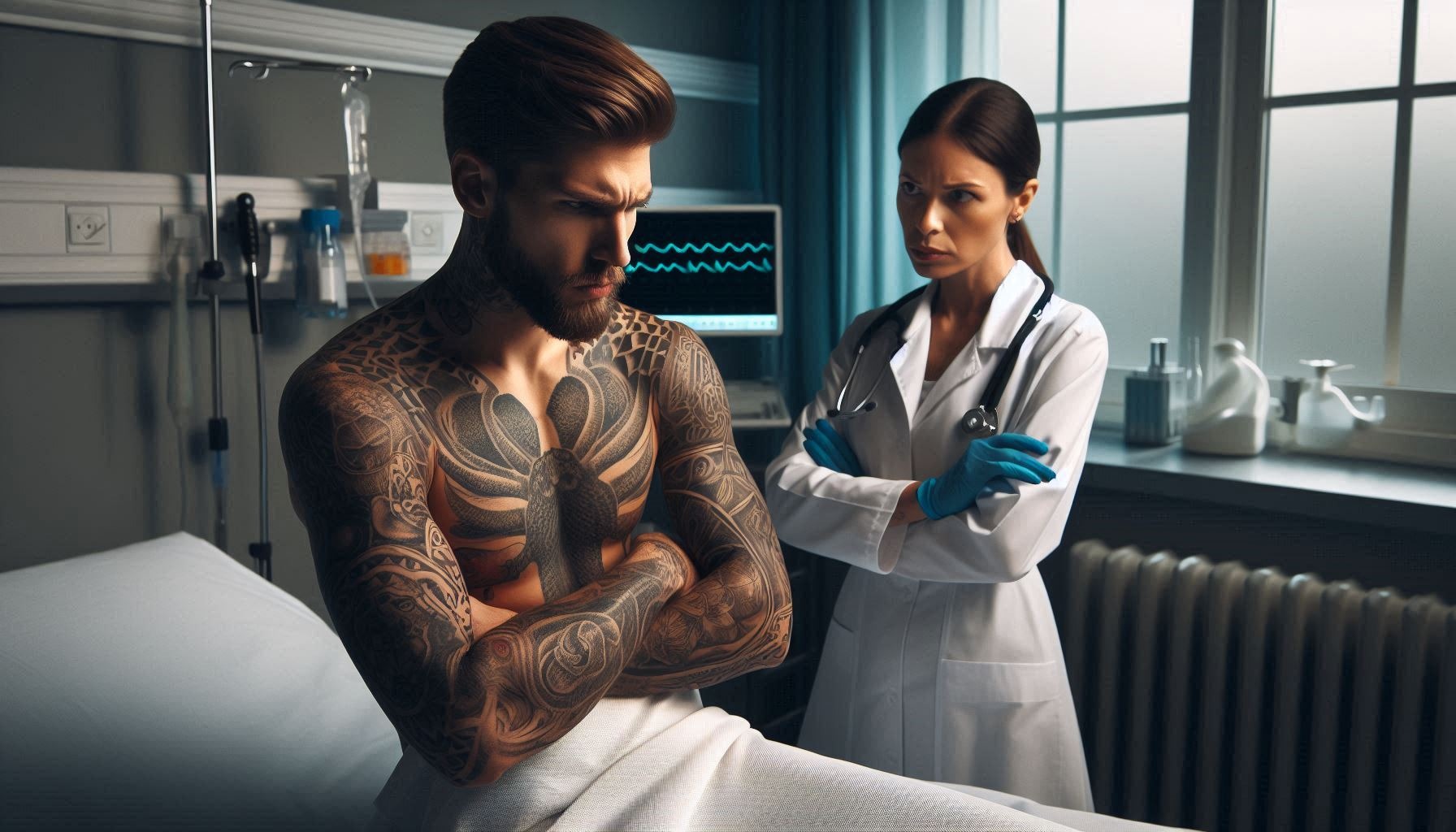
Medical staff matched Rossi’s tattoos to an Interpol notice after he was admitted during a severe COVID-19 illness.
By Staff Reporter
WASHINGTON, DC, May 30, 2026, Nicholas Rossi’s international fugitive story began collapsing in an unlikely place, not at a border checkpoint or airport gate, but inside a Glasgow hospital ward where medical staff were treating a man with severe COVID-19 symptoms.
The hospital stay became the point where the false identity failed.
Rossi, also known as Nicholas Alahverdian, had allegedly faked his death in the United States, left behind a false obituary claiming he died from lymphoma and later appeared in Scotland under the name Arthur Knight.
That identity might have continued longer if he had remained outside institutions, but illness brought him into a medical setting where names, records, physical features and official alerts could be compared with greater care.
Medical staff at Queen Elizabeth University Hospital reportedly recognized tattoos that matched images circulated in an Interpol notice, a discovery later described in British news coverage of the Rossi case.
The hospital admission mattered because it showed that a fugitive identity can survive socially for a time, but it becomes vulnerable when the person behind it must interact with systems designed to document, verify and preserve records.
Rossi’s case became internationally famous because the man claiming to be Arthur Knight was no longer merely avoiding attention, he was being tested against photographs, tattoos, fingerprints and legal records connecting him to America.
COVID-19 placed the fugitive inside a system he could not fully control.
The pandemic created extraordinary pressure on hospitals, but it also placed patients into environments where identity, treatment history, medical observations and emergency records became part of institutional documentation.
Rossi’s severe illness reportedly required hospital care, which meant staff had direct access to physical identifiers that could be compared with material circulated through law enforcement channels.
The tattoo match became crucial because tattoos can be difficult to explain away when they appear in the same locations and resemble images connected to a wanted person.
Rossi later claimed that tattoos had somehow been placed on him while he was unconscious, an explanation that Scottish courts and prosecutors treated as implausible in the context of the wider identity evidence.
The hospital stays therefore turned the body itself into evidence, because the physical features visible during treatment contradicted the story that the patient was an Irish man wrongly accused by American authorities.
The Interpol notice brought international law enforcement into the ward.
An Interpol notice can transform a local encounter into an international identification event because it gives foreign authorities and institutions a reference point for recognizing a person wanted across borders.
In Rossi’s case, the notice reportedly included tattoo images that allowed staff and police to compare the hospital patient with the American fugitive sought in connection with Utah rape charges.
That comparison showed how modern fugitive detection often depends on practical identifiers rather than dramatic confrontations, because scars, tattoos, photographs and hospital records can quietly defeat a false name.
The case also demonstrated that international wanted notices matter outside traditional policing spaces, because the first decisive recognition occurred through medical treatment rather than a traffic stop or immigration inspection.
Once the tattoo match drew attention, the Arthur Knight identity began facing the kind of formal scrutiny that no performance could easily survive.
The claimed Arthur Knight identity was built on denial.
After his arrest, Rossi repeatedly insisted he was not Nicholas Rossi or Nicholas Alahverdian, but Arthur Knight, an Irish-born orphan who had never been to the United States.
That denial became central to his extradition fight because Scottish courts first had to decide whether the man before them was the same person named in American warrants and Utah charging documents.
The claim required courts to believe that American investigators, Scottish police, hospital staff, tattoo comparisons, fingerprints and official records had all converged on the wrong person.
Scottish judges rejected the argument, finding that the identity evidence established he was Rossi, not an innocent Irish man trapped in a case of mistaken identity.
That ruling allowed the case to move beyond the invented biography and toward the rape charges that had followed Rossi across jurisdictions, aliases and the alleged false death notice.
The hospital discovery reversed the false obituary.
Before Scotland, Rossi had been publicly reported dead after an obituary claimed he died from non-Hodgkin lymphoma, a story authorities later said was part of his attempt to avoid prosecution.
The Glasgow hospital discovery exposed the contradiction at the heart of the scheme, because a man supposedly dead from cancer was alive, receiving treatment and arguing that he was someone else entirely.
The false obituary had attempted to create finality, while the hospital stay created a new official record proving that the story was not over.
That collision between obituary and hospital record became one of the case’s most striking elements, because the same theme of illness appeared first as a fake ending and later as the circumstance that exposed him.
The attempt to use a medical death narrative ultimately failed in a medical environment, where the living body and official identification evidence outweighed the obituary’s claim of death.
The Utah rape cases survived the attempted disappearance.
Rossi’s fugitive story would have been bizarre under any circumstances, but its legal importance came from the Utah rape cases that remained active after he allegedly tried to erase himself.
Authorities had connected him to 2008 sexual assault allegations through DNA evidence developed from older rape kits, making the cases part of a larger national story about backlogged sexual assault evidence.
The Salt Lake County District Attorney’s Office later announced that Rossi was sentenced to five years to life in prison after being convicted of first-degree felony rape in the Salt Lake County case, according to the county’s official sentencing release.
A second Utah conviction followed in a separate county case, adding to the accountability that had been delayed by the false death, Scottish identity fight and extradition proceedings.
The hospital discovery mattered because it reopened the path between a fugitive living under another name and the women whose cases had waited years for trial.
The tattoo evidence became a symbol of failed reinvention.
False identities often depend on documents, accents, stories and behavior, but the Rossi case showed that physical identifiers can carry the old identity into the new life.
Tattoos are especially powerful in fugitive cases because they can remain visible, searchable and comparable even when a person changes names, locations and personal narratives.
In Rossi’s case, the tattoos reportedly visible on his body became part of the evidence that linked him to law enforcement images and helped unravel the Arthur Knight claim.
That detail made the case both strange and instructive, because the very body receiving medical treatment in Glasgow carried signs that connected it to the wanted man authorities were seeking.
The lesson is that a fugitive can invent a biography, but physical identifiers may continue preserving the truth beneath the story.
Hospitals can expose fugitives because care creates records.
A person living under a false identity can avoid some official systems by staying away from airports, courts, banks or government offices, but serious illness can make avoidance impossible.
Hospitals require names, histories, medications, emergency contacts, insurance information, physical examinations and clinical notes, all of which can become points where a false identity begins to fracture.
Medical staff are not border officers, but they often see details that other institutions do not, including tattoos, scars, speech patterns, documents and inconsistencies in personal history.
In Rossi’s case, that ordinary medical reality became extraordinary because the hospital environment brought his claimed identity into contact with an international fugitive notice.
The ward became the place where survival required treatment, treatment required documentation and documentation exposed the man who had allegedly tried to vanish.
The extradition process turned identification into a courtroom battle.
Once Rossi was identified in Scotland, the legal question shifted from hospital recognition to extradition, where courts had to determine whether he could be lawfully returned to the United States.
Extradition depends on identity because a court must be satisfied that the person being surrendered is the person sought by the requesting country.
Rossi’s insistence that he was Arthur Knight delayed the process, but it also forced the court to examine the identifying evidence in a structured legal setting.
The proceedings eventually cleared the way for his return to Utah, where the allegations that had been overshadowed by the identity dispute could finally be tried.
The extradition fight demonstrated that false identity claims can slow justice, but they do not necessarily prevent it when documentary, physical and forensic evidence remain intact.
The spectacle risked overshadowing the survivors.
Rossi’s courtroom appearances, oxygen mask, wheelchair, accent claims and Arthur Knight identity attracted intense media attention, turning the extradition process into an international spectacle.
That spectacle sometimes risked shifting focus away from the women whose reports and evidence formed the foundation of the Utah cases.
Fugitive stories often create this imbalance because the escape narrative becomes visually dramatic, while survivor testimony remains difficult, private and emotionally demanding.
The Utah convictions later restored the center of the case to the assaults, the DNA evidence and the legal findings reached by juries after years of delay.
The hospital discovery was important not because it made Rossi famous, but because it helped bring him back into court where the underlying allegations could finally be addressed.
The case showed why fake death fraud rarely creates freedom.
Rossi’s alleged false obituary may have changed public perception, but it did not erase DNA evidence, court records, tattoos, warrants, police files or the memories of people connected to his past.
A fake death can interrupt a search, confuse the public and delay proceedings, but it cannot make the legal system forget records that remain active inside official databases.
The Glasgow hospital discovery illustrated that weakness because the supposed dead man eventually needed medical care, and the medical system created the opening for identification.
Every false identity must still pass through ordinary life, including illness, work, housing, banking, communication and legal contact, each of which can produce records and witnesses.
Rossi’s case showed that pseudocide may buy time, but it also creates a dramatic contradiction that becomes devastating once the person is found alive.
The invented identity was not lawful identity change.
There are lawful ways for people to change names, relocate, correct records or seek protected identities through recognized legal channels, but Rossi’s Arthur Knight claim was tied to avoiding prosecution and resisting extradition.
Professional discussions of a new legal identity emphasize government recognition, lawful purpose, verifiable documentation and compliance with the systems that control identity.
Rossi’s alleged conduct belonged to the opposite category because it involved a claimed death, an invented overseas identity and denial of records connecting him to serious criminal cases.
That distinction matters because the public phrase “new identity” can describe lawful protection in one context and criminal evasion in another.
The difference is purpose and documentation, because a lawful identity preserves accountability while a fugitive identity is designed to defeat it.
The Glasgow discovery became a modern fugitive case study.
Older fugitive cases often turned on passport stamps, witness sightings, bank records or border alerts, while Rossi’s case turned on a hospital stay, visible tattoos and an international wanted notice.
That combination made the case distinctly modern because medical care, law enforcement alerts and identity verification intersected in a way that exposed the false life.
The discovery also showed that fugitives can be found through vulnerable moments, especially when illness, injury or emergency care forces contact with systems they cannot fully manipulate.
Rossi’s severe COVID-19 illness did not protect the false identity, because the treatment setting made comparison and recognition possible.
The case now stands as an example of how modern fugitives may hide across borders, but remain vulnerable whenever the body, records and official alerts converge.
Lawful anonymity and fugitive concealment remain opposites.
Legitimate anonymous living depends on compliant structures, valid documentation and recognition by legal systems that allow privacy without destroying accountability.
Rossi’s case involved the opposite pattern, because the claimed identity change was used to resist arrest, deny extradition and distance himself from DNA-linked rape cases in the United States.
That contrast is essential because privacy can be lawful and necessary for people facing threats, while concealment after serious criminal allegations is a strategy of evasion.
A lawful identity can be verified, while Rossi’s Arthur Knight identity failed when courts compared it with fingerprints, tattoos, photographs and official records.
The Glasgow hospital episode captured that difference in one setting: a claimed identity met a verifiable body, and the body carried the evidence that defeated the claim.
The bottom line is that the hospital stay exposed what the obituary tried to bury.
Nicholas Rossi’s severe COVID-19 illness brought him into a Glasgow hospital, where medical staff reportedly matched his tattoos to images circulated through an Interpol notice.
That discovery undermined the false obituary, weakened the Arthur Knight identity and set in motion the extradition process that eventually returned him to Utah.
The hospital stay became the turning point because it turned a fugitive performance into a matter of physical identification and official records.
Rossi’s later convictions showed that the false death and invented identity did not erase the DNA evidence, survivor testimony or legal process he had tried to avoid.
For the public record, the Glasgow hospital episode remains a modern warning that a fugitive can claim death, change names and cross borders, but the body, records and justice system can still bring the old identity back to life.
