

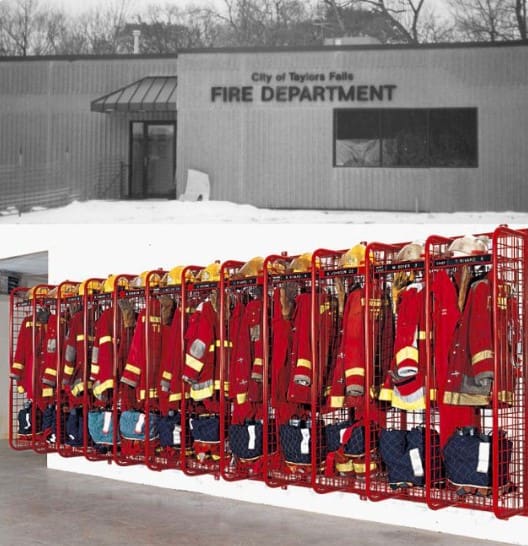
Across industries, the challenge is remarkably similar. Organizations rely on gear that must be organized, protected, kept dry, and accessed quickly. Firefighters depend on turnout gear that performs under extreme conditions. Athletes rely on equipment that must be ready for daily use. Tactical units need secure storage that does not compromise readiness. Public works teams manage tools and protective equipment across varied environments.
Despite the differences in mission, the storage problem is shared. Gear that is poorly stored degrades faster, becomes harder to manage, and creates inefficiencies that ripple through daily operations. Storage is not simply about where equipment sits. It is about how well organizations can do their jobs.
GearGrid’s systems address this universal need by applying principles developed in one demanding environment to many others.
Origin in the Fire Service
GearGrid’s story begins in the fire service, where the consequences of poor storage are immediate and personal. In the late nineteen nineties, one of the company’s co owners was serving as an assistant fire chief. Like many departments at the time, his station struggled with how to dry and store turnout gear properly after calls.
Traditional lockers restricted airflow, leaving gear damp for extended periods. Moisture led to odor, material breakdown, and increased exposure to contaminants. Rather than accept these limitations, he developed a ventilated storage system that allowed air to move freely around gear.
That innovation marked a turning point. It proved that storage could actively support safety and readiness rather than simply contain equipment. The same principles that improved firehouse operations would later prove valuable far beyond the fire service.
Athletic Storage Solutions
Athletic facilities face a different set of pressures, but the underlying needs are familiar. Equipment must be stored in a way that promotes drying, reduces odor, and keeps items organized for frequent use. Helmets, pads, bags, and training gear vary widely in size and shape.
Open grid storage provides airflow that helps athletic gear dry between practices and games. This reduces lingering moisture and extends the usable life of equipment. Custom locker sizes allow teams to store gear without compressing or stacking items in ways that cause damage.
Modular layouts also support changing rosters and seasonal sports. Lockers can be reconfigured as needs evolve, allowing facilities to adapt without replacing entire systems. What began as a solution for turnout gear translates naturally to the demands of athletic programs.
Tactical and Law Enforcement Needs
Tactical and law enforcement units require storage that balances security with accessibility. Equipment must be protected while remaining ready for rapid deployment. Traditional solid lockers often sacrifice ventilation for security, creating enclosed environments that trap moisture.
GearGrid’s systems address this balance through configurable designs. Ventilated lockers support airflow around gear, while optional secure doors provide controlled access where required. Units can be wall mounted to keep floors clear and equipment visible.
For teams that operate in high readiness environments, this combination matters. Gear remains organized and accessible without being sealed off from airflow. Storage supports operational discipline rather than hindering it.
Public Works and Heavy Equipment
Public works departments operate across diverse spaces, from centralized facilities to mobile job sites. Storage solutions must accommodate tools, protective equipment, and supplies that move with the work.
Mobile and freestanding units offer flexibility for these environments. Equipment can be staged where it is needed rather than stored far from the point of use. Open grid shelving keeps tools visible, reducing time spent searching and improving accountability.
Durability is also critical. Public works gear is often heavy and frequently used. Storage systems must withstand daily wear while remaining adaptable as projects and crews change. Modular construction allows departments to scale storage up or down without major disruption.
Why Made in the USA Matters
Across all these applications, one factor remains consistent. GearGrid manufactures its systems entirely in the United States. This approach supports material quality, manufacturing control, and long term service continuity.
Domestic production allows tighter oversight of materials and construction. It also enables custom design capabilities that respond to specific facility needs. When systems need to be expanded or modified years later, continuity in manufacturing matters.
For organizations making long term investments in infrastructure, this reliability supports confidence that storage solutions will remain serviceable and supported over time.
From firehouses to athletic facilities, tactical units to public works operations, the need for effective storage cuts across industries. GearGrid’s systems demonstrate how solutions developed in one demanding environment can serve many frontlines. The strength of this approach lies in adaptability. Open grid construction, modular components, and configurable layouts allow storage to respond to real operational needs. Rather than forcing organizations into fixed solutions, these systems evolve alongside them.
