
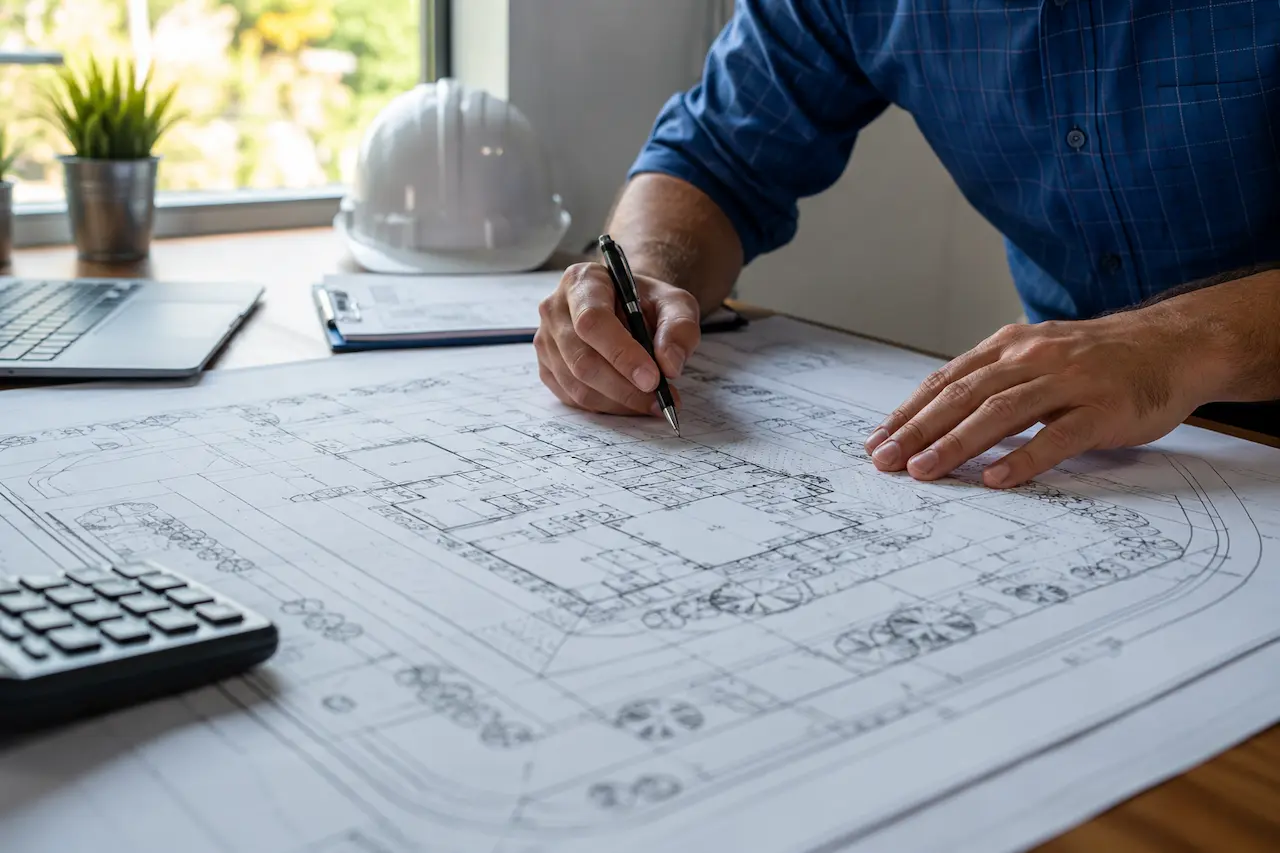
Applying for a building permit in Florida can feel simple at first. A homeowner may think they only need to describe the project, pay the fee, and wait for approval. In reality, many Florida cities and counties require a clear site plan before they will approve work on a property.
A site plan is one of the most important documents in the permit process because it shows how the proposed project fits on the property. It helps the permit reviewer understand the property layout, the location of existing structures, and the exact area where new work will be completed.
For homeowners planning a pool, fence, shed, driveway, patio, addition, or accessory structure, a site plan can help reduce confusion and prevent avoidable permit delays.
What Is a Site Plan?
A site plan is a top-view drawing of a property. It usually shows the lot boundaries, existing home, proposed improvement, setbacks, driveways, walkways, easements, and other important property details.
If you are new to the process, this guide from Site Plans FL explains the basics clearly:
What Is a Site Plan in Florida?
A Florida site plan may include:
- Property lines
- Existing house or building footprint
- Proposed project location
- Setback distances
- Driveway and access points
- Pools, sheds, patios, fences, or additions
- Easements if available
- Dimensions and labels
- North arrow and scale
- Permit-related notes
The exact requirements depend on the city, county, zoning district, and type of project.
Why Florida Permit Offices Ask for Site Plans
Permit reviewers need to confirm that the proposed project fits the property and follows local requirements. A site plan helps them check whether the project affects setbacks, drainage, access, easements, utilities, lot coverage, or nearby structures.
For example, a pool permit may require the pool location, pool deck, equipment pad, setbacks, and enclosure information. A fence permit may require the fence location, height, gates, easements, and property boundaries. A driveway permit may require the driveway width, location, and connection to the street.
If the site plan is unclear or missing important information, the permit office may return the application with comments.
Common Projects That Need a Site Plan
Many Florida residential projects may require a site plan, including:
- Swimming pools
- Fences
- Sheds
- Driveways
- Patios
- Decks
- Home additions
- Garage additions
- ADUs
- Accessory buildings
- Commercial improvements
For Florida permit site plan requirements, this page is useful:
Florida Building Permit Site Plan Requirements
Why Permits Get Delayed
Many permit delays happen because the plan is missing basic information. Common issues include:
- Missing property lines
- No setback dimensions
- Proposed work is not clearly marked
- Missing structure dimensions
- No north arrow or scale
- Easements not shown
- Incorrect lot coverage
- Missing PE stamp when required
- City comments not addressed
Before submitting, homeowners can use the Site Plans FL tools to review possible issues:
Free Tools
How to Get a Florida Site Plan
The easiest way to get a site plan is to send the property address, project type, survey if available, sketches, photos, and permit comments to a drafting team.
Site Plans FL provides residential and commercial site plan support across Florida. Homeowners can start here:
Residential Plan Services
For general permit site plan help, visit:
Site Plans FL Services
Final Thoughts
A site plan is not just a drawing. It is a permit communication tool. It helps the city or county understand your project and can reduce delays caused by incomplete information.
If you are planning a Florida property improvement, getting a clear site plan before submission is one of the smartest steps you can take.
Recommended Link:
Get a Florida Site Plan