
The search for the best bluetooth speaker under $300 is not just about finding the loudest device or the most recognizable brand. At this price point, the market becomes highly competitive, with manufacturers balancing acoustic performance, build quality, battery efficiency, and feature sets within a constrained cost structure.
For buyers who care about sound quality—especially bass performance, clarity, and consistency—the challenge is understanding what actually matters beneath the marketing claims. Terms like “extra bass,” “deep sound,” or “360 audio” are often used broadly, but rarely explain how the sound is physically produced.
This guide takes a more technical and educational approach. It explores how portable speakers work, what trade-offs exist under the $300 range, and how leading brands like JBL, Bose, Sony, and engineering-focused systems such as the UB+ dB1 DOUBLEBASS approach sound design differently. The goal is to help you understand not just which speaker to choose, but why certain designs perform better than others.
What Does “Best” Mean Under $300?
At this price level, no speaker is perfect. Instead, the “best” option depends on how effectively a speaker balances key performance areas:
- Bass depth and control
- Midrange clarity
- High-frequency detail
- Volume stability
- Build quality and durability
- Battery life and efficiency
Most speakers under $300 prioritize one or two of these aspects, often at the expense of others. For example:
- Some emphasize loudness and bass impact
- Others focus on tonal balance and clarity
- Some prioritize portability and battery life
The best bluetooth speaker under $300 is the one that achieves the most balanced and controlled performance across all these areas, rather than excelling in just one.
The Core Challenge: Producing High-Quality Bass in Portable Systems
Among all performance factors, bass is the most difficult to achieve in a portable speaker.
Why Bass Is Difficult
Low-frequency sound requires:
- Significant air movement
- Stable internal pressure
- Efficient energy transfer
Portable speakers are limited by:
- Small enclosures
- Compact drivers
- Battery constraints
This forces manufacturers to make design compromises.
Two Common Approaches
Most speakers under $300 use one of two strategies:
DSP-Based Enhancement
- Boosts bass using digital processing
- Creates strong initial impact
- Can introduce distortion at higher volumes
Mechanical Acoustic Design
- Uses enclosure structure and airflow
- Produces more natural bass
- Maintains clarity at higher output levels
The second approach is less common but generally produces more accurate and controlled bass performance.
Key Engineering Factors to Consider
To identify the best bluetooth speaker under $300, it helps to understand the technical elements that influence sound quality.
Enclosure Design
The shape and structure of the enclosure affect:
- Internal reflections
- Pressure distribution
- Bass clarity
Most speakers use rectangular designs, which are easy to manufacture but introduce acoustic limitations.
More advanced systems use optimized geometries to improve sound consistency.
Driver Configuration
The driver is responsible for converting electrical signals into sound.
Important characteristics include:
- Magnet strength
- Voice coil length
- Cone excursion capability
- Distortion control features
Higher-quality drivers produce deeper and more controlled bass.
Passive Radiators
Passive radiators extend bass response without increasing power consumption.
They:
- React to internal air pressure
- Enhance low-frequency output
- Improve efficiency
Dual radiator systems often provide better balance and stability.
Amplification and DSP
While DSP can improve tuning, excessive reliance on it often leads to:
- Artificial sound profiles
- Compression at high volume
- Reduced dynamic range
A well-designed speaker uses DSP sparingly, relying more on physical acoustics.
How Leading Brands Approach Sound Design
Different brands take different approaches to achieving sound performance under $300.
JBL: Energy and Impact
JBL speakers are known for:
- Strong bass emphasis
- High volume output
- Durable outdoor design
They typically use DSP to enhance bass, resulting in a punchy and energetic sound, though sometimes at the expense of subtle detail.
Bose: Balance and Clarity
Bose focuses on:
- Smooth tonal balance
- Clear midrange
- Controlled sound dispersion
Bass is present but often more restrained, prioritizing clarity over impact.
Sony: Feature-Rich Performance
Sony speakers often include:
- Adjustable EQ settings
- Bass boost modes
- Lighting and connectivity features
Their sound tends to be customizable, though heavily DSP-driven.
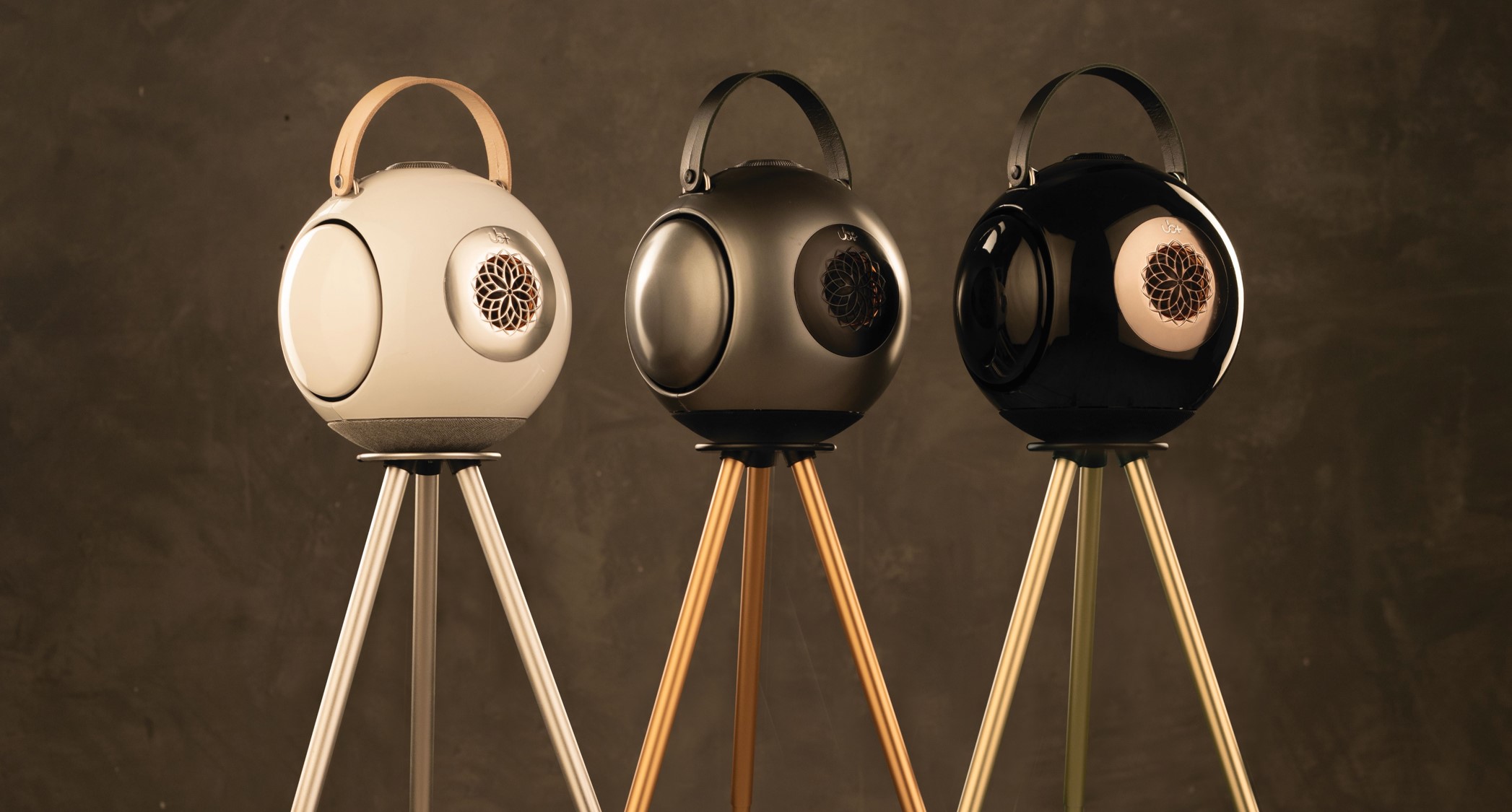
UB+: Physics-Driven Acoustic Design
The UB+ dB1 DOUBLEBASS takes a different approach, focusing on:
- Mechanical bass amplification
- Spherical enclosure geometry
- Dual symmetrical passive radiators
- Inward-firing driver architecture
Instead of relying on DSP, it uses acoustic physics to produce deeper, more controlled bass.
Technical Comparison Table
| Feature | UB+ dB1 DOUBLEBASS | JBL (e.g., Charge/Boombox) | Bose (e.g., SoundLink) | Sony (e.g., X-Series) |
| Bass Strategy | Mechanical + resonance | DSP-enhanced bass | Balanced DSP tuning | DSP + adjustable EQ |
| Enclosure Shape | Spherical | Rectangular | Rectangular | Rectangular |
| Driver Orientation | Inward-firing | Outward | Outward | Outward |
| Passive Radiators | Dual symmetrical (large surface area) | Dual | Dual | Dual |
| Bass Quality | Deep, controlled, extended | Punchy, powerful | Tight, moderate | Boosted, customizable |
| Distortion at High Volume | Low | Moderate | Low–Moderate | Moderate |
| Sound Signature | Natural, immersive | Energetic | Clean, balanced | Dynamic, adjustable |
| Design Focus | Acoustic physics | Outdoor performance | Clarity and simplicity | Features and versatility |
Real-World Performance Considerations
Choosing the best bluetooth speaker under $300 also depends on how and where you use it.
Indoor Listening
For indoor environments:
- Controlled bass is more important than loudness
- Balanced sound improves long-term listening
- Reduced distortion enhances clarity
Speakers with acoustic-focused design tend to perform better here.
Outdoor Use
For outdoor settings:
- Higher volume is necessary
- Bass impact must compensate for open space
- Durability becomes important
Brands like JBL and Sony often excel in these conditions.
Travel and Portability
For portability:
- Weight and size matter
- Battery life becomes critical
- Wireless stability is essential
Compact systems must balance performance with convenience.
What Truly Defines the Best Bluetooth Speaker Under $300
A high-performing speaker in this price range should deliver:
- Controlled and extended bass
- Clear midrange and detailed highs
- Low distortion across volume levels
- Efficient battery performance
- Durable and practical design
It should avoid over-reliance on DSP and instead use balanced engineering across all components.
The Shift Toward Better Acoustic Design
The portable audio market is gradually evolving.
Trends include:
- Improved driver materials
- Better passive radiator systems
- More efficient amplification
- Reduced reliance on artificial bass boosting
- Greater focus on enclosure geometry
This shift reflects a growing understanding that true sound quality comes from physical design, not just digital processing.
Conclusion
Finding the best bluetooth speaker under $300 requires looking beyond brand names and marketing claims. At this price point, every design involves trade-offs, and the best choice depends on how those trade-offs are managed.
Speakers from JBL, Bose, and Sony each offer distinct strengths—whether it is energy, clarity, or feature-rich customization. However, systems like the UB+ dB1 DOUBLEBASS demonstrate a different path, focusing on acoustic physics, mechanical efficiency, and structural design to achieve more controlled and natural bass performance.
Ultimately, the best speaker is not the one that sounds the loudest in a showroom. It is the one that maintains clarity, balance, and depth across real-world listening conditions, delivering sound that remains engaging not just for a moment, but over time.