
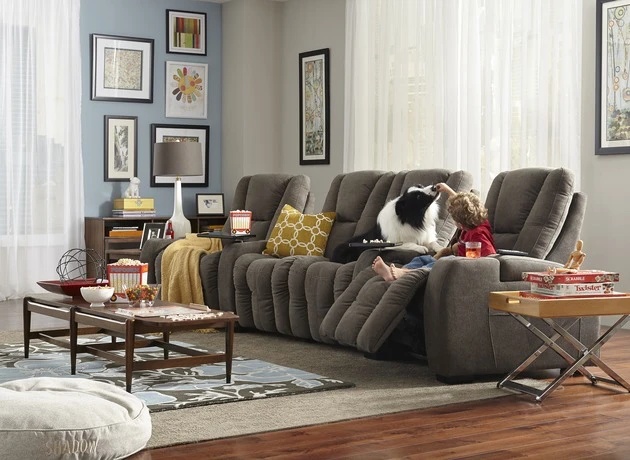
Designing a home theater for a family with children and pets involves a completely different set of priorities than designing one for adults only. Durability, cleanability, and resistance to damage become the dominant factors, and choosing the right materials can mean the difference between a space that stays looking great for years and one that shows visible wear within months.
The good news is that durable seating options have expanded significantly in recent years. Material technology has advanced to the point where family-friendly upholstery can now match premium aesthetics while standing up to the demands of everyday family life.
Why Material Choice Matters Most
Children spill drinks, drop snacks, and occasionally jump on furniture. Pets bring muddy paws, shed fur, and may scratch upholstery with their claws. These realities make material selection the single most important decision when choosing home theater seating for a family household.
Standard leather, while beautiful, can be scratched by pet claws and requires specific cleaning products. Bonded leather is even more susceptible to damage and will peel under heavy use. The best options for families are performance fabrics and top-grain leather specifically treated for durability.
Performance Fabrics
Performance fabrics are engineered textiles designed to resist staining, moisture, and abrasion. Brands like Crypton and Sunbrella produce performance fabrics that can be cleaned with mild soap and water, resist liquid penetration, and maintain their appearance even with heavy use.
These fabrics come in a wide variety of colors and textures, so you do not have to sacrifice style for practicality. Many manufacturers now offer home theater seat collections specifically upholstered in performance fabrics, recognizing the growing demand from family buyers.
Top-Grain Leather and Leather Alternatives
For those who prefer the look and feel of leather, top-grain leather is significantly more resistant to scratching than standard or full-grain leather. While no leather is entirely pet-proof, top-grain leather can be conditioned regularly to maintain its resistance to surface damage.
High-quality leather alternatives, including polyurethane-based synthetic leathers, have also improved dramatically. The best versions are nearly indistinguishable from genuine leather in appearance and feel, while offering superior resistance to moisture and easier cleaning.
Seat Construction and Frame Quality
Beyond upholstery, the structural integrity of the seat matters in a family environment. Seats that will be used heavily by children jumping and climbing need frames built from hardwood or steel rather than particleboard or softwood. Look for seats with a minimum weight capacity well above the actual intended use weight, as this indicates a more robustly constructed frame.
Reinforced seams and double-stitching on upholstery extend the life of the seat cover significantly in high-use situations.
Cleaning and Maintenance
Durable seating should be easy to maintain. Look for removable seat cushion covers that can be machine washed, or upholstery that can be wiped clean with a damp cloth. Having cleaning supplies readily accessible in the theater room encourages prompt cleanup of spills before they set into stains.
FAQ
Q: What is the best upholstery material for homes with pets? A: Performance fabrics and top-grain leather are generally the best choices for pet owners. They offer the best combination of durability, cleanability, and resistance to scratching.
Q: Can pet scratches on leather be repaired? A: Minor scratches on leather can often be buffed out with leather conditioner. Deeper scratches may require professional repair or patching.
Q: Are there home theater seats designed specifically for children? A: Some manufacturers offer smaller seat configurations designed for children, including adjustable footrests and lower seat heights that are more proportional to smaller bodies.
Q: How often should home theater seats be cleaned in a family household? A: A light cleaning after each use is ideal. A thorough deep clean should be done monthly or whenever visible soiling occurs.
Q: Are there warranties that cover pet damage? A: Most standard warranties do not cover pet damage. However, some retailers offer optional protection plans that include accidental damage coverage.
