
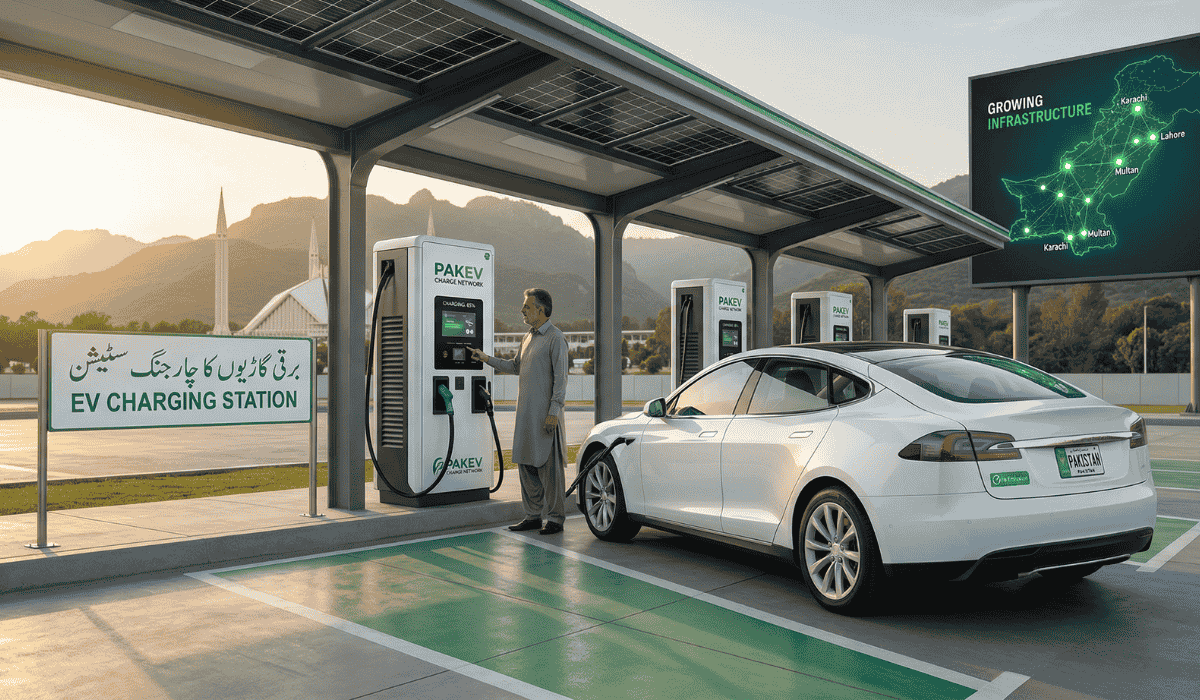
As electric vehicles (EVs) gradually gain popularity in Pakistan, the role of EV charger infrastructure is becoming increasingly important. While EV adoption is still in its early stages compared to global markets, growing fuel prices, environmental concerns, and government support are pushing more people to consider electric mobility.
In fact, policy direction under Pakistan’s Electric Vehicle Policy highlights the country’s commitment to increasing EV adoption and developing supporting infrastructure.
However, for EV owners, one of the biggest questions remains: Is the charging infrastructure ready?
Current State of EV Charger Infrastructure in Pakistan
The availability of EV charger networks in Pakistan is still limited but steadily improving. Most charging stations are currently concentrated in major cities such as Karachi, Lahore, and Islamabad. These chargers are typically installed in commercial areas, office buildings, and select fuel stations.
Recent developments and reports on the growth of EV infrastructure in Pakistan indicate increasing private sector participation, which is helping expand charging availability across urban areas.
For daily users, this means urban EV ownership is becoming more practical, but intercity travel still requires planning due to fewer charging points on highways. This limited distribution is one of the main reasons why many potential buyers still hesitate to switch to EVs.
Why EV Charger Access Matters for EV Owners
For any EV owner, access to a reliable EV charger is just as important as owning the vehicle itself. Unlike traditional fuel stations, EV charging requires time, planning, and in many cases, access to home or workplace charging.
Having access to a nearby EV charger offers several advantages:
- Convenience of charging at home or work
- Reduced dependency on fuel stations
- Lower long-term running costs
- Better confidence for daily and long-distance travel
As infrastructure improves, these benefits will become more accessible to a wider audience across Pakistan.
Emerging Trends in EV Charging in Pakistan
Pakistan’s EV ecosystem is slowly evolving, and several trends are shaping the future of EV charger deployment.
One noticeable shift is the growing demand for fast charging solutions. Businesses and commercial spaces are beginning to install DC fast chargers to serve more users in less time. At the same time, residential charging is also gaining traction, with more EV owners opting to install personal chargers at home.
Another trend is the rise of smart charging solutions, supported by evolving frameworks such as EV charging infrastructure regulations, which aim to standardize and improve charging networks across Pakistan.
There is also growing interest in renewable-powered charging, with studies like solar-powered EV charging systems highlighting how solar integration can make charging more sustainable and reduce pressure on the grid.
What This Means for EV Owners
For current and future EV owners in Pakistan, the expanding EV charger infrastructure brings both opportunities and considerations.
In the short term, EV ownership is most practical for individuals living in urban areas or those who can install a home charger. Planning routes and understanding charger availability is still necessary for long-distance travel.
At the same time, broader discussions around Pakistan’s energy and electricity challenges highlight why efficient and well-planned charging infrastructure is critical for long-term sustainability.
In the long term, as more EV charger installations take place across highways, commercial spaces, and residential areas, EV ownership will become far more convenient and accessible.
Role of Industry Players
The development of EV charging infrastructure is not just driven by the government but also by private companies investing in reliable and scalable solutions.
Some industry players are already contributing to this growth by offering a range of AC and DC charging solutions tailored for different use cases. For example, companies like CITA EV Charger are often mentioned in discussions around emerging EV infrastructure, particularly for providing flexible charging solutions for homes, businesses, and commercial applications.
While the market is still developing, such contributions are helping accelerate the adoption of electric vehicles in Pakistan.
Conclusion
The future of EV mobility in Pakistan is closely tied to the growth of EV charger infrastructure. While challenges such as limited availability and infrastructure gaps still exist, steady progress is being made.
For EV owners, this means greater convenience, lower operating costs, and a more sustainable way of commuting in the coming years. As the network of EV charger installations continues to expand, Pakistan is moving closer to a cleaner and more efficient transportation future.
