
The search for the best bass bluetooth portable speaker often begins with a simple goal: finding a compact speaker that can produce powerful low frequencies without sacrificing portability. But beneath that goal is a much more complex challenge. Reproducing convincing bass from a small wireless device requires more than louder output or heavier digital processing. It requires a deep understanding of acoustic engineering, driver mechanics, enclosure behavior, and energy efficiency.
Bass is the most physically demanding part of sound reproduction. It needs air movement, stable pressure, and mechanical precision. In a large home audio system, these requirements can be met with bigger drivers and larger cabinets. In a portable speaker, those same requirements must be achieved in a compact enclosure powered by a battery.
That is why not every speaker marketed as bass-heavy actually delivers quality bass. Some create a short burst of impact, while others produce bass that feels bloated or distorted. The best bass bluetooth portable speaker is not simply the loudest one. It is the speaker that produces deep, controlled, and natural low frequencies while maintaining clarity throughout the rest of the audio spectrum.
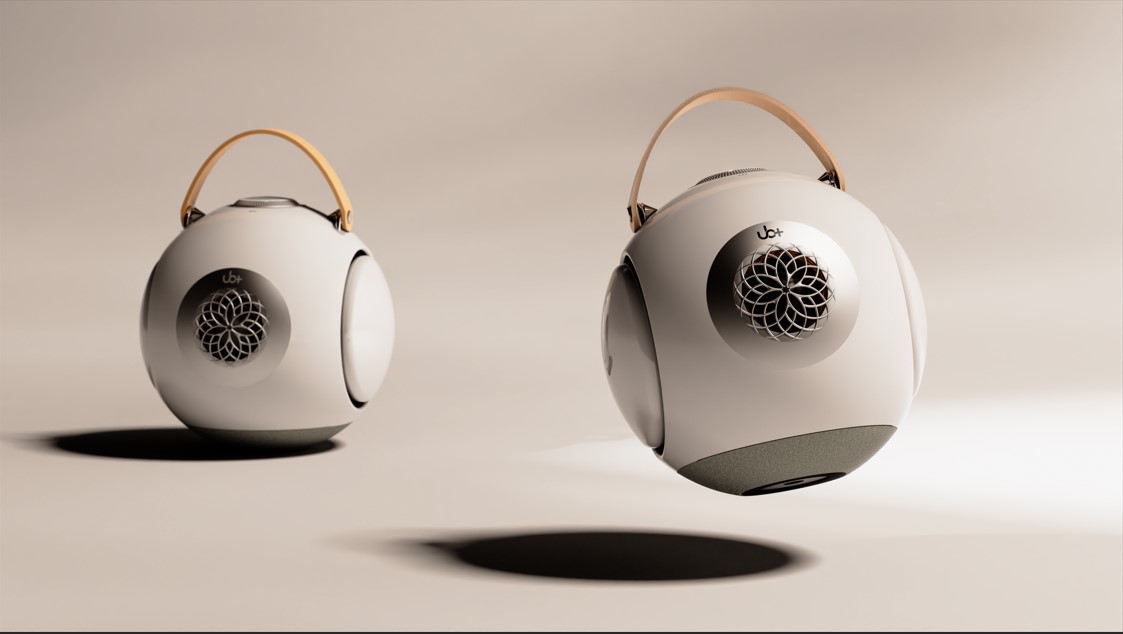
This article explains what truly defines bass quality in portable speakers, why some designs outperform others, and how advanced engineering approaches like those found in the UB+ dB1 DOUBLEBASS are reshaping expectations for portable wireless audio.
What Makes Bass “Good” in a Portable Speaker?
Bass quality is often misunderstood because listeners frequently associate bass with loudness alone. But strong bass is not always good bass.
A well-designed portable speaker should produce bass that offers:
- Depth – the ability to reproduce lower frequencies naturally
- Control – tight and accurate low-end response
- Balance – bass that supports rather than overwhelms other frequencies
- Consistency – stable performance at different volume levels
- Clarity – individual bass notes remain distinguishable
Poor bass usually sounds:
- Boomy
- Muddy
- Distorted
- Artificial
- Overpowering
The best bass systems create bass that is felt without becoming exaggerated.
Why Bass Is Hard to Reproduce in Small Speakers
The reason bass is difficult in portable systems comes down to physics.
Low Frequencies Need Space
Low-frequency sound waves are physically long.
For example:
- High frequencies are short and easy to reproduce
- Bass frequencies are long and require larger acoustic space
Because a portable speaker has a limited enclosure, it must find ways to reproduce long waves inside a small volume.
Bass Requires Air Movement
Low frequencies are produced by moving air.
That depends on:
- Driver diameter
- Cone excursion
- Enclosure efficiency
Portable speakers use smaller drivers, so they must compensate through smarter engineering.
Bass Requires More Energy
Compared to midrange and treble, bass consumes more power because:
- The driver moves farther
- More air must be displaced
- Internal pressure rises significantly
This creates challenges for:
- Battery life
- Heat control
- Sustained output
Why Many Bass-Heavy Portable Speakers Sound Artificial
Many wireless speakers advertise “extra bass,” but not all bass is created equally.
Digital Signal Processing Overuse
Many brands use DSP to increase bass output.
This can:
- Make bass appear stronger at first
- Create impressive showroom sound
- Boost perceived power
But too much DSP often causes:
- Distortion
- Compression
- Reduced detail
- Listening fatigue
Digital enhancement can mimic bass, but it cannot replace physical acoustic performance.
Small Box Limitations
Traditional portable speakers use rectangular enclosures because they are practical to build.
However, box designs can create:
- Internal standing waves
- Uneven pressure
- Resonance issues
- Vibration noise
These reduce bass accuracy.
The Importance of Acoustic Engineering
The best bass bluetooth portable speaker depends on more than software. It depends on physical design.
True bass performance comes from:
- Efficient enclosure shape
- Controlled airflow
- Stable internal pressure
- Driver precision
- Mechanical balance
When these elements work together, bass becomes deeper and cleaner.
Enclosure Shape Matters More Than Most Buyers Realize
Most buyers focus on wattage and driver size, but enclosure design can be even more important.
Problems with Rectangular Enclosures
Rectangular cabinets can create:
- Parallel-wall reflections
- Standing waves
- Pressure inconsistencies
These cause bass to sound uneven.
Benefits of Spherical Enclosures
A spherical enclosure offers:
- Even pressure distribution
- Fewer internal reflections
- More natural resonance behavior
- Reduced distortion
This is one reason the UB+ dB1 DOUBLEBASS uses a spherical chamber to improve low-frequency performance.
Helmholtz Resonance and Natural Bass Extension
One of the most advanced ways to improve bass is through Helmholtz resonance.
What It Does
Helmholtz tuning allows:
- Internal air to resonate at bass frequencies
- Greater efficiency
- Deeper extension
- Less amplifier strain
This allows the enclosure itself to assist with bass production.
Why It Matters
Instead of forcing bass electronically, the speaker uses acoustic physics to create it naturally.
That means:
- Better sound quality
- Lower distortion
- More realistic bass
Driver Engineering: The Heart of Bass Performance
The driver is responsible for turning electrical energy into movement.
A bass-capable portable speaker needs a driver with:
- Strong magnetic control
- Long excursion capability
- Rigid cone material
- Stable suspension system
Advanced systems may include:
- Large neodymium magnets
- Long-stroke voice coils
- Aluminum shorting rings
- Wide surrounds
These features improve:
- Bass depth
- Driver control
- Reduced distortion
Passive Radiators and Bass Enhancement
Many premium portable speakers use passive radiators to improve bass.
How Passive Radiators Work
Passive radiators respond to internal pressure and:
- Move in sync with bass frequencies
- Extend low-end response
- Improve efficiency
Dual Radiator Advantages
When placed symmetrically, dual radiators can:
- Cancel vibration
- Improve balance
- Increase bass stability
This helps create deeper bass without making the speaker larger.
Mechanical Bass vs Digital Bass
The difference between premium bass and artificial bass often comes down to one thing:
How the bass is created.
Digital Bass
Uses:
- Software boosts
- Frequency enhancement
- Dynamic EQ
Benefits:
- Immediate impact
Weaknesses:
- Less natural
- More distortion
Mechanical Bass
Uses:
- Driver motion
- Pressure tuning
- Enclosure resonance
Benefits:
- Cleaner sound
- Better detail
- More realistic bass
The best bass bluetooth portable speaker usually relies more on mechanical engineering than digital tricks.
Comparing Popular Portable Speaker Approaches
Different brands take different paths to bass.
| Feature | UB+ dB1 DOUBLEBASS | JBL Portable Models | Bose Portable Models | Sony Extra Bass Models |
| Bass Method | Mechanical resonance | DSP-enhanced | Balanced tuning | DSP bass boost |
| Enclosure | Spherical | Rectangular | Rectangular | Rectangular |
| Radiators | Dual symmetrical | Dual | Dual | Dual |
| Distortion Control | Excellent | Good | Good | Moderate |
| Bass Character | Deep and controlled | Punchy | Tight | Strong but processed |
What Listening Experience Should Feel Like
The best portable bass speaker should not just sound louder.
It should create:
Physical Presence
Bass should feel:
- Rich
- Dense
- Full
- Immersive
Separation
Bass should not blur:
- Vocals
- Instruments
- Detail
Stability at Volume
At higher volume, bass should remain:
- Tight
- Clean
- Controlled
Not loose or distorted.
What Buyers Should Look For
When evaluating the best bass bluetooth portable speaker, focus on:
Driver Quality
Look for:
- Strong magnets
- High excursion
- Quality materials
Enclosure Design
Look for:
- Acoustic optimization
- Vibration control
Bass Balance
Look for:
- Deep bass without muddy sound
Real Engineering
Look for:
- Mechanical design over marketing claims
Why Portability Changes Bass Design
Portable speakers must balance two opposing goals:
- Strong bass
- Small size
This means engineers must maximize every element:
- Driver movement
- Internal air pressure
- Battery efficiency
- Structural rigidity
That is why truly great portable bass speakers are difficult to design.
The Future of Portable Bass
The portable speaker market is moving toward:
- Better driver materials
- Smarter enclosure design
- More efficient passive systems
- Reduced DSP dependence
- More natural sound reproduction
The future of bass is becoming less about exaggeration and more about precision.
Conclusion
Finding the best bass bluetooth portable speaker requires looking beyond marketing terms and understanding the engineering that creates sound.
Real bass comes from:
- Controlled driver movement
- Optimized enclosure design
- Pressure management
- Mechanical stability
- Acoustic efficiency
Speakers that rely only on digital bass enhancement may impress briefly, but truly satisfying portable bass comes from systems built around physical acoustic principles.
Designs like the UB+ dB1 DOUBLEBASS show how advanced engineering can create bass that is deeper, cleaner, and more natural than traditional portable speaker designs.
In the end, the best portable speaker is not the one with the most bass it is the one with the best bass, where depth, control, and musical balance come together in a compact wireless form.