
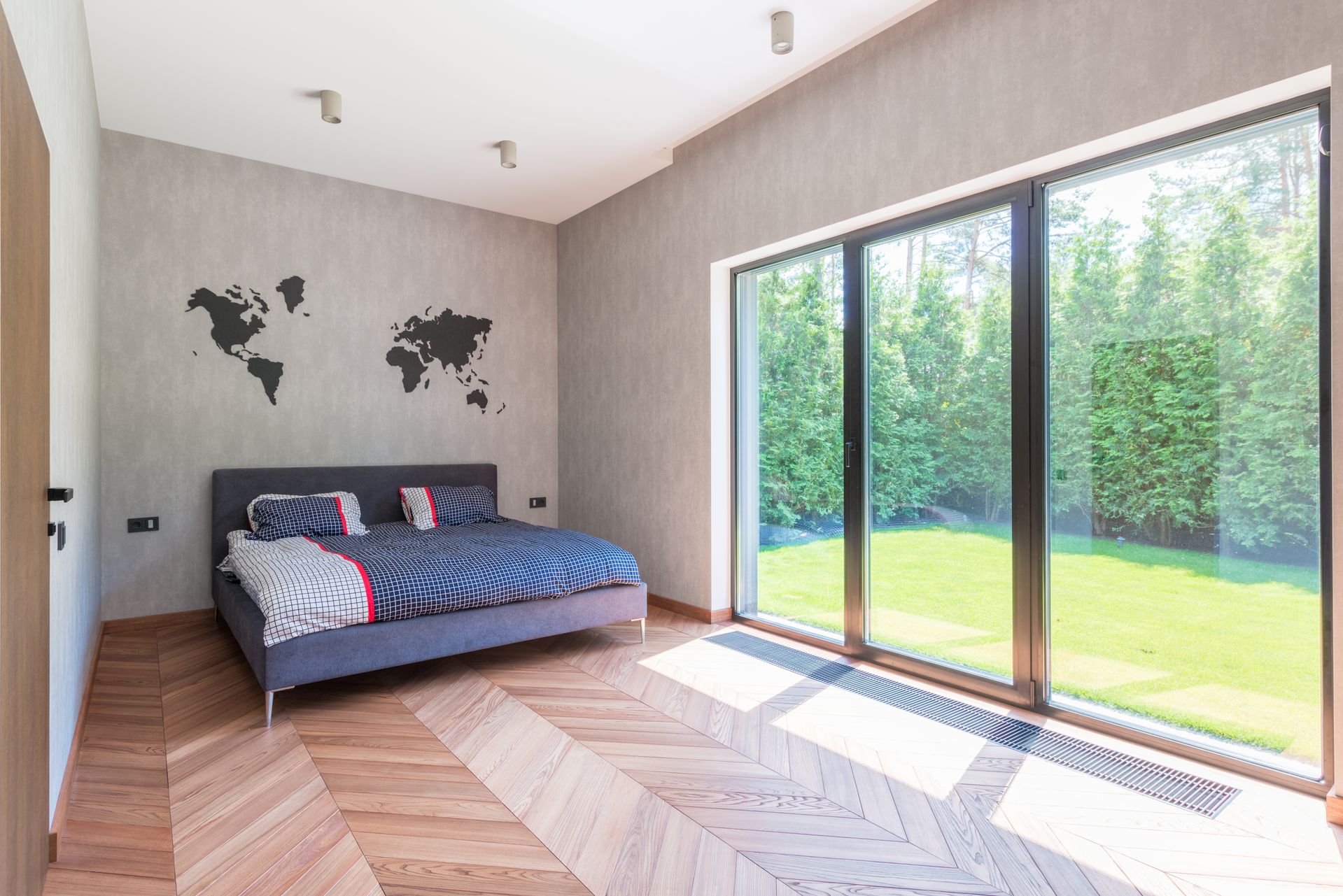
It seems there is an ongoing belief, both among London property owners and sometimes among conservation officers themselves, that there is an inherent conflict between thermal efficiency and good window design. It can be seen where the rationale comes from; back when the thermal break aluminium window frame was still a fairly new technology and had yet to improve upon its design, it was thick and imposing, and getting permission for installing it in a listed property would have been an automatic no. Thankfully, things have changed considerably over the past twenty years, and for most properties in London, the conflict simply isn’t necessary anymore.
The origins of the compromise reputation
Early double-glazed aluminium windows needed thick frames to hold the thermal break and the pane assembly. This resulted in frame widths that seemed overweight and disproportionately large in Georgian terrace windows and Victorian bay windows, which had been constructed using thin wood frames. Planners from conservation areas throughout London rejected them outright, only allowing wood windows glazed singly as a suitable substitute. The reputation for requesting a homeowner to compromise between warmth and aesthetics was rightly earned by the industry back then.
Aluminium systems available today, which come from reputable suppliers, will meet the requirements set by Building Regulation Part L at a face width of 60–80mm, and in the case of slim-profile sliding systems, a stile width of 20mm can be achieved. On the other hand, slim profiles have always been the characteristic feature of timber systems because a timber sash may be produced with a face width of only 44mm with the inclusion of a double-glazed unit.
Decisions that influence thermal performance – and those that don’t
Five technical specifications determine the thermal performance of a window: the material used for the frame and the quality of thermal break (for aluminium windows); the number of glazing panes (double or triple glazing); gas fills; low-E glass coating; and finally, the type of spacer bar. All of the above specifications fall into the realm of engineering choices. In turn, these choices must be distinguished from those made purely for design reasons.
Material coloration, surface finishing, the profile of the frame itself, choice of handles, and glass bar pattern all have absolutely no effect whatsoever on thermal performance. Thus, an anthracite-colored powder coat gives the same result as a white powder coat. A traditional sash window with a profile including molded glazing bars will perform just as well as a more modern version with the same dimensions and profiles. Black interior paint on aluminum will give a U-value identical to natural anodizing. The looks of a window and its energy efficiency are largely unrelated things, and confusing one for the other results in bad choices in both cases.
The implication from a practical perspective is that, for most projects, the aesthetic specification and the performance specification can be separately optimized. Selecting the appropriate color, shape, and surface does not carry any thermal cost. Selecting the appropriate gas fill, glazing, and spacing does not have any aesthetic impact.
When there are still trade-offs to be made
It is also important to consider those cases where a maximum cannot be achieved in terms of performance and aesthetics, rather than exaggerating the idea that there should be no trade-off.
An example would be where an architectural property in London is a listed building or a part of a conservation area, and where the original window had very slim single-glazing. It will be impossible to achieve the double-glazing within the same slim profile; thus, double-glazing is bound to have a marginally thicker meeting rail than the original single-glazed one. In such conservation area works, most authorities are prepared to accept this; however, listed building works require the original to be replaced identically, which means that secondary glazing needs to be installed inside the existing window.
Another area of real trade-off lies in the solar heat gain factor. The low-e coating applied with a view to maximizing the lowest U-value will also minimize the solar heat gain factor. This means that the free solar heat gained during winter from the sun will decrease, thereby reducing the heating load. For south-facing rooms in London, this is particularly relevant as the g-value should be considered along with the U-value. Trying to get the lowest U-value for a south-facing room without considering the g-value could end up yielding a worse performance than if a less aggressive approach had been taken.
The planning position on windows in London conservation areas in 2026
There have been developments in recent years with regard to the planning position on window materials in London conservation areas. Some boroughs are accepting double-glazed timber or slim aluminium windows when the external appearance of the windows (profile depth, finishing, and glazing bar detail) matches the original as closely as possible. However, the previous position that only single-glazed timber would be acceptable has not changed in all London boroughs and still holds for sensitive buildings in certain boroughs. The recommendation is to clarify the position with the borough before specification, rather than assuming what might happen. There are great variations between borough policies, and just a phone call can help avoid bigger problems in the future.
When it comes to historic buildings, secondary glazing is by far the most accepted way of improving the building’s insulation and soundproofing qualities without impacting its exterior. In most cases, no listed building consent is required for carrying out such works, and well-constructed units with slim aluminium frames and high-quality fittings can actually make a noticeable difference.
The practical method of making specifications
One very clear method of doing this would be to separate the frame specification from the glass specification. The frame specification – which would include material, profile, color and finish – would be based on considerations of the urban planning situation, the building type, and the aesthetic requirements of the project. The glass specification within that frame, whether gas-filled, coated with low-e, spacer bar type, and double/triple pane, would be performance optimization and could be carried out without impacting the visual appearance of the frame for almost any frame construction. From our Citi Homes Windows experience, in most projects in London, these two factors would not be limiting each other.