

Every home cook knows the frustration. You buy a new non-stick pan, and within months the coating starts flaking, the base warps under high heat, and food begins sticking to the very surface that promised effortless release. You toss it out, buy another, and the cycle repeats—costing you money, cluttering landfills, and undermining your confidence in the kitchen. Stir-frying, which demands intense heat and rapid movement, punishes inferior cookware faster than almost any other technique.
There is a better path. Professional-grade stir-frying pans and woks, built from robust materials and engineered for decades of daily use, exist for home cooks who refuse to compromise. But true value extends beyond the pan itself. The brands worth your trust stand behind their products with lifetime warranties and risk-free 30-day return policies—guarantees that eliminate buyer’s remorse and signal genuine manufacturing confidence. This guide walks you through everything you need to know: from the materials and construction that define lasting performance, to the warranty and return commitments that protect your investment. By the end, you’ll know exactly how to choose cookware you can pass down to the next generation.
Why a Lifetime Warranty Matters for Your Stir-Frying Pan
In the cookware world, a lifetime warranty means the manufacturer commits to repairing or replacing your pan if it fails due to defects in materials or workmanship—for as long as you own it. This differs dramatically from standard limited warranties, which typically cover only one to five years and often exclude the very issues most likely to arise: warping from thermal stress, handle loosening, or coating degradation. A lifetime warranty on durable cooking utensils isn’t just a marketing phrase; it’s a binding promise that the company expects its product to outlast trends, kitchen renovations, and perhaps even your current home.
Consider what this signals about manufacturing confidence. No company offers to replace a product indefinitely unless it has rigorously tested materials under extreme conditions and knows failure rates are negligible. When a brand backs a stir-frying pan with a lifetime warranty, it’s telling you the metallurgy is sound, the handle attachment won’t fail, and the cooking surface will perform year after year under proper use. That confidence transfers directly to you at the stove.
Now consider the hidden economics of cheap pans. A budget non-stick skillet replaced every 18 months over a 30-year cooking life means roughly 20 pans purchased, discarded, and forgotten. The cumulative cost easily surpasses a single high-quality pan purchased once. More importantly, each replacement cycle resets your learning curve—you never fully adapt to a tool you keep discarding. A lifetime warranty transforms your stir-frying pan from a disposable commodity into a long-term investment, one that improves with use as you develop muscle memory for its weight, balance, and heat response. That’s the difference between owning cookware and truly partnering with it.
Choosing Your Perfect Pan: Materials and Construction
The material your stir-frying pan is made from determines everything—how it heats, how it ages, and whether it will still perform flawlessly a decade from now. Carbon steel stands as the traditional choice for high-heat stir-frying. It’s lightweight enough to toss ingredients with one hand, conducts heat rapidly, and develops a natural non-stick seasoning layer over time that actually improves with every use. Carbon steel also withstands the extreme temperatures stir-frying demands without warping, provided the gauge is thick enough. Look for pans in the 1.5 to 2mm range, which balance responsiveness with structural integrity.
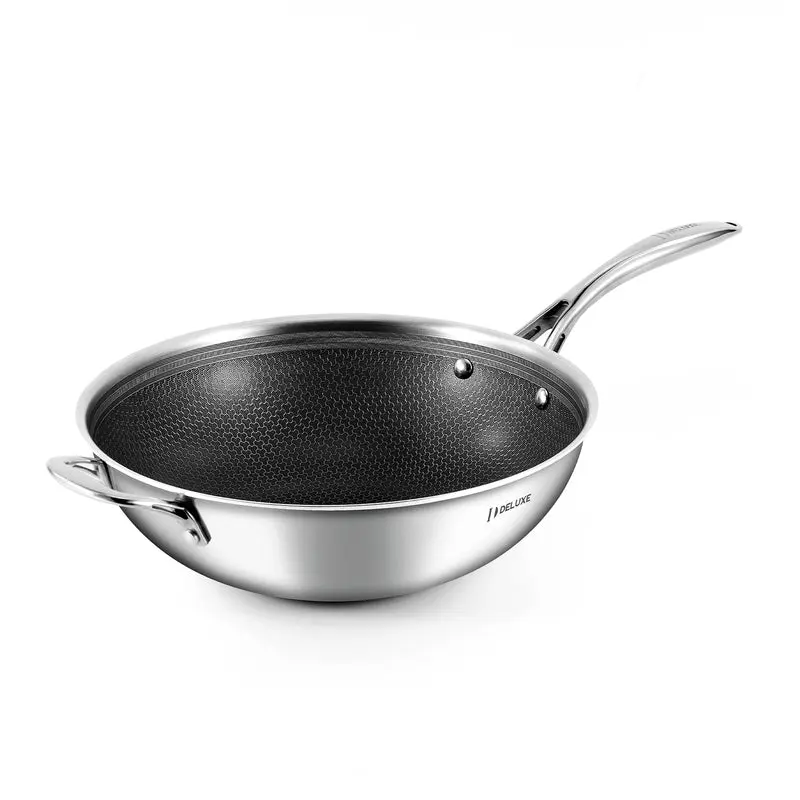
Cast iron offers unmatched heat retention. Once a cast iron pan reaches temperature, it stays there even when cold ingredients hit the surface—a significant advantage for achieving the smoky, charred “wok hei” flavor. The trade-off is weight; a cast iron wok or skillet requires wrist strength and isn’t ideal for the constant tossing motion that defines traditional stir-frying. However, for cooks who prefer a more stationary searing approach, cast iron is virtually indestructible. High-quality clad stainless steel, meanwhile, combines an aluminum or copper core sandwiched between stainless layers, delivering even heat distribution without reactive surfaces. It won’t develop a patina, but it resists corrosion, handles acidic sauces without imparting metallic flavors, and transitions seamlessly from stovetop to oven.
Beyond material, construction details separate lasting cookware from disposable products. Riveted handles distribute stress across the pan body and resist loosening over thousands of heating cycles—spot-welded handles eventually fail under thermal expansion and contraction. A flat, thick base resists warping on modern induction and electric burners, while a gently sloped sidewall facilitates the tossing motion central to stir-frying. Oven-safe construction up to high temperatures adds versatility, letting you finish dishes under a broiler or use the same pan for roasting. Match your material choice to your reality: if you stir-fry daily on a gas burner, carbon steel is your natural partner. If you cook on induction and want zero maintenance, clad stainless steel serves you best. If weekend slow-cooking and searing dominate your routine, cast iron rewards your patience.
Spotlight on Woks: The Ultimate Stir-Fry Specialist
The wok isn’t just a pan shape—it’s a cooking philosophy. Its concave design creates multiple heat zones simultaneously: scorching hot at the base for searing proteins, progressively cooler up the sides for parking vegetables that need gentler treatment. This built-in temperature gradient lets you cook an entire stir-fry in sequence without removing ingredients from the pan. Traditional round-bottom woks sit perfectly in the high-BTU ring burners of commercial kitchens, allowing the cook to swirl and tilt with precision. For home stoves, a flat-bottom wok makes more practical sense. It maintains stable contact with electric, induction, and standard gas burners while preserving enough curvature in the sidewalls to enable proper tossing technique.
Carbon steel woks require an initial seasoning process—heating thin layers of oil past their smoke point until they polymerize into a dark, slick coating. This patina is self-reinforcing: every stir-fry adds another microscopic layer, making the surface progressively more non-stick without any synthetic chemicals. If you accidentally strip the seasoning through over-scrubbing or an acidic sauce, you simply re-season and continue. The wok forgives mistakes and rewards consistent use. This is precisely where a lifetime warranty transforms the ownership experience. Knowing the manufacturer stands behind the pan indefinitely frees you to push boundaries—crank the heat higher, experiment with unfamiliar techniques, and learn through doing rather than tiptoeing around a fragile tool. A warranted wok becomes a training partner, not a liability.
Understanding and Utilizing Hassle-Free Return Policies
Buying cookware online presents a unique challenge: you can’t feel the weight in your hand, test the balance during a toss, or gauge how the handle sits against your palm. A 30-day return policy exists precisely to bridge this gap. Think of it as a no-risk audition period—the pan comes into your kitchen, performs under real conditions, and earns its permanent spot on your rack or goes back without penalty. This safety net is especially critical for stir-frying pans, where ergonomics and heat behavior matter far more than appearance on a shelf.
A genuinely hassle-free return policy has specific hallmarks that distinguish it from the fine-print traps many retailers set. Free return shipping means you aren’t penalized for discovering the pan doesn’t suit your stove or technique. No restocking fees ensure you receive every dollar back, not a discounted refund that quietly punishes you for exercising your right. A full refund processed promptly—not store credit forced upon you—completes the picture. Before purchasing, read the return terms carefully. If a brand buries exceptions in dense legal language or requires the pan to arrive unused and in original packaging, that’s not confidence in their product; that’s a barrier designed to discourage returns.
During your trial period, put the pan through meaningful tests rather than letting it sit in the box. Cook a high-heat stir-fry on day one to assess how quickly and evenly the surface reaches temperature. Pay attention to how the handle feels after five minutes over a flame—does it stay cool, or does heat creep uncomfortably toward your grip? Toss ingredients to evaluate balance and weight distribution. Try deglazing with a splash of vinegar or citrus to see how the surface responds to acidity. These real-world trials reveal whether the pan matches your cooking rhythm. Brands that offer transparent, easy 30-day returns are telling you something important: they’ve already done this testing internally and expect you to reach the same conclusion they did—that the pan belongs in your kitchen permanently.
Your Action Plan: Selecting and Caring for Your Investment
Knowing what makes a great stir-frying pan is only half the equation. Turning that knowledge into a smart purchase—and then protecting that purchase for decades—requires a deliberate approach. Here’s your roadmap from research to long-term ownership.
Start by honestly assessing your cooking habits. How often do you stir-fry each week? What type of stove do you use? A gas burner opens the door to round-bottom woks and carbon steel that thrives on open flame, while induction cooktops require flat-bottom pans with ferromagnetic properties. If you stir-fry three or more times weekly, a dedicated carbon steel wok makes sense. If you need one pan to handle stir-fries, sauces, and oven finishing, clad stainless steel offers broader versatility.
Next, research brands specifically known for backing their stir-frying pans and woks with lifetime warranties. Companies like Deluxe Cookware have built their reputation around this kind of long-term commitment to quality. Don’t settle for vague “satisfaction guarantees”—look for explicit written commitments covering defects in materials and workmanship for the life of the product. Once you identify candidates, read the warranty terms line by line. Confirm what’s covered (warping, handle failure, delamination) and what’s excluded (cosmetic wear, misuse). Simultaneously verify the return policy: confirm free return shipping, zero restocking fees, and a full monetary refund rather than forced store credit. Purchase from the brand’s official retailer or website to ensure your warranty registration is clean and undisputed.
Once your pan arrives, proper initial care sets the foundation for decades of performance. Carbon steel woks and pans need seasoning before first use—wash off any factory coating, dry thoroughly over heat, then apply a thin layer of high-smoke-point oil and heat until it polymerizes into a dark film. Repeat two or three times to build a base layer. Clad stainless steel needs no seasoning but benefits from preheating before adding oil to minimize sticking. Cast iron follows a similar seasoning protocol to carbon steel but tolerates thicker oil applications due to its porous surface.
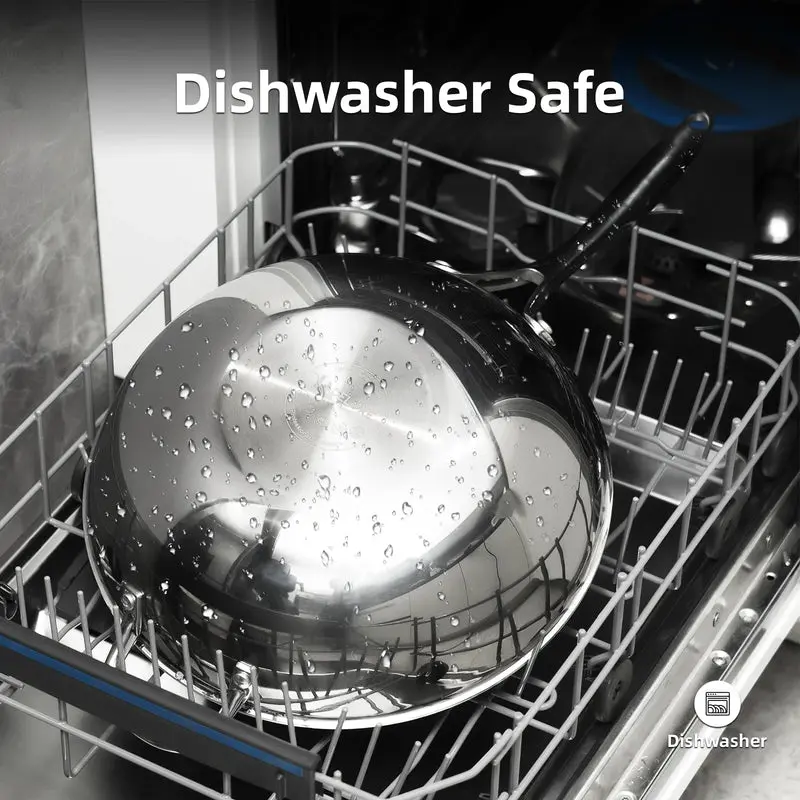
Daily maintenance directly affects your warranty standing. Use wooden, silicone, or bamboo utensils on seasoned surfaces to preserve the patina. Avoid soaking carbon steel or cast iron—rinse while warm, use a bamboo brush or chain-mail scrubber for stuck bits, and dry immediately over low heat before applying a whisper-thin oil coat for storage. For stainless steel, a gentle dish soap and soft sponge suffice; Bar Keeper’s Friend handles stubborn discoloration without damaging the surface. Store pans with protective liners between them if stacking, preventing scratches that could become warranty gray areas. Finally, keep your purchase receipt and warranty registration accessible. If you ever need to initiate a claim, having documentation ready streamlines the process—most reputable brands resolve claims within days when proof of purchase is clear. Knowing this process exists in the background lets you cook with full commitment, pushing your pan to its limits exactly as it was designed to be used.
Invest Once in Cookware That Lasts a Lifetime
The best stir-frying pan or wok isn’t simply the one with the highest heat tolerance or the most impressive material spec sheet—it’s the one that pairs exceptional durability with unwavering brand commitment. When robust construction meets a lifetime warranty and a genuinely hassle-free 30-day return policy, you’re no longer gambling on cookware. You’re making a deliberate, informed investment in a tool that will sharpen your skills, reward your technique, and remain a reliable kitchen companion through thousands of meals.
It’s time to elevate your expectations. Stop accepting disposable pans as inevitable and start demanding heirloom-quality cooking companions that earn their place on your stovetop permanently. The right stir-frying pan, backed by guarantees that demonstrate real manufacturing confidence, saves you money over decades, keeps failed cookware out of landfills, and transforms nightly cooking from a chore into a craft you genuinely enjoy. Choose once, choose well, and cook with the freedom that comes from knowing your investment is protected for life.