

Investing in new equipment is a major decision for any business, especially in the competitive world of custom apparel. A DTF printer can unlock new revenue streams, but it’s essential to understand the numbers. If you’re considering buying a DTF printer, your main question is likely: “When will I see a return on my investment?”
This post will break down the key factors that influence the profitability of a DTF printer. We’ll explore the initial costs, ongoing expenses, and how to calculate your break-even point to help you make an informed decision for your business.
Understanding the Initial Investment
Your first step in calculating ROI is to tally up the upfront costs. This isn’t just the price tag of the printer itself; several other components are essential for a complete DTF setup.
What to Factor Into Your Startup Costs:
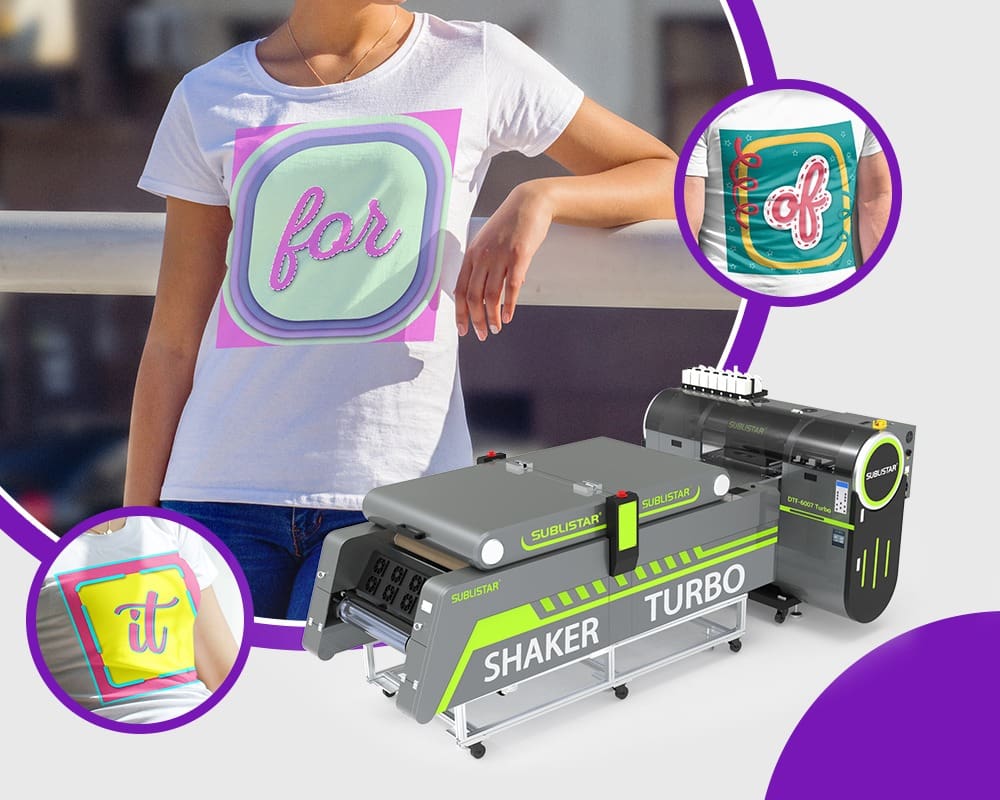
DTF Printer: The core of your operation. Prices can vary significantly based on speed, size, and features. An industrial model like the DTF-6007 Turbo, designed for high-volume output, will have a higher initial cost than a smaller, entry-level machine.
Powder Shaker and Dryer: An essential companion to the printer, this machine applies and cures the adhesive powder. Industrial printers often come bundled with a shaker, like the DTF-6007 Turbo combo.
Heat Press Machine: You’ll need this to transfer the finished designs from the film to the garment.
RIP Software: Raster Image Processing (RIP) software is crucial for color management and print quality. Some printers include this, while others require a separate purchase.
Initial Consumables: To get started, you’ll need a supply of DTF ink, transfer film, and adhesive powder. Many suppliers offer a starter kit with a new printer purchase.
Calculating Ongoing Operational Costs
Once your setup is complete, you’ll have recurring expenses. Accurately tracking these is vital for determining your profit margin on each item you sell.
Key Operational Expenses:
Ink: Your most frequent consumable cost. The price per liter varies, and consumption depends on the complexity and size of your designs.
Film: DTF transfer film is sold in rolls, and its cost should be calculated per print.
Adhesive Powder: This is the “glue” that bonds the ink to the fabric. Like ink and film, its cost needs to be factored into each print job.
Maintenance: While modern printers like the DTF-6007 Turbo feature automatic cleaning systems to minimize downtime, you should still budget for routine maintenance and potential replacement parts.
Utilities: Don’t forget electricity. An industrial printer and its accompanying shaker and oven can have significant power requirements. The DTF-6007 Turbo’s oven, for example, has an 8000W power rating.
Labor: Your time, or the time of your employees, is a cost. Factor in the time spent on design, printing, and pressing.
How to Calculate Your Break-Even Point
Your break-even point is the moment you’ve made enough profit to cover your initial investment. To find it, you need to determine the profit you make on each item sold.
Simple Profit Calculation:
Cost Per Print: Add up the cost of ink, film, and powder for a single design (e.g., a standard A3-sized print).
Total Cost Per Item: Add the cost per print to the cost of the blank garment (e.g., a t-shirt).
Profit Per Item: Subtract the total cost per item from your selling price.
Example:
Cost of blank t-shirt: $5.00
Cost of ink, film, and powder per print: $1.50
Total cost: $6.50
Selling price: $25.00
Profit per shirt: $18.50
With this profit-per-item figure, you can calculate how many items you need to sell to recoup your initial investment.
Break-Even Calculation:
Total Initial Investment / Profit Per Item = Number of items to sell
If your initial setup cost was $20,000, using the example above:
$20,000 / $18.50 = 1,082 shirts
You would need to sell approximately 1,082 shirts to break even. If you sell 100 shirts a week, you could reach profitability in about 11 weeks.
Accelerate Your Path to Profitability
Investing in a DTF printer is a significant step, but with a clear understanding of the costs and a solid business plan, it can be a highly profitable venture. By carefully calculating your expenses and pricing your products strategically, you can create a clear roadmap to achieving a positive return on investment.
Are you ready to explore how an industrial DTF printer can scale your production and boost your profits? Contact our team today to get a custom quote and configuration for your business needs.