
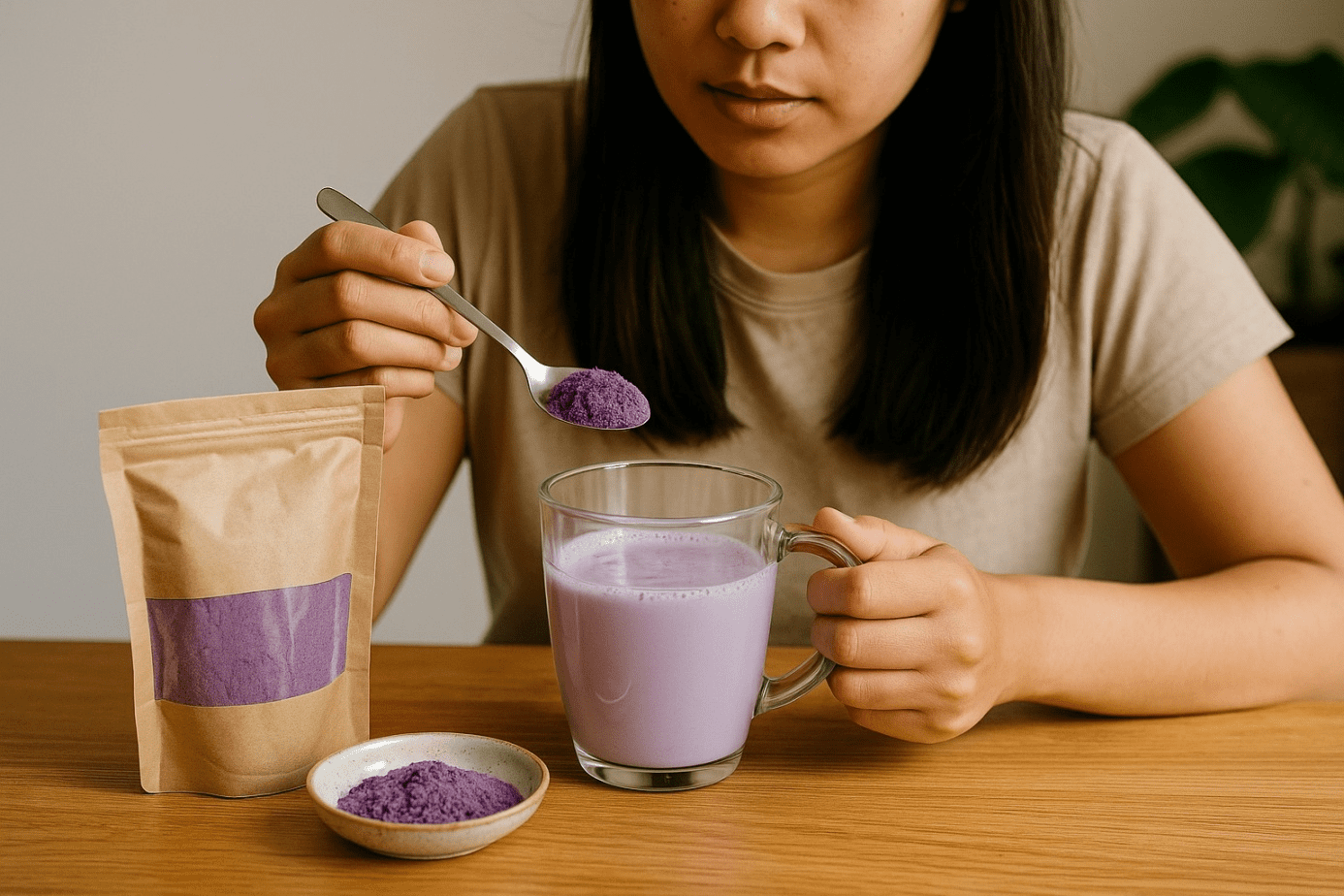
With its striking violet hue and sweet, nutty flavour, ube powder has taken the culinary world by storm but it’s more than just a trend. Whether you’ve spotted it in a vivid latte, swirled through an ice cream, or as the star of a soft cake, this humble purple yam in powdered form holds more than visual charm. Used traditionally in Filipino cuisine, it is now catching the attention of health-conscious food lovers across the globe. But what exactly makes ube powder so special? Is it only for sweets? Is it healthy? Let’s peel back the layers of this underground gem and find out how this seemingly magical powder can elevate your cooking and possibly your health.
What exactly is ube powder and how is it made?
Ube powder comes from Dioscorea alata, a purple yam native to Southeast Asia, particularly the Philippines. Unlike taro or sweet potato, ube boasts a naturally sweet taste with subtle notes of vanilla and nuttiness a flavour often described as a cross between white chocolate and coconut with a hint of earthiness. Once harvested, the ube is peeled, steamed or boiled, mashed, then dehydrated and finely ground into a shelf-stable powder. This drying process ensures it retains much of its nutritional value and signature colour without the need for preservatives. In this concentrated form, a spoonful of powder can be rehydrated or mixed directly into recipes, making it incredibly versatile. Whether you’re whipping up traditional ube halaya or modern vegan doughnuts, this ingredient slots in seamlessly.
Not only is the powder a practical way to enjoy ube year-round, but it also avoids the perishability of the fresh tuber, which can be difficult to source outside Asia. The rise of freeze-dried and air-dried options also improves texture and taste integrity. Using it is simple: just mix with a bit of warm water or milk to rehydrate and blend into your recipe of choice. This ease of use combined with the powder’s brilliant pigmentation makes it a favourite for both amateur cooks and professional chefs. But beyond its practicality, it’s the health perks that truly elevate ube powder from colourful novelty to nutrient-dense superfood.
Is ube powder healthy or just hype?
Let’s get straight to it yes, ube powder can be part of a healthy diet, especially when used with intention. Rich in antioxidants, particularly anthocyanins (the pigment that gives it that iconic purple shade), ube powder may help support cellular health, combat oxidative stress, and promote heart wellness. Here’s a quick breakdown of its nutritional benefits:
- Antioxidants (especially anthocyanins)
- Vitamin C
- Vitamin A
- Potassium
- Fibre
- Low glycaemic impact
One of the standout features is its high antioxidant load. These compounds not only protect your cells from damage but may also slow down signs of ageing and inflammation. Compared to other root vegetables, ube stands out for its striking anthocyanin content, which has been linked in studies to improved blood circulation and reduced cholesterol levels. If you’re wondering, “is ube powder gluten free?” the answer is yes. It contains no gluten, making it a suitable option for coeliac diets or those with gluten sensitivity. Its naturally sweet profile also means less added sugar is needed in recipes. That’s a huge win for those watching their sugar intake without compromising on taste. And for vegan eaters, it’s completely plant-based and often used in dairy-free desserts. So while yes, it’s popular on Instagram, the health benefits are far from aesthetic fluff.
How do you use ube powder in everyday cooking?
Despite its exotic origins, incorporating ube powder into your daily meals is surprisingly easy. From sweet to savoury, its applications are wide-ranging. Whether you want to make a simple smoothie or an elaborate layered cake, the key is understanding how ube behaves once hydrated. Start with small amounts, as its colour and flavour are both intense. A teaspoon can transform a recipe both visually and in taste. Some of the most popular uses include:
Sweet applications
Ube shines in desserts naturally. Think ube cheesecake, ube mochi, ube pancakes, or the viral ube crinkle cookies. Its powder form allows for a controlled addition of colour and flavour, avoiding the graininess that mashed yam sometimes brings. Using ube powder in baking is ideal as it mixes well with dry ingredients and hydrates during the baking process. If you’re after vegan recipes with ube powder, swap dairy with coconut milk a natural partner for its taste.
Savoury twists
Surprisingly, ube pairs well with savoury dishes too. In Filipino cuisine, it’s not unusual to find it combined with cheese or coconut in rice-based meals. Ube mashed potatoes, purple gnocchi, or even an ube hummus could add a colourful flair to your dinner. Don’t be afraid to get creative. Some chefs are now using ube powder in burger buns, tortillas and pasta turning everyday foods into eye-catching plates with subtle sweetness.
Storage and shelf life: how to keep your ube powder fresh
Like many powdered foods, ube powder must be stored correctly to maintain its quality. Moisture is the enemy here. Always keep it in an airtight container away from direct sunlight and heat sources. A cool, dark pantry or cupboard is ideal. Properly stored, it can last up to a year but freshness in flavour and colour tends to peak in the first 6–8 months. If the powder clumps, smells off, or loses vibrancy, it’s best to replace it.
For frequent users, consider portioning into smaller jars to avoid unnecessary exposure every time you open the container. Rehydrated ube should be used within 2–3 days and refrigerated. One key tip always check the origin and whether additives or colouring agents are used. The best ube powders are 100% pure, organic, and free from synthetic dyes.
Is ube the same as taro or purple sweet potato?
This question pops up often. Despite their similar purple hues, ube, taro and purple sweet potato are entirely different botanically and taste-wise :
- be: Sweet, nutty, vanilla-like. Comes from Dioscorea alata. Used mostly in Filipino sweets
- Taro: Earthy, less sweet. Often used in savoury Asian dishes like taro chips or bubble tea
- Purple sweet potato: Denser, mildly sweet. More starchy. Found in Hawaiian and Okinawan cooking
Visually they can be confused, but once tasted, their differences become clear. If you’re aiming to recreate authentic Filipino desserts or want the health properties of anthocyanin-rich roots, ube powder is the best choice.
The final scoop
Ube powder is more than a pretty face. It blends vibrant aesthetics, rich tradition, and genuine nutritional value into a single ingredient. Whether you’re a seasoned baker, curious foodie or someone exploring healthier ingredients, ube powder adds a touch of magic and a whole lot of taste to your kitchen. What will you make first?
