
In the modern age of wireless audio, not all speakers are created equal. While many portable and Bluetooth-enabled speakers promise thumping low-end, very few deliver truly controlled, deep, and natural bass. For music enthusiasts and audiophiles, the quest for the best bass wireless speakers is about more than just volume it’s about precision, clarity, and an immersive listening experience.
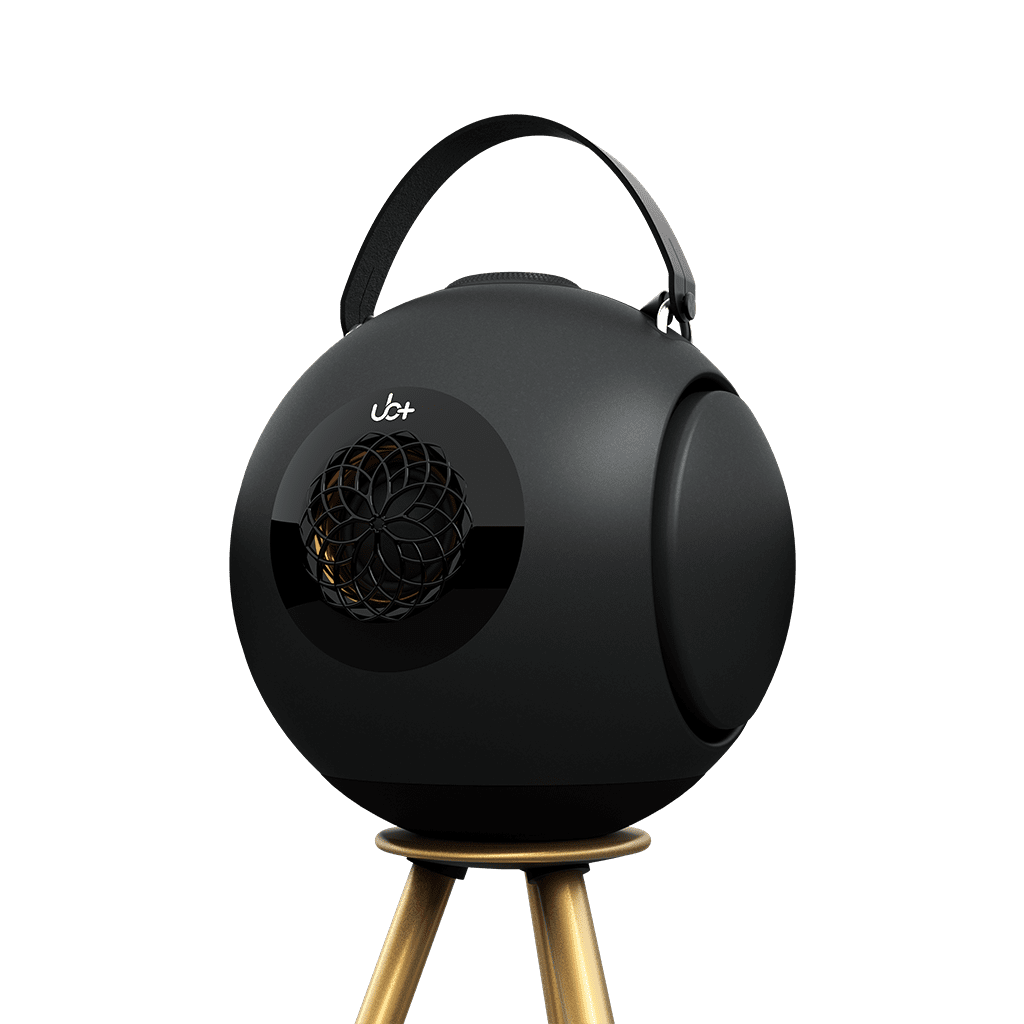
The UB+ dB1 DOUBLEBASS exemplifies this approach. It is a wireless speaker engineered around physics-driven bass, combining spherical acoustic design, dual symmetrical passive radiators, and high-fidelity driver engineering. The result is a portable speaker that produces bass you don’t just hear you feel.
In this article, we will explore what makes a speaker deliver the best bass, the challenges of low-frequency reproduction, and why the dB1 DOUBLEBASS is leading a new standard in wireless audio.
Understanding the Quest for the Best Bass
Bass frequencies are the foundation of music. A well-reproduced low end provides energy, rhythm, and depth, shaping the entire listening experience. However, reproducing these frequencies in portable wireless speakers is inherently difficult.
- Size constraints: Low frequencies require significant air movement. Smaller enclosures often cannot move enough air to generate deep bass naturally.
- Driver limitations: Standard drivers can reach distortion when pushed to produce sub-bass.
- Acoustic interference: Rectangular or box-shaped enclosures create standing waves, reflections, and vibrations that muddy the bass.
Many portable speakers attempt to overcome these challenges with software—DSP bass boost or “enhanced low end” modes. While effective for marketing, these methods often result in unnatural, fatiguing sound.
True bass excellence comes from engineering the sound physically, not digitally. This is why understanding speaker design, enclosure physics, and driver configuration is critical when searching for the best bass wireless speakers.
The Helmholtz Resonator: A Classical Principle Applied to Modern Speakers
The UB+ dB1 DOUBLEBASS is built around a spherical acoustic chamber inspired by the Helmholtz resonator principle, originally developed by Hermann von Helmholtz.
In essence, a Helmholtz resonator consists of a cavity of air with a controlled opening. When air moves in and out of the opening, specific low frequencies are naturally reinforced. This principle has been applied in bass reflex ports, architectural acoustics, and other audio systems.
What sets the dB1 apart is its holistic application: the entire spherical enclosure functions as a resonant chamber.
- Even air pressure distribution: Low-frequency energy is spread evenly inside the sphere.
- Reduced standing waves: Internal reflections are minimized, reducing distortion and harmonic interference.
- Cleaner low-end reproduction: Vocals and instruments retain natural timbre alongside deep, controlled bass.
The sphere is not merely a design choice it is a critical functional element of the speaker, shaping every note and delivering bass with unprecedented precision.
Dual Passive Radiators: Symmetrical Motion for Powerful Bass
Unlike most portable speakers, which rely on a single port or passive radiator, the dB1 DOUBLEBASS uses two large passive radiator plates mounted on opposite sides of the enclosure.
When music plays, the centrally placed mid-bass driver fires into the spherical chamber, generating internal air pressure. This pressure pushes both passive radiators outward in perfect symmetry.
The benefits include:
- Self-cancelling vibration: Cabinet shake is minimized because the opposing motion balances mechanically.
- Maximized acoustic energy: More energy is converted to bass sound rather than wasted in vibrations.
- Deep, clean bass: Low frequencies remain tight and controlled without muddiness.
This symmetrical dual-radiator configuration is a hallmark of the dB1 and a primary reason it is considered among the best bass wireless speakers.
Mechanical Bass Amplification Through Surface Area
The combined passive radiator surface area of the dB1 is 3.5× larger than the central woofer. This design allows the speaker to move a large volume of air efficiently, producing authoritative low frequencies without pushing the driver beyond its limits.
Traditional speakers often try to produce bass by increasing driver power, which can lead to distortion or “boomy” sound. The dB1, in contrast, allows air itself to do the work, creating bass that feels physical, natural, and effortless.
High-End Driver Engineering
The dB1 DOUBLEBASS is equipped with a 4.5-inch mid-bass driver engineered to audiophile standards:
- Oversized 90 mm neodymium magnet for strong magnetic force
- 35 mm long-stroke voice coil for large excursion
- Up to 20 mm piston movement for precise low-frequency motion
- Aluminium shorting ring to reduce distortion
- Wide 18 mm surround for controlled linear motion
This combination ensures clean, distortion-free bass even at high volumes something most consumer-grade Bluetooth speakers cannot achieve.
Dual Driver Configuration for Harmonic Stability
By distributing the acoustic load across two drivers, the dB1 achieves:
- Lower distortion
- Improved headroom
- Preserved midrange clarity
- Better instrument separation
Balanced driver motion ensures the bass is authoritative without overpowering vocals or harmonic details, maintaining the musicality of every track.
Phase Coherence and Imaging
Bass accuracy also directly affects stereo imaging. Out-of-phase low frequencies can collapse the soundstage, making instruments feel indistinct or unnatural.
The symmetrical driver and passive radiator design of the dB1 promotes coherent wave propagation, enhancing stereo performance and spatial depth. Paired units create an expanded soundstage for immersive listening.
DSP as Structural Support
Unlike many Bluetooth speakers that rely heavily on DSP for tonal shaping, the dB1’s DSP serves primarily as a monitoring and protection system.
- Maintains linearity
- Protects components from overload
- Preserves the natural tonal balance
This ensures that the speaker’s physics-driven bass remains intact without artificial enhancement.
Performance Across Listening Environments
Indoor and outdoor environments affect bass perception differently:
- Indoor: Reflections from walls enhance low-frequency energy.
- Outdoor: Open spaces reduce boundary reinforcement, making bass harder to perceive.
The dB1’s spherical acoustic chamber generates controlled air pressure, preserving low-frequency presence whether indoors or outdoors.
Connectivity and Playback
The dB1 provides versatile options for high-quality playback:
- Bluetooth 5.3: Stable connection with low latency
- Wired and TF card input: Alternative options for consistent performance
- Stereo pairing: Expand soundstage with multiple units
Stable signal transmission ensures dynamic details remain intact, reinforcing its position as one of the best bass wireless speakers.
Power Delivery and Listening Time
Generating deep bass requires energy. The dB1 features efficient power management, offering:
- Up to 20 hours of playback
- Sustained dynamic performance
- Loud, controlled bass without driving drivers beyond limits
This allows long listening sessions without fatigue.
Comparison Table: UB+ dB1 vs Popular Brands
| Feature | UB+ dB1 DOUBLEBASS | JBL Portable Speakers | Bose Portable Speakers |
| Enclosure Shape | Spherical acoustic chamber | Rectangular | Rectangular |
| Bass Technology | Dual symmetrical passive radiators | Single radiator or port | Single radiator |
| Bass Strategy | Mechanical / physics-driven | DSP bass boost | DSP tuning |
| Radiator Surface Area | 3.5× woofer | ~1× woofer | ~1× woofer |
| Driver Components | Hi-Fi grade | Consumer grade | Consumer grade |
| Cabinet Vibration | Self-cancelling symmetry | Moderate | Moderate |
| Listening Fatigue | Low | Moderate | Moderate |
| Sound Philosophy | Physics-driven | Loudness-focused | Balanced consumer tuning |
The comparison clearly demonstrates the technical and acoustic superiority of the UB+ dB1.
What to Look for in the Best Bass Wireless Speakers
When choosing your next high-performance Bluetooth speaker, consider the following:
- Enclosure Geometry: Shapes like spheres or curved surfaces reduce standing waves.
- Air Volume Management: Proper chamber design allows consistent bass pressure.
- Driver Quality: High-excursion drivers with quality magnets and voice coils produce clean sound.
- Resonance Control: Symmetrical passive radiators or anti-vibration designs prevent cabinet shake.
- Phase Alignment: Proper driver positioning ensures accurate stereo imaging.
The UB+ dB1 DOUBLEBASS meets all these criteria, making it a reference point for the best bass wireless speakers category.
Conclusion
For music enthusiasts and audiophiles, the search for the best bass wireless speakers ends with physics-driven design, precision engineering, and thoughtful acoustic architecture.
The UB+ dB1 DOUBLEBASS demonstrates how a spherical enclosure, dual symmetrical passive radiators, and high-end drivers can deliver deep, clean, and controlled bass without resorting to digital tricks. With low distortion, stable stereo imaging, and consistent performance across environments, it redefines what portable wireless audio can achieve.
Experience the UB+ dB1 DOUBLEBASS today:
https://ub-plus.com/products/db1-doublebass