

Bringing a newborn home is one of life’s most joyful moments — and one of its most overwhelming. Suddenly, every shelf in the baby store demands your attention, and every product promises to be the one thing your child truly needs. For most new parents, the sheer volume of choices quickly transforms excitement into exhaustion. Baby gear, in particular, raises a persistent question: how do you invest wisely when your child’s needs will change dramatically within months?
At the heart of this dilemma sits a deceptively simple piece of equipment: the baby swing. Done right, baby swings offer far more than a few minutes of hands-free relief. Modern designs can adapt from the earliest newborn days through toddlerhood, delivering both immediate comfort and lasting value. But not all swings are created equal, and safety can never be treated as an afterthought.
This article is your practical roadmap. Whether you’re evaluating newborn swing safety standards for the first time or trying to decide between a compact portable model and a full-featured multi-stage unit, you’ll find clear, actionable guidance here. We’ll walk through what safety certifications actually mean, which adaptable features are worth paying for, and how to match a swing to your family’s real-world lifestyle — so you can make a confident, well-informed choice for your growing child.
Understanding Baby Swing Safety: A Non-Negotiable Priority
When it comes to baby gear, safety isn’t a feature — it’s the foundation. Newborns spend significant time in swings during their earliest, most vulnerable weeks, which makes newborn swing safety a topic every parent must take seriously before making a purchase. A swing that looks appealing on a store shelf or in an online listing can still harbor real risks if it hasn’t been properly tested or certified.
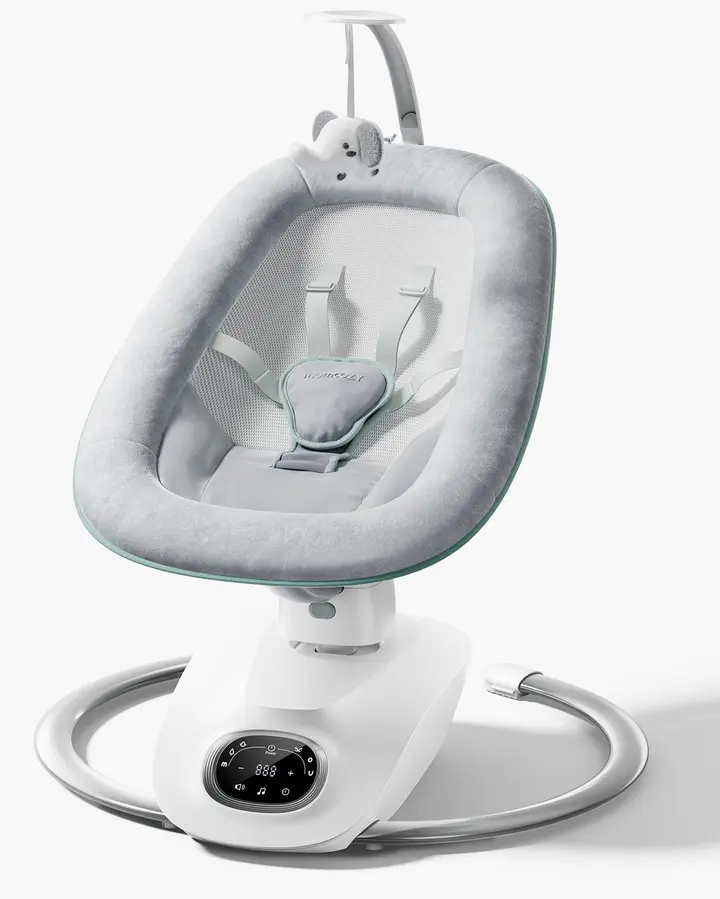
Two standards worth knowing are ASTM International and the Juvenile Products Manufacturers Association (JPMA). ASTM sets the technical performance and safety benchmarks for infant swings, while JPMA certification indicates a product has been independently tested against those standards. Always look for these labels before buying. Beyond certifications, common hazards to watch for include recline angles that are too upright for newborns (which can compromise airway positioning), poorly stitched harnesses that loosen over time, and frames with unstable bases that tip when a child shifts weight.
Key Safety Features Every Parent Must Verify
Before committing to any swing, check these specific features in person or through verified product documentation. A five-point harness — shoulder straps, waist straps, and a crotch strap — is essential for keeping your baby securely positioned through every swing cycle. Avoid models that offer only a basic lap belt. Anti-slip feet or a wide, weighted base prevent the entire unit from sliding or tipping on hardwood or tile floors. Weight limits matter too: always confirm the swing supports your baby’s current weight and has enough headroom for near-term growth. Finally, an automatic shut-off feature protects against unattended use and motor burnout. Together, these elements don’t just reduce risk — they build the consistent, reliable environment that helps newborns sleep safely and parents breathe easier.
The Adaptability Advantage: Baby Swings That Grow With Your Child
Every parent has experienced the sting of outgrown baby gear — a bouncer retired after three months, a rocker gathering dust in the corner. Adaptability in baby swings directly addresses this frustration by extending a product’s useful life far beyond the newborn phase. Rather than purchasing separate pieces of equipment for each developmental stage, parents can invest in a swing designed to evolve alongside their child, delivering genuine cost-effectiveness without sacrificing comfort or safety.
At its core, adaptability means adjustable recline positions that support a flat sleeping angle for newborns and transition to a more upright seat as your baby gains head and core control. It also means accommodating growing weight ranges — ideally from around 5 pounds at birth up to 30 pounds or more in toddlerhood. Multi-stage swings often include removable head and body inserts that cushion smaller infants and detach as a child fills out the seat naturally. For families watching their budget, a 2-in-1 swing that functions both as a swing and a stationary bouncer can replace two separate purchases entirely.
Portability adds another dimension to this value equation. A portable swing that folds flat or disassembles quickly isn’t just convenient for travel — it moves with your family through different rooms, different homes, and different daily routines. Whether you need soothing motion in the living room during the day or a calming presence in the bedroom at night, a portable design removes the logistical friction that makes parenting harder than it needs to be.
Portable and Multi-Function Designs
The most practical multi-function swings combine a swing mode with a detachable seat that doubles as an independent bouncer or rocker. This design lets parents use the motorized swing arc when active soothing is needed and switch to the lightweight bouncer seat for quieter moments or travel. Look specifically for models where the seat attachment mechanism is secure and tool-free — both for ease of daily use and to eliminate loose hardware that could pose a hazard. Compact, lightweight frames with fold-flat capability are worth prioritizing if you live in a smaller home or expect to move the swing frequently. Some portable swing models weigh under 10 pounds, making them genuinely one-handed to carry. When evaluating these designs, confirm that portability hasn’t compromised structural stability — a wide footprint and rubberized feet remain essential regardless of how lightweight the frame is.
Step-by-Step Guide to Choosing Your Ideal Baby Swing
Narrowing down your options becomes far less stressful when you approach the decision with a clear, structured process. Start by assessing your child’s current age and weight alongside realistic projections for the next 12 to 18 months. A newborn at 7 pounds will grow quickly, so a swing with a generous upper weight limit — 30 pounds or more — gives you room to delay the next gear purchase without compromising fit or safety. Check whether the manufacturer lists a minimum weight as well, since some full-featured swings aren’t recommended for babies under 8 pounds without additional infant inserts.
Next, verify safety certifications before anything else. Look for ASTM compliance and JPMA certification on the product label or in the official product specifications. If neither is listed, that’s a meaningful red flag. Once you’ve confirmed certification, examine the harness system in person when possible — pull gently on each strap point to test stitching integrity, and confirm the buckle release requires deliberate adult pressure rather than a casual bump. This step alone eliminates a significant number of otherwise attractive-looking options.
From there, test the adjustability features directly. Recline the seat through all available positions and confirm the flattest angle genuinely supports a newborn’s airway. Toggle through speed settings to make sure transitions between them are smooth rather than jarring. If the swing includes a detachable bouncer seat, attach and remove it several times to gauge how intuitive and secure the mechanism feels under real use conditions.
Consider your home’s layout and your daily routine before finalizing your choice. Measure the floor space available in the rooms where you’ll use the swing most, then compare those dimensions against the swing’s footprint. If you frequently move between rooms or travel, weigh the folded dimensions and total unit weight as seriously as any feature. Finally, read verified purchase reviews specifically for long-term feedback — parents who’ve used a swing for six months or more will surface durability issues and motor reliability concerns that no product listing ever mentions.
Top Recommendations: Safe and Adaptable Baby Swings Reviewed
With safety certifications confirmed and adaptability criteria in mind, narrowing your shortlist becomes a matter of matching swing categories to your family’s specific situation. The market currently offers three types of swings that consistently stand out for combining robust safety construction with meaningful growth flexibility. Each addresses a different set of parent priorities, so understanding their strengths helps you decide which direction fits your household best.
Full-size multi-stage swings are the most feature-rich option and best suited for families with dedicated nursery or living room space. These models typically cover the widest weight range, include the most recline positions, and offer the greatest variety of built-in sounds and motion patterns. Their larger footprint is the main trade-off, but for parents who won’t be moving the unit frequently, the extended useful life — often from birth through 30 pounds — justifies the investment. Safety construction on full-size models tends to be more substantial, with wider bases and heavier frames that resist tipping even as an active infant shifts their weight.
Lightweight convertible swings occupy the middle ground, balancing feature depth with practical portability. These models sacrifice some structural bulk to stay under 15 pounds, making them manageable for room-to-room movement without a full fold-down process. Brands focused specifically on the mother-and-infant space — Momcozy among them — have developed convertible designs that maintain consistent safety standards while meaningfully reducing overall footprint. ASTM and JPMA labels should still be your first checkpoint regardless of brand.
Spotlight on 2-in-1 and Portable Models
The 2-in-1 swing category earns particular attention for families managing tight budgets or limited storage. These designs feature a motorized swing frame paired with a detachable infant seat that functions independently as a bouncer — effectively replacing two separate purchases. When evaluating any 2-in-1 model, confirm the seat locks firmly into the swing frame with an audible click and that removal requires a deliberate release mechanism rather than incidental pressure. Truly portable swing models — those folding flat and weighing under 10 pounds — address a narrower need but serve traveling families exceptionally well, providing consistent soothing motion across changing environments without requiring parents to adapt their child to entirely new equipment. Momcozy’s portable offerings are one example of how this category has matured, with collapsible frames designed to pack efficiently without sacrificing the structural stability that safe infant use demands.
Investing in Your Baby’s Safety and Long-Term Comfort
Choosing a baby swing is ultimately about more than soothing a fussy newborn in the moment — it’s an investment in comfort, safety, and practical value that can serve your family for years. Throughout this guide, the core message has stayed consistent: safety comes first, and adaptability makes that safety last longer. A swing with a certified five-point harness, stable anti-tip base, and appropriate weight range isn’t just checking boxes — it’s creating a dependable environment where your child can rest and you can exhale.
Adaptability layers on top of that foundation. Whether you choose a full-size multi-stage swing, a lightweight convertible model, or a 2-in-1 design that doubles as a bouncer, the right swing grows alongside your child rather than becoming another piece of gear that gets retired too soon. Portability extends that value further, letting a single product move through your family’s changing routines and living spaces without friction.
New parents don’t need to feel paralyzed by the options. Use the step-by-step evaluation process here as your filter — verify certifications, test harness integrity, confirm adjustability.