
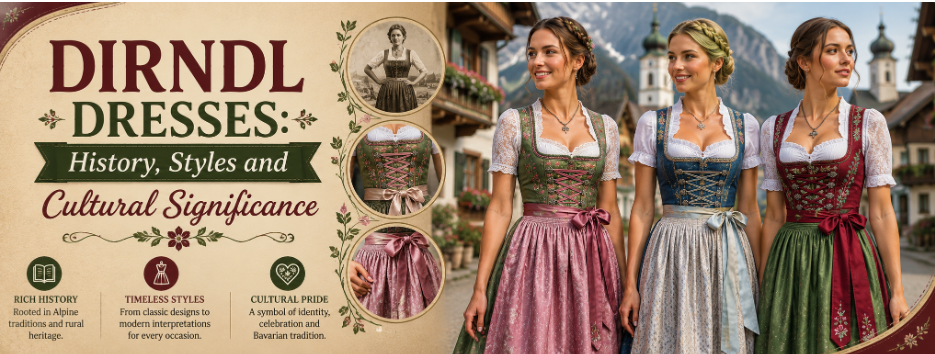
Dirndl dresses are among the most recognizable symbols of Bavarian culture and Alpine fashion. Known for their elegant silhouette, traditional craftsmanship, and rich cultural heritage, dirndls have remained popular for centuries. Today, these beautiful dresses are worn during Oktoberfest celebrations, cultural festivals, weddings, and traditional events throughout Germany and beyond.
While many people associate dirndl dresses exclusively with Oktoberfest, their history extends far beyond modern celebrations. These garments represent regional traditions, social customs, and generations of craftsmanship that continue to influence contemporary fashion. Understanding the history and significance of dirndl dresses provides a deeper appreciation for one of Europe’s most iconic forms of traditional clothing.
The Origins of Dirndl Dresses
The history of the dirndl can be traced back to the Alpine regions of Bavaria, Austria, and parts of Switzerland during the 19th century. Originally, dirndls were practical work garments worn by women in rural communities. Farmers, housemaids, and laborers favored these dresses because they were comfortable, functional, and suitable for everyday tasks.
The word “dirndl” itself originates from the Bavarian dialect and was originally used to describe a young woman or girl. Over time, the term became associated with the traditional dress worn by women throughout the Alpine region.
Unlike modern fashion trends that often change rapidly, dirndl dresses evolved gradually while maintaining their connection to regional traditions and cultural identity.
How Dirndl Dresses Became a Cultural Symbol
During the late nineteenth century, traditional Bavarian clothing experienced a revival as people sought to preserve regional customs and heritage. Dirndl dresses transitioned from practical rural attire into garments worn during celebrations, festivals, and special occasions.
As cultural organizations promoted traditional German clothing, the dirndl became an important symbol of Bavarian pride. Over time, it gained recognition throughout Europe and eventually around the world.
Today, dirndl dresses are closely associated with Oktoberfest, where millions of women wear them as part of traditional festival attire. However, their cultural significance extends far beyond the festival grounds.
Key Elements of a Traditional Dirndl Dress
Authentic dirndl dresses consist of several distinct components that work together to create their timeless appearance.
The Bodice
The fitted bodice is one of the most recognizable features of a dirndl. It creates a flattering silhouette while reflecting traditional tailoring techniques.
The Blouse
A dirndl blouse is typically worn underneath the bodice. Depending on personal preference and regional style, blouses may feature short sleeves, puff sleeves, lace details, or elegant necklines.
The Skirt
Traditional skirts are designed to provide comfort and movement while maintaining a graceful appearance. Lengths can vary depending on regional traditions and modern fashion preferences.
The Apron
The apron is a defining feature of the dirndl. Historically, it served a practical purpose, but today it contributes significantly to the dress’s aesthetic appeal.
The Meaning Behind Apron Bows
One of the most fascinating traditions associated with dirndl dresses involves the placement of the apron bow.
Traditionally:
- Bow tied on the left indicates a woman is single.
- Bow tied on the right indicates she is married or in a relationship.
- Bow tied in the center may indicate she is a virgin or young woman.
- Bow tied at the back often signifies widowhood or professional service roles.
Although modern wearers may not always follow these customs strictly, the tradition remains an interesting aspect of Bavarian culture.
Different Styles of Dirndl Dresses
Over time, dirndl fashion has expanded to include a variety of styles while preserving traditional elements.
Traditional Dirndl Dresses
Traditional designs emphasize authenticity and regional heritage. These dresses often feature classic fabrics, modest cuts, and detailed embroidery.
Modern Dirndl Dresses
Modern interpretations combine traditional craftsmanship with contemporary fashion trends. Popular updates include unique colors, updated silhouettes, and innovative fabric combinations.
Luxury Dirndl Dresses
Luxury dirndls showcase premium materials, intricate embroidery, and exceptional craftsmanship. These dresses are often chosen for formal events and special occasions.
Oktoberfest Dirndl Dresses
Designed specifically for festival wear, Oktoberfest dirndls balance tradition with comfort and style. They remain among the most sought-after options for attendees.
The Role of Craftsmanship in Authentic Dirndls
Quality craftsmanship remains one of the defining characteristics of authentic dirndl dresses. Skilled artisans carefully construct each garment using traditional sewing techniques, decorative trims, and high-quality fabrics.
Attention to detail is evident in every aspect of the dress, including:
- Embroidery
- Lace accents
- Bodice construction
- Fabric selection
- Decorative buttons
- Apron detailing
These elements contribute to both the beauty and longevity of the garment.
Popular Fabrics Used in Dirndl Dresses
The choice of fabric plays a significant role in comfort and appearance.
Cotton
Cotton remains a popular option due to its breathability and versatility.
Linen
Linen offers a lightweight feel and traditional appearance, making it ideal for warmer weather.
Velvet
Velvet dirndls are often selected for formal events because of their luxurious texture and elegant appearance.
Silk and Satin
Premium fabrics such as silk and satin add sophistication and refinement to special occasion dirndls.
Why Dirndl Dresses Remain Popular Today
The enduring popularity of dirndl dresses can be attributed to several factors.
Cultural Heritage
Many women appreciate the opportunity to celebrate Bavarian traditions through authentic clothing.
Timeless Style
Dirndls offer a classic silhouette that remains fashionable regardless of changing trends.
Festival Fashion
Oktoberfest has introduced dirndl dresses to international audiences, increasing their global appeal.
Quality and Craftsmanship
Consumers increasingly value well-made garments that reflect tradition and authenticity.
Choosing the Right Dirndl Dress
Selecting the perfect dirndl involves considering several factors.
Fit
A properly fitted bodice enhances comfort and creates the traditional silhouette associated with dirndl fashion.
Length
Mini, midi, and full-length dirndls are available to suit different preferences and occasions.
Fabric
Choosing the right fabric ensures comfort throughout the event.
Occasion
Traditional events may call for classic designs, while modern celebrations offer greater flexibility in style choices.
Dirndl Dresses and Oktoberfest
No discussion of dirndl dresses would be complete without mentioning Oktoberfest. The world-famous festival has helped introduce Bavarian fashion to a global audience.
Wearing an authentic dirndl enhances the Oktoberfest experience while demonstrating appreciation for local traditions. Many attendees spend significant time selecting dresses that reflect both personal style and cultural authenticity.
For those seeking premium Dirndl Dresses, choosing authentic craftsmanship and traditional design elements can make a significant difference in both appearance and comfort throughout the festival.
Many shoppers prefer purchasing from a trusted traditional Bavarian outfit store that specializes in authentic German clothing and heritage-inspired fashion. Brands such as Royal Lederhosen continue to promote traditional Bavarian attire through carefully crafted dirndl dresses, lederhosen, and Oktoberfest apparel designed to celebrate Alpine culture.
The Future of Dirndl Fashion
As interest in cultural heritage and sustainable fashion continues to grow, dirndl dresses are likely to remain relevant for future generations. Modern designers are finding innovative ways to incorporate traditional elements into contemporary styles while preserving the garment’s historical significance.
This balance between tradition and innovation ensures that dirndl dresses will continue to inspire fashion enthusiasts and cultural celebrations around the world.
Conclusion
Dirndl dresses represent far more than traditional festival attire. They embody centuries of Bavarian history, craftsmanship, and cultural identity. From their origins as practical rural clothing to their modern role as symbols of heritage and celebration, dirndls continue to captivate women around the world.
Whether worn during Oktoberfest, cultural festivals, weddings, or traditional gatherings, authentic dirndl dresses offer a unique connection to Alpine traditions while providing timeless elegance and style. As appreciation for cultural fashion continues to grow, the dirndl remains one of the most cherished and enduring symbols of Bavarian heritage.
Frequently Asked Questions About Dirndl Dresses
1. What is a dirndl dress?
A dirndl dress is a traditional Bavarian and Alpine garment worn by women. It typically consists of a fitted bodice, blouse, full skirt, and apron, making it one of the most recognizable symbols of German and Austrian culture.
2. Why are dirndl dresses associated with Oktoberfest?
Dirndl dresses are commonly worn during Oktoberfest because they represent traditional Bavarian heritage. Wearing a dirndl helps festival attendees embrace the culture and customs of the world’s most famous beer festival.
3. What is the difference between a traditional and modern dirndl?
Traditional dirndls focus on authentic fabrics, classic designs, and regional details, while modern dirndls often feature contemporary colors, updated cuts, and fashionable styling while maintaining traditional elements.
4. How should a dirndl dress fit?
A dirndl should fit snugly around the bodice while remaining comfortable. The skirt should allow ease of movement, and the overall fit should create the classic feminine silhouette associated with Bavarian fashion.
5. What does the apron bow on a dirndl mean?
Traditionally, the bow placement has different meanings:
- Left side: Single
- Right side: Married or in a relationship
- Center: Young woman or virgin
- Back: Widow or service worker
6. What fabrics are commonly used in authentic dirndl dresses?
Authentic dirndl dresses are often made from cotton, linen, velvet, satin, or silk. The choice of fabric depends on the occasion, season, and desired level of formality.
7. Can dirndl dresses be worn outside Oktoberfest?
Yes. Dirndl dresses are worn at weddings, folk festivals, cultural celebrations, heritage events, and traditional gatherings throughout Germany, Austria, and many other countries.
8. How do I choose the right dirndl dress for Oktoberfest?
Consider factors such as fit, fabric quality, skirt length, color preference, and overall comfort. Choosing an authentic dirndl with traditional details enhances both style and cultural authenticity.
9. Are dirndl dresses still popular today?
Yes. Dirndl dresses remain popular because they combine cultural heritage, timeless elegance, and high-quality craftsmanship. Their popularity continues to grow among festival-goers and fashion enthusiasts worldwide.
10. Where can I find authentic Dirndl Dresses?
Authentic Dirndl Dresses can be found through reputable retailers specializing in Bavarian fashion and Oktoberfest clothing. Many shoppers prefer established brands such as Royal Lederhosen, which offer traditional designs inspired by Alpine heritage.
11. What shoes should I wear with a dirndl dress?
Traditional pumps, ballet flats, ankle boots, or Bavarian-inspired shoes are popular choices that complement a dirndl outfit.
12. What length dirndl is best for Oktoberfest?
Midi-length dirndls are currently the most popular option because they balance tradition, comfort, and modern style.
13. Can tourists wear dirndl dresses at Oktoberfest?
Absolutely. Tourists are encouraged to wear authentic Bavarian attire as a way to participate in the festival’s traditions and cultural experience.
14. Are dirndl dresses only worn in Germany?
No. Dirndl dresses are also popular in Austria, Switzerland, and at Oktoberfest celebrations around the world.
15. Why are authentic dirndl dresses more expensive?
Authentic dirndls often feature premium fabrics, detailed craftsmanship, quality tailoring, and traditional design elements that contribute to their value and durability.