
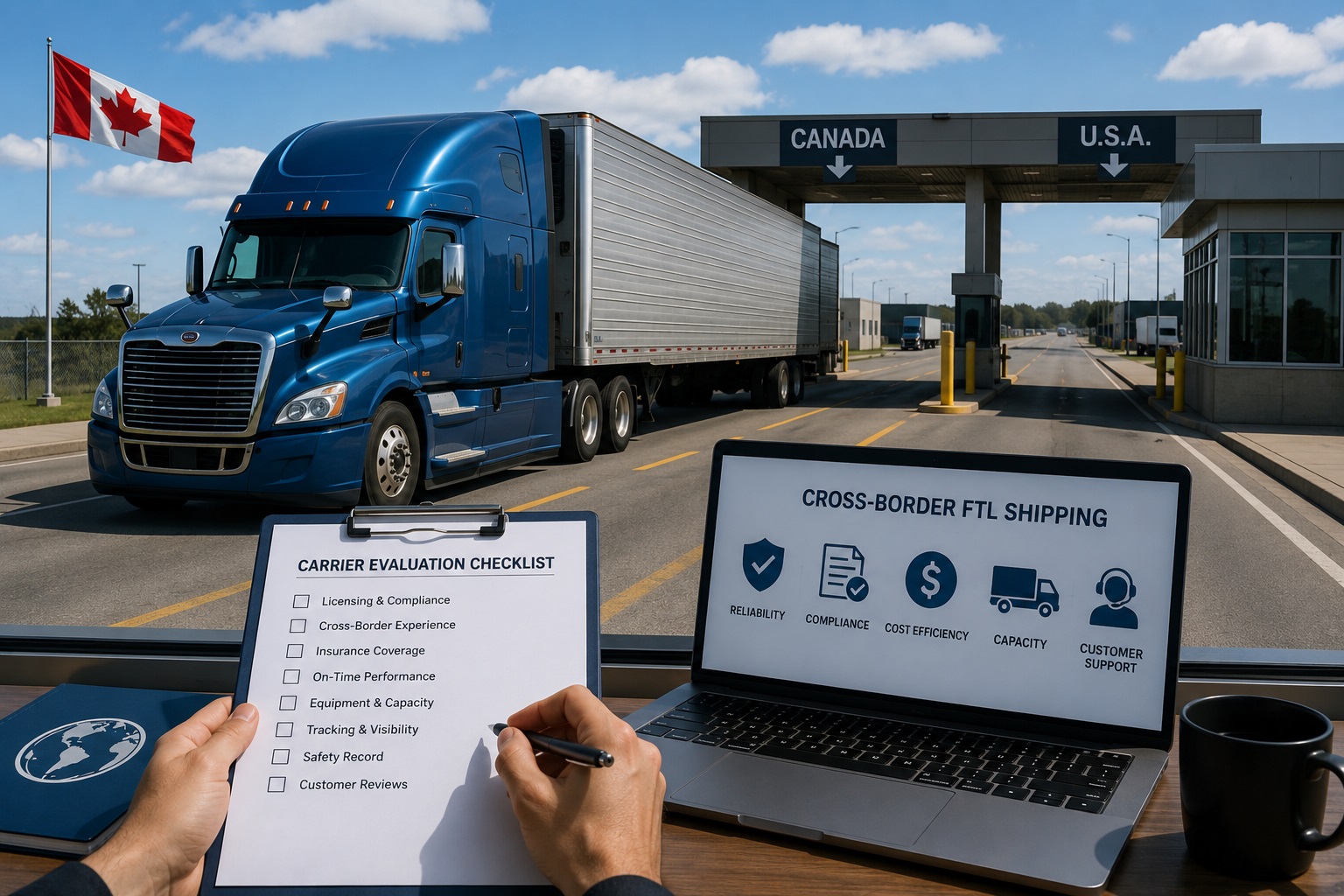
Cross-border freight reliability is determined long before a shipment reaches the border. The FTL trucking companies and logistics providers supporting a shipment can significantly impact whether freight moves efficiently or encounters costly delays.
For manufacturers, distributors, and other B2B shippers, selecting the right transportation partner requires more than comparing rates. Cross-border shipping involves customs requirements, regulatory compliance, carrier capacity, equipment availability, and shipment visibility. Evaluating these factors early helps businesses reduce risk and improve supply chain performance.
Core Evaluation Criteria for FTL Transportation Providers
Capacity alone does not guarantee reliable service. Strong full truckload shipping companies demonstrate how they manage carrier qualification, equipment selection, shipment planning, and exception handling before freight moves.
When evaluating potential partners, procurement teams should focus on operational capabilities such as:
- Equipment suitability for shipment requirements
- Cross-border transportation experience
- Carrier qualification and safety standards
- Communication processes and escalation procedures
- Shipment visibility and tracking capabilities
- Documentation and customs coordination expertise
Dedicated full truckload shipping is particularly valuable for freight that is sensitive to handling, delivery timing, or site-specific requirements. However, successful execution depends on selecting a provider that can coordinate all aspects of the shipment effectively.
Why Dedicated Full Truckload Capacity Matters
Dedicated full truckload services are often the preferred option for businesses shipping high-value, time-sensitive, or freight that requires direct transportation between origin and destination. By reducing handling and intermediate stops, full truckload shipments can help improve transit consistency and reduce the risk of damage.
For organizations managing cross-border supply chains, direct truckload transportation can also improve scheduling control and provide greater flexibility when coordinating deliveries across multiple facilities, distribution centers, or customer locations.
How Transportation Providers Manage Cross-Border Compliance
Cross-border shipping requires disciplined documentation management and customs coordination. Delays often occur when shipment information is incomplete, inaccurate, or submitted too late in the transportation process.
When evaluating FTL trucking companies, businesses should understand how providers manage:
- Commercial invoices and customs documentation
- Shipment classification requirements
- Broker coordination
- Border crossing procedures
- Regulatory compliance requirements
- Cargo insurance verification
Strong logistics providers treat documentation as a critical operational process rather than an administrative task. Proactive document review and customs coordination can help prevent border delays, inspections, and delivery disruptions.
Insurance review should also be part of the evaluation process. Coverage requirements vary by shipment type, commodity value, and transportation mode. Understanding coverage limits and claims procedures before freight moves helps reduce uncertainty if issues arise during transit.
Why Technology Matters in Cross-Border FTL Shipping
Technology has become an important differentiator in modern freight transportation. However, tracking tools alone do not improve shipment performance unless they support better operational decision-making.
Many transportation providers now offer:
- Real-time shipment tracking
- Automated status updates
- Exception notifications
- Electronic document management
- EDI and API integrations
- Performance reporting and analytics
These capabilities help businesses maintain visibility throughout the shipping process while improving communication between logistics teams, transportation providers, customs brokers, and customers.
Automated reporting should help procurement and operations teams identify recurring documentation issues, missed handoffs, appointment delays, and other operational challenges that affect shipment performance. When evaluating transportation providers, businesses should look beyond pricing and assess factors such as carrier qualification processes, customs coordination capabilities, communication standards, shipment visibility, and exception management procedures.
Providers that offer transparent communication, proactive problem resolution, and strong cross-border expertise are often better positioned to support reliable freight movement. This level of operational discipline helps reduce transportation risk, improve delivery consistency, and create greater confidence across the supply chain.
Evaluating Carrier Networks and Capacity Access
Many businesses focus heavily on equipment availability when selecting transportation partners. While capacity remains important, access to a qualified carrier network often provides greater long-term value.
Transportation providers with established carrier relationships can offer:
- Greater flexibility during market fluctuations
- Access to specialized equipment
- Improved coverage across key shipping lanes
- More consistent service levels
- Better support for changing shipment requirements
For businesses shipping between Canada and the United States, access to a broad network of qualified carriers can help maintain transportation continuity even when capacity conditions change.
How MGA International Supports Cross-Border FTL Shipping
Cross-border FTL shipping requires more than truck capacity. Successful freight movements depend on carrier qualification, customs coordination, shipment visibility, and proactive communication throughout the transportation process. For manufacturers, distributors, and other B2B shippers, choosing a logistics partner with established cross-border expertise can help reduce delays, improve reliability, and support long-term supply chain performance.
MGA International helps businesses coordinate full truckload services across Canada and the United States through a carefully developed network of transportation providers and logistics partners. With more than 25 years of industry experience, MGA works closely with customers to understand freight requirements, equipment needs, delivery expectations, and compliance considerations before shipments move.
The company’s approach emphasizes carrier selection, documentation accuracy, customs coordination, and shipment visibility. By combining transportation expertise with a broad carrier network, MGA helps businesses secure reliable capacity while maintaining the service standards businesses expect from leading full truckload shipping companies.
Whether supporting recurring freight movements or project-based shipments, MGA provides customized transportation solutions designed to align with operational goals, improve supply chain efficiency, and help businesses navigate the complexities of cross-border shipping.
Contact MGA International to discuss customized cross-border FTL transportation solutions for your business.