
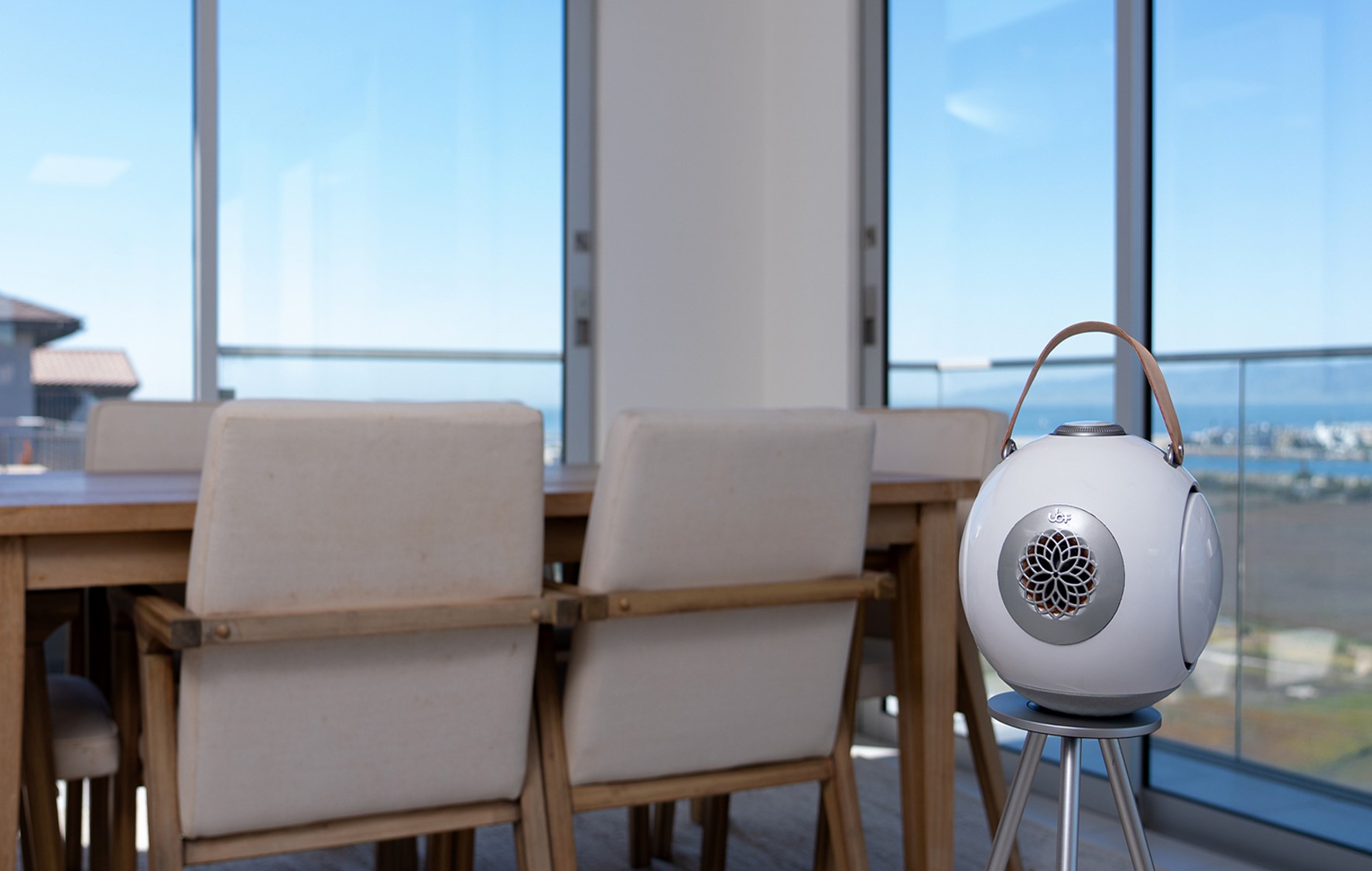
Modern apartment living requires a different approach to sound. Unlike large houses with dedicated media rooms, apartments demand speakers that can deliver immersive listening experiences while remaining balanced enough for compact shared environments.
As more people use wireless audio systems for music, streaming, podcasts, gaming, and remote work, interest in the best speakers for apartment living continues to grow.
But apartment-friendly audio is not simply about buying smaller speakers.
The best apartment speakers are designed to provide:
- Balanced tonal performance
- Controlled bass response
- Comfortable listening at moderate volumes
- Compact room integration
- Reduced distortion
- Long-term listening comfort
Many speaker systems are designed around maximum output and exaggerated bass. While this may sound exciting during short demonstrations, aggressive tuning often creates problems in apartment environments where reflections, shared walls, and close listening distances amplify acoustic flaws.
The best speakers for apartment use focus on acoustic refinement rather than sheer loudness.
This article explores the engineering principles, acoustic challenges, and listening characteristics that define truly refined apartment audio systems.
Why Apartment Listening Is Different
Apartment environments create unique acoustic conditions.
Compared to larger homes or outdoor spaces, apartments typically have:
- Smaller room dimensions
- Shared walls and ceilings
- Lower listening distances
- Stronger sound reflections
- Limited space for speaker placement
Because of these factors, speaker tuning that works well outdoors may feel overwhelming indoors.
Bass reflections become stronger, and harsh frequencies are easier to notice when listeners are physically closer to the speaker system.
The best speakers for apartment environments should therefore prioritize:
- Tonal balance
- Controlled bass
- Vocal clarity
- Smooth long-term listening
instead of extreme loudness.
Why Loud Speakers Often Perform Poorly Indoors
Many consumer speakers are tuned for immediate impact.
Manufacturers frequently emphasize:
- Heavy bass boosting
- Bright treble response
- Maximum output power
While this can create excitement during short demonstrations, it often produces poor results in apartment spaces.
Common Problems With Overpowered Apartment Speakers
Aggressively tuned systems often create:
- Boomy bass reflections
- Harsh upper frequencies
- Listening fatigue
- Reduced vocal clarity
- Vibrations through walls and floors
In smaller rooms, these problems become much more noticeable because sound energy reflects rapidly off nearby surfaces.
Why Balance Works Better
The best speakers for apartment listening should sound:
- Controlled
- Spacious
- Natural
- Comfortable during extended listening sessions
Refined tuning usually performs better indoors than oversized power.
Bass Performance in Apartment Spaces
Bass behaves very differently indoors compared to open environments.
Low frequencies naturally interact with:
- Walls
- Floors
- Ceilings
- Furniture surfaces
This means poorly controlled bass can quickly dominate a room.
What Good Apartment Bass Feels Like
Well-engineered bass should feel:
- Tight
- Warm
- Controlled
- Properly integrated into the music
instead of overwhelming the entire soundstage.
Why Controlled Bass Improves Listening
Balanced bass helps preserve:
- Vocal clarity
- Instrument separation
- Dialogue intelligibility
- Long-term listening comfort
The best speakers for apartment living provide low-frequency depth without excessive resonance.
Driver Engineering and Sound Precision
The driver is the core component responsible for generating sound waves.
Its quality directly affects:
- Clarity
- Bass accuracy
- Dynamic response
- Tonal smoothness
Advanced Driver Technologies
Premium apartment-friendly speakers often include:
- Neodymium magnetic systems
- Long-stroke voice coils
- Wide suspension surrounds
- Distortion-reducing motor structures
These technologies improve:
- Driver stability
- Excursion control
- Midrange detail
- Overall tonal balance
Why Driver Precision Matters Indoors
Apartment listening often occurs at shorter distances.
This makes distortion and tonal imbalance easier to hear.
The best speakers for apartment environments should maintain smooth and refined sound even at moderate listening levels.
Enclosure Design and Acoustic Control
The enclosure strongly influences how sound behaves.
Its geometry affects:
- Airflow efficiency
- Resonance behavior
- Internal reflections
- Pressure distribution
Problems With Traditional Box Designs
Rectangular cabinets often create:
- Standing waves
- Uneven pressure zones
- Resonance buildup
These issues can blur bass and reduce clarity indoors.
Curved and Spherical Acoustic Chambers
Advanced enclosure designs improve performance by:
- Reducing internal reflections
- Improving airflow symmetry
- Minimizing resonance buildup
This creates:
- Cleaner bass
- Better tonal balance
- Reduced distortion
Compact systems inspired by spherical acoustic chamber concepts often work especially well in apartment environments because they distribute sound more evenly throughout smaller rooms.
Stereo Imaging and Apartment Listening
Apartment listening usually occurs at close range, making stereo imaging especially important.
Why Stereo Imaging Matters
Strong stereo performance creates:
- Better instrument separation
- Spacious soundstage
- More immersive listening experiences
How Poor Bass Damages Imaging
Boomy bass can blur directional detail and collapse the stereo image.
The best speakers for apartment listening preserve spatial realism while maintaining warmth and fullness.
Low-Volume Performance Is Essential
Most apartment listening happens at moderate or low volume levels.
Because of this, low-volume performance becomes critically important.
Common Low-Volume Problems
Poorly tuned speakers often lose:
- Bass warmth
- Vocal presence
- Dynamic richness
when played quietly.
Signs of Better Acoustic Engineering
Well-designed systems remain:
- Full
- Detailed
- Balanced
even at lower listening levels.
This is one of the strongest indicators of refined acoustic tuning.
Listening Fatigue and Everyday Comfort
Apartment speakers are often used throughout the day for:
- Music
- Movies
- Podcasts
- Work sessions
- Ambient listening
Because of this, listening comfort becomes extremely important.
Causes of Listening Fatigue
- Overboosted bass
- Harsh treble
- Distortion
- Excessive DSP processing
Comfortable Apartment Audio
The best speakers for apartment use should feel:
- Smooth
- Relaxed
- Natural during extended listening sessions
This allows listeners to enjoy immersive sound comfortably for hours.
Music Genres and Apartment Speaker Performance
Different genres reveal different strengths and weaknesses in speaker tuning.
Acoustic and Jazz Music
Require:
- Natural tone
- Midrange detail
- Instrument separation
Pop and Electronic Music
Require:
- Controlled bass
- Dynamic energy
- Vocal clarity
Podcasts and Spoken Audio
Require:
- Smooth mids
- Clear dialogue reproduction
- Minimal distortion
A refined apartment speaker should perform consistently across all content types.
Compact Design and Apartment Integration
Apartment spaces often require efficient room organization.
Because of this, many listeners prefer speakers that feel:
- Compact
- Minimal
- Elegant
- Easy to position
Large floor-standing systems may overpower smaller rooms both visually and acoustically.
Compact wireless speakers with refined tuning often integrate more naturally into apartment environments.
Wireless Flexibility and Cleaner Spaces
Bluetooth and wireless connectivity provide practical advantages for apartment users.
Wireless systems allow listeners to:
- Reduce cable clutter
- Move speakers easily
- Experiment with room placement
- Maintain cleaner aesthetics
This flexibility has made wireless systems increasingly popular for apartment listening.
Speaker Placement and Apartment Acoustics
Placement significantly affects sound quality indoors.
Better Placement Improves Performance
For balanced apartment sound:
- Avoid placing speakers directly in corners
- Keep them away from shared walls when possible
- Position speakers near ear level
- Allow airflow around the enclosure
These adjustments improve bass control and overall clarity.
Mechanical Bass vs DSP Bass Indoors
One major difference between refined speakers and heavily marketed consumer systems is how bass is produced.
DSP-Based Bass Enhancement
Digital Signal Processing can artificially increase low-frequency output.
But indoors, excessive DSP often creates:
- Boominess
- Distortion
- Listening fatigue
Mechanical Acoustic Bass
Physics-driven bass systems rely on:
- Air displacement
- Acoustic resonance
- Structural efficiency
This creates bass that feels more natural and balanced in apartment spaces.
The best speakers for apartment listening prioritize acoustic refinement over aggressive digital enhancement.
Neighbor-Friendly Listening Without Sacrificing Quality
Apartment living requires respectful listening habits.
Refined speakers help by maintaining:
- Clarity at lower volumes
- Strong vocal detail
- Balanced bass without excessive vibration
This allows listeners to enjoy immersive sound without constantly increasing volume.
Common Apartment Speaker Buying Mistakes
Many consumers focus too heavily on:
- Maximum loudness
- Oversized bass output
- Large speaker size
- Marketing claims rather than listening comfort
But apartment listening benefits more from precision than raw power.
What to Look For in the Best Speakers for Apartment Living
When comparing speakers, prioritize:
- Controlled bass response
- Smooth vocals
- Balanced tonal tuning
- Low-volume performance
- Minimal distortion
- Compact and elegant design
These factors matter far more than exaggerated specifications.
The Future of Apartment Audio
Speaker engineering is increasingly focused on:
- Better acoustic tuning
- Reduced distortion
- More natural bass reproduction
- Compact high-performance systems
- Smarter room integration
The industry is moving toward immersive and refined listening experiences rather than exaggerated sound signatures.
Conclusion
The best speakers for apartment living are not simply the loudest or largest systems available.
True apartment audio quality comes from the combination of:
- Balanced acoustic tuning
- Controlled bass response
- Precision driver engineering
- Intelligent enclosure design
- Long-term listening comfort
When these elements work together, speakers become more than entertainment devices—they become part of the atmosphere and rhythm of everyday apartment life.
Modern speaker systems continue proving that compact designs can deliver immersive and emotionally engaging sound without overwhelming smaller residential spaces.
Ultimately, the best apartment speakers are the ones that create warmth, clarity, comfort, and musical immersion while fitting naturally into the realities of apartment living.