
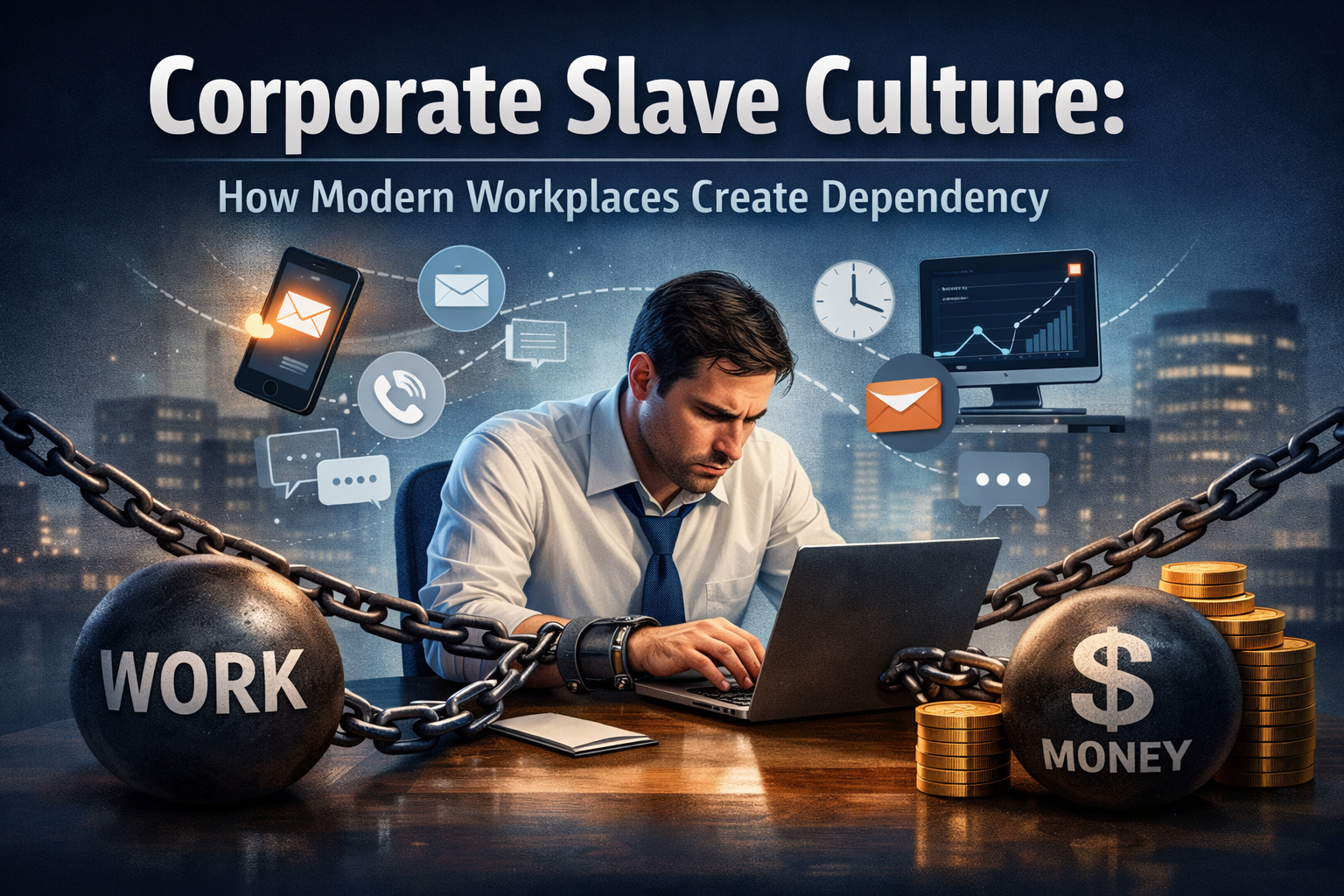
Have you ever felt like your job dictates your schedule, influences your decisions, and leaves little room for personal priorities? If so, you are not alone. Across Australia and around the world, many employees are beginning to question whether modern workplaces are creating a new form of dependency. This growing concern is often described using the term corporate slave, a phrase that captures the feeling of being trapped in a cycle of work, expectations, and constant availability.
While employment is essential for financial security and career growth, the modern workplace has evolved significantly over the past decade. Technology has made it possible to work from anywhere, but it has also made it harder to disconnect. Emails, instant messaging platforms, virtual meetings, and performance-tracking systems have blurred the boundaries between work and personal life. For some employees, work is no longer something they do; it becomes a major part of who they are.
Corporate slave culture does not mean employees are literally enslaved. Instead, it refers to workplace environments where individuals become heavily dependent on their jobs for financial stability, identity, social validation, and a sense of purpose. Over time, this dependency can affect mental health, relationships, and overall well-being.
What Is Corporate Slave Culture?
Corporate slave culture describes a workplace dynamic in which employees feel compelled to dedicate excessive amounts of time, energy, and emotional investment to their jobs, often at the expense of their personal well-being.
In many organisations, commitment is measured not by productivity but by visibility. Employees who stay late, answer emails after hours, and sacrifice personal time are often viewed as more dedicated than those who maintain healthy boundaries.
Over time, this can create a culture where overworking becomes normal and even celebrated.
Common characteristics of corporate slave culture include:
- Constant availability outside work hours
- Fear of taking leave or sick days
- Excessive workloads
- Pressure to prioritise work over personal life
- Dependence on workplace approval
- Anxiety about job security
- Difficulty disconnecting from professional responsibilities
While ambition and dedication are valuable traits, problems arise when work begins to dominate every aspect of life.
How Modern Workplaces Encourage Dependency
The Always-On Digital Environment
Technology has transformed the way people work. Smartphones, cloud-based software, and collaboration platforms allow employees to remain connected at all times.
While these tools increase flexibility, they can also create expectations of constant availability.
Many employees check emails during evenings, weekends, and holidays. Even when employers do not explicitly require this behaviour, workplace culture often encourages it. Employees may worry that failing to respond quickly could make them appear less committed.
As a result, work begins to invade personal time, making it difficult to switch off mentally.
Financial Dependence
One of the strongest factors contributing to workplace dependency is financial security.
With rising living costs, mortgage repayments, household expenses, and economic uncertainty, many Australians feel increasingly reliant on their income. This financial pressure can make employees reluctant to challenge workplace expectations or seek alternative opportunities.
Even when individuals feel overwhelmed or unhappy in their roles, fear of financial instability may keep them in unhealthy work environments.
Workplace Perks and Benefits
Many organisations provide attractive benefits such as:
- Free meals
- Wellness programs
- Social events
- Gym memberships
- Flexible work arrangements
- Professional development opportunities
While these benefits can improve employee satisfaction, they may also deepen emotional attachment to the workplace.
Employees may begin to rely on their employer not only for income but also for social interaction, personal development, and lifestyle support. This can make it harder to separate professional identity from personal identity.
Career Advancement Pressure
Modern workplaces often reward employees who go above and beyond standard expectations.
Promotions, salary increases, and recognition programs frequently favour those willing to work longer hours or take on additional responsibilities.
While career growth is important, constant pressure to prove dedication can encourage employees to sacrifice personal well-being in pursuit of professional success.
Over time, individuals may feel trapped in an endless cycle of achievement and performance.
The Psychology Behind Corporate Dependency
The Need for Validation
Human beings naturally seek recognition and approval.
Workplaces provide frequent opportunities for validation through promotions, praise, bonuses, and performance reviews. These rewards can trigger positive emotional responses and reinforce work-focused behaviour.
Over time, some employees may begin to associate their self-worth with professional achievements.
When this happens, career success becomes closely tied to personal identity.
Fear of Falling Behind
Many workplaces operate in highly competitive environments.
Employees often compare themselves to colleagues, industry peers, and professional networks. Social media platforms such as LinkedIn can amplify these comparisons by showcasing promotions, achievements, and career milestones.
This constant exposure can create a fear of falling behind, encouraging employees to work harder and longer to keep up.
The Productivity Trap
Modern society frequently equates productivity with value.
People are often praised for being busy, ambitious, and constantly engaged in work. As a result, rest may be viewed as laziness rather than a necessary component of well-being.
Employees can become trapped in a mindset where their worth depends on how much they accomplish.
This productivity obsession is a key driver of corporate slave culture.
Signs You May Be Experiencing Corporate Slave Culture
Recognising the warning signs is the first step toward creating healthier work habits.
You may be experiencing workplace dependency if you:
- Regularly work beyond your scheduled hours
- Feel guilty when taking annual leave
- Check emails during evenings and weekends
- Struggle to relax without thinking about work
- Prioritise work commitments over family or personal relationships
- Feel anxious when disconnected from workplace communication
- Base your self-worth primarily on career achievements
- Experience burnout symptoms but continue pushing through exhaustion
Occasional periods of increased workload are normal. However, when these behaviours become ongoing patterns, they may indicate an unhealthy relationship with work.
The Mental Health Impact of Corporate Slave Culture
Chronic Stress
One of the most common consequences of workplace dependency is chronic stress.
Persistent pressure, unrealistic expectations, and long working hours can keep the body’s stress response activated for extended periods.
This may lead to symptoms such as:
- Headaches
- Muscle tension
- Fatigue
- Difficulty concentrating
- Sleep disturbances
Over time, chronic stress can significantly impact physical and mental health.
Burnout
Burnout is a state of emotional, physical, and mental exhaustion caused by prolonged workplace stress.
Common symptoms include:
- Feeling emotionally drained
- Reduced motivation
- Increased cynicism
- Decreased productivity
- Difficulty engaging with work
Burnout has become increasingly common among professionals across various industries.
Anxiety
Workplace dependency can also contribute to anxiety.
Employees may constantly worry about meeting expectations, achieving targets, or maintaining job security. This ongoing concern can create a cycle of overthinking and emotional strain.
For some individuals, workplace-related anxiety extends beyond office hours and affects daily life.
Depression
When employees feel trapped in demanding work environments with little control over their circumstances, feelings of hopelessness may develop.
Persistent stress, social isolation, and lack of work-life balance can contribute to symptoms associated with depression, including:
- Low mood
- Loss of motivation
- Reduced enjoyment in activities
- Difficulty sleeping
- Emotional exhaustion
How Corporate Slave Culture Affects Personal Relationships
Workplace dependency rarely affects only the individual.
Long working hours and constant availability can reduce the quality time spent with family, friends, and partners.
Relationships may suffer when employees:
- Miss important events
- Cancel personal plans
- Remain distracted by work during social interactions
- Experience increased irritability due to stress
Over time, professional commitments can begin to replace meaningful personal connections.
Strong relationships are essential for emotional well-being, making work-life balance a critical component of overall health.
Why Remote Work Can Be Both a Solution and a Problem
Remote work has provided employees with greater flexibility and autonomy.
Many Australians appreciate the ability to work from home and avoid lengthy commutes. However, remote work can also blur boundaries between professional and personal life.
Without clear separation between workspaces and living spaces, employees may find themselves:
- Working longer hours
- Taking fewer breaks
- Responding to messages outside work hours
- Feeling unable to switch off
The challenge is not remote work itself but the lack of boundaries that often accompanies it.
Breaking Free from Workplace Dependency
Establish Clear Boundaries
Setting boundaries is one of the most effective ways to reduce workplace dependency.
Consider:
- Defining specific work hours
- Turning off notifications after work
- Avoiding emails during personal time
- Creating a dedicated workspace at home
Clear boundaries help separate professional responsibilities from personal life.
Prioritise Mental Health
Mental health should be treated with the same importance as physical health.
Regular self-care practices may include:
- Exercise
- Mindfulness
- Adequate sleep
- Social connection
- Professional mental health support
Seeking support early can help prevent stress from developing into more serious concerns.
Develop Interests Outside Work
A healthy sense of identity should extend beyond professional achievements.
Pursuing hobbies, creative activities, volunteer work, or community involvement can provide fulfilment independent of career success.
This reduces reliance on work as the primary source of self-worth.
Learn to Disconnect
Many employees underestimate the importance of genuine rest.
Taking breaks, using annual leave, and spending time away from workplace communication can improve both mental well-being and long-term productivity.
Rest is not a reward for hard work, it is a necessity.
The Role of Employers in Preventing Corporate Slave Culture
Employers play a crucial role in creating healthy workplace environments.
Organisations can support employee wellbeing by:
- Encouraging work-life balance
- Respecting boundaries outside work hours
- Promoting realistic workloads
- Supporting mental health initiatives
- Providing access to wellbeing resources
- Recognising productivity rather than hours worked
When businesses prioritise employee wellbeing, both individuals and organisations benefit.
Supporting Workplace Mental Health in Australia
Awareness of workplace mental health has grown significantly across Australia in recent years.
Employees increasingly recognise the importance of maintaining balance and seeking support when needed. Access to telehealth services has also made mental health care more convenient and accessible for individuals managing workplace stress, anxiety, burnout, and other related concerns.
At WellU Digital, we recognise that workplace pressures can significantly impact mental wellbeing. Accessing professional support through modern telehealth services can help individuals develop healthier coping strategies and regain control over their work-life balance.
Conclusion
The rise of corporate slave culture reflects broader changes in the modern workplace. While technology, ambition, and professional growth offer many benefits, they can also create environments where employees become overly dependent on work for financial security, identity, and validation.
Recognising the signs of workplace dependency is the first step toward creating healthier habits and protecting mental wellbeing. By establishing boundaries, prioritising self-care, nurturing relationships, and seeking professional support when needed, individuals can build more balanced and fulfilling lives.
Work should be an important part of life, but it should never become the only part. Maintaining a healthy relationship with work allows individuals to thrive both professionally and personally, creating a more sustainable path to long-term success and wellbeing.