

Choosing the right concrete mix is crucial for any construction or home improvement project involving concrete. The concrete mix determines the characteristics and performance of the concrete, and using the wrong concrete mix can lead to cracking, crumbling, scaling, and other issues down the road. With so many potential options, it’s important to understand the different types of concrete mixes, their intended uses, and how to choose the right one. The Concrete Doctors looks into the many factors when considering when selecting a concrete mix, including the application, strength requirements, workability, durability needs, and more.
The Concrete Doctors: A Passion for High-Quality Concrete
At The Concrete Doctors, we aim for quality in everything we do and take pride in the work we produce. Regardless of the scope or intricacy of the project, our team of skilled experts has a track record of producing outstanding outcomes.
We firmly believe in delivering the best possible service and satisfaction to our clients, and we stand behind the quality of our work. You know you’re receiving the best concrete services when you hire Premium Edmonton Concrete Contractor.
- Puts a high priority on lucid communication and customer service.
- Makes use of years of experience in the field.
- Produces excellent outcomes.
- Offers consultations at no cost.
- Guarantees free professional assistance and recommendations.
Factors to Consider When Choosing the Right Mix of Concrete
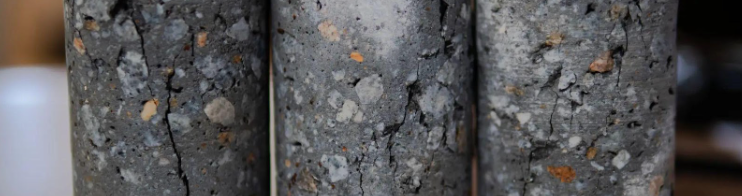
Strength
The strength rating of concrete indicates its compressive strength, or the amount of force it can withstand before failing under pressure. This is one of the most important factors to consider when choosing a concrete mix.
The most common strength ratings used are:
- 2,500 psi – This low-strength concrete is suitable for non-structural uses like sidewalks, driveways, and patios.
- 3,000 psi – This is the minimum recommended strength for residential slabs and foundations. It provides good durability.
- 4,000 psi – This higher-strength mix is often used for commercial buildings and floor slabs. It provides additional durability.
- 5,000+ psi – Very high-strength mixes over 5,000 psi are used in specialized applications like bridges, dams, and high rises where extra strength is critical.
Projects that require high-strength concrete include:
- Bridges – High-strength mixes of 5,000 psi or greater are needed to withstand heavy vehicle loads and environmental stresses.
- Skyscrapers – Tall buildings require very high-strength concrete at the lower levels to support the enormous weight above. Strengths up to 10,000 psi may be used.
- Airport runways – Strengths of 4,000 psi or more are used to withstand the heavy loads from planes landing and taking off.
Projects that can use lower-strength concrete include:
- Driveways and garage slabs – 2,500 to 3,000 psi concrete provides adequate strength for light residential vehicle loads.
- Sidewalks at 2,500 psi are often suitable for pedestrian foot traffic unless the sidewalk is exposed to heavy use or salt or chemical exposure.
- Patios – Low 2,500 psi mixes are commonly used since patios do not bear structural loads.
Workability
The term “workability” describes how quickly and easily new concrete can be finished, consolidated, and placed. It is an important property because it impacts the strength and durability of the final concrete product.
The desired level of workability depends on what you’re building. Slabs and pavements require a high workability for easy finishing. Mass concrete needs only enough workability for vibration to consolidate the mix. Here are some tips for achieving proper workability:
- Add just enough water for adequate workability without compromising strength. Follow mixed design guidelines.
- Use a well-graded, rounded aggregate with a maximum size appropriate for your forms and reinforcement.
- Consider using plasticizers to get flowing concrete without adding excess water.
- Adjust the mix design if it is too stiff. More sand and less coarse aggregate can help.
- Order concrete at a low slump and add water on site in small amounts as needed.
Shrinkage
Shrinkage in concrete can lead to cracks, especially in slabs or walls. As the concrete shrinks, it pulls away from any adjacent concrete or the forms. If the pull is strong enough, it can cause cracks at the joints. Shrinkage cracking is most common within the first few days after the concrete has been placed while it is still plastic, but it can also happen later as the concrete continues to cure and dry out.
There are a few ways to minimize shrinkage in concrete:
- Use aggregate that is properly graded with a wide distribution of particle sizes. This creates a dense concrete matrix that leaves less space for shrinkage. Avoid making aggregates vulnerable to shrinkage, like some lightweight aggregates.
- Reduce the water content in the concrete mix as much as possible while still maintaining workability. More water means more shrinkage as it evaporates. A low water-to-cement ratio is best.
- Add a shrinkage-reducing admixture to the concrete mix. These admixtures work by reducing the surface tension of water in the concrete, which results in less shrinkage.
- Properly cure the concrete to keep it from drying out too quickly. Curing entails sustaining the right temperature and moisture content.
Specialty Concrete Mixes
Specialty concrete mixes have unique properties that make them suitable for specific applications. Here are some of the most common specialty concrete mixes:
High-Performance Concrete
High-performance concrete has enhanced strength and durability properties compared to conventional concrete. It contains supplementary cementitious materials like silica fume or fly ash. It has a low water-to-cement ratio and well-graded aggregates. High-performance concrete has very high compressive strength, typically over 8,000 psi. It is used in structures like skyscrapers that require high strength and durability.
Pervious Concrete
Previous concrete has high porosity and allows water to drain through it. It contains little or no sand, creating continuous voids. Typically, previous concrete has a compressive strength of 2,000-4,000 psi. It is used for pavements, parking lots, and walkways to manage stormwater drainage. The porous structure absorbs rainwater and snowmelt, reducing runoff.
Coloured Concrete
Concrete can be coloured for decorative purposes with pigments added during mixing. Common colours are brick red, tan, and ray. White cement is used as the base for very light colours. The pigments are inorganic minerals resistant to UV exposure. Coloured concrete is popular for driveways, pool decks, patios, and other exterior flatwork where aesthetics are important.
Self-Consolidating Concrete
Self-consolidating concrete has high flowability and does not require vibration to compact it. It contains chemical admixtures, like superplasticizers, to improve flow. Self-consolidating concrete is useful for congested reinforcements and complex shapes that would be difficult to vibrate. It provides a smooth finish and is used for architectural concrete where appearance is important.
Mixing Methodology
Proper mixing is crucial for achieving optimal concrete strength and workability. After the ingredients are batched, they must be thoroughly combined to produce a uniform material.
- Use a rotating drum concrete mixer if available. These machines mix continuously and ensure the concrete is blended evenly. Set the mixer on level ground and check that the drum rotates smoothly before adding materials.
- For small batches mixed by hand, choose a clean, watertight mixing surface like a wheelbarrow or shallow trough. Turn over the dry ingredients several times with a shovel to pre-mix them before slowly adding water.
- Mix for 3-5 minutes after all materials have been added to fully incorporate the cement, aggregates, and water. Under-mixing leaves pockets of dry ingredients that weaken the concrete. Over-mixing can cause excess air entrainment.
- Use a hoe or shovel to ensure that any concrete clinging to the sides or corners gets blended in. Scrape down the sides periodically.
- Do not add extra water unless necessary. This will dilute the cement and compromise its strength. Only add more water if the mix is too stiff to place and consolidate.
Testing The Concrete Mix
Testing concrete samples is crucial to ensuring the mix design meets the required specifications. Proper testing provides quality control and helps identify any issues with the concrete mixture. Several key tests should be performed.
Slump Test
The slump test measures the workability and consistency of the concrete mix. It involves filling an inverted cone mould with concrete, lifting it, and measuring how much the concrete slumps down. The slump measurement indicates how fluid or stiff the mix is. Typical slump ranges are:
- 2-4 inches for foundations
- 4-6 inches for slabs and beams
- 6-8 inches for columns
Slumps should be tested periodically, such as when sampling from each truckload.
Air Content Test
Testing the air content determines the amount of air bubbles within the concrete. Air content improves resistance to freeze-thaw damage. The test uses a specialized meter to measure air pressure in a sample and calculate the total air content percentage.
Air content should be tested at regular intervals to ensure it remains within specifications, which are usually 4-8%.
Compressive Strength Test
This critical test measures the concrete’s hardness and ability to withstand loads. It involves pouring concrete into cylinder moulds, curing the samples properly, and then crushing them in a compression machine after 7 and 28 days.
Compressive strength requirements depend on the type of project but are usually around 3000 psi. Testing at 7 and 28 days verifies both early and full strength gains.
Final Assessment
Choosing the right concrete mix is crucial for a successful project. The key factors to consider are strength, workability, shrinkage, and durability requirements. It’s important to test samples ahead of the pour to verify the concrete will perform as needed under actual job site conditions.
The mix design process takes into account the characteristics of the cement, aggregates, water, and any admixtures used. Balancing these ingredients determines the properties of the fresh and hardened concrete. A certified testing lab can help optimize the proportions for your specific application and performance goals.
For more information on mix design, admixtures, testing procedures, and quality control, check out resources from The Concrete Doctors in Edmonton, Alberta. With careful planning and execution, you can have full confidence in your concrete.