
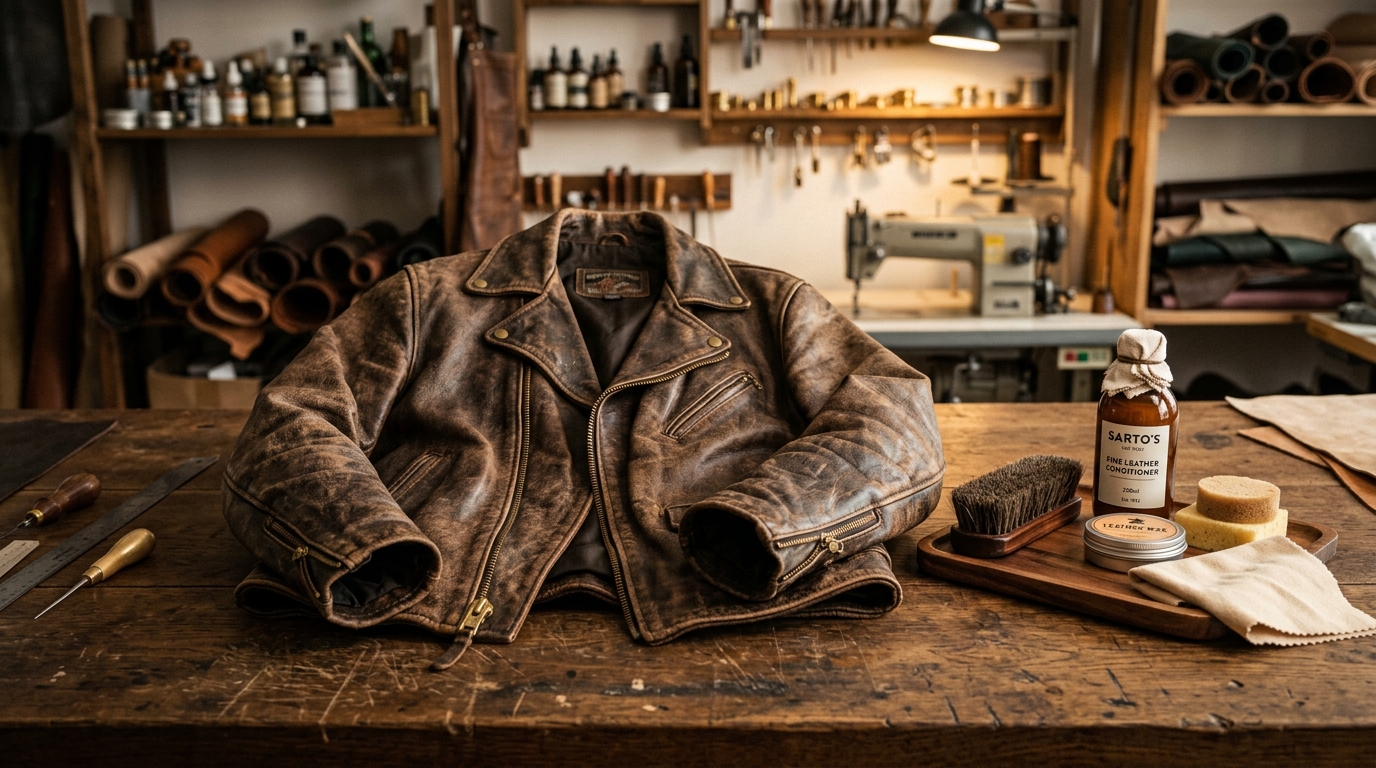
There is something about a worn-in leather jacket that a brand new one just cannot replicate. The creases, the fading, the texture built up over years of use. But there is a fine line between beautifully aged and falling apart. Most people either over-restore their jacket and kill its character, or they do nothing and let it deteriorate completely.
Neither is the right call.
So, can you restore a distressed leather jacket without ruining it? Yes. But only if you know what you are doing. Here are 6 easy steps that work.
Step 1: Assess the Damage Before You Touch Anything
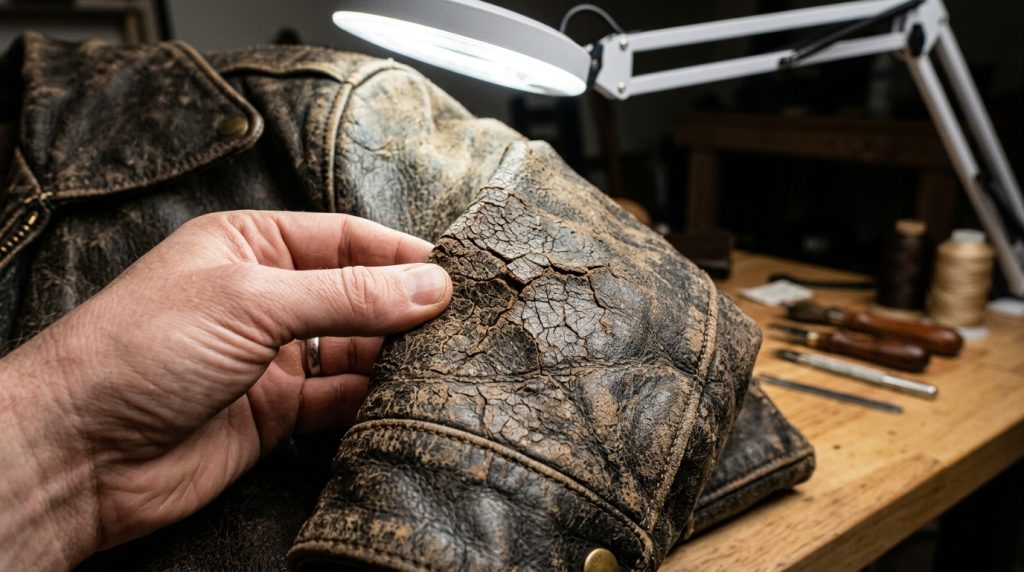
Take 5 minutes to actually look at your jacket. Is the leather cracking? Is it faded unevenly? Are there scuff marks, stiff areas, or dry patches?
A lot of people skip this and go straight to scrubbing. That is where things go wrong. Different problems need different solutions. Light fading needs conditioning. Deep cracks need filler. Stiff areas need moisture. Knowing what you are dealing with saves you from making it worse.
Step 2: Clean It Gently, Not Aggressively
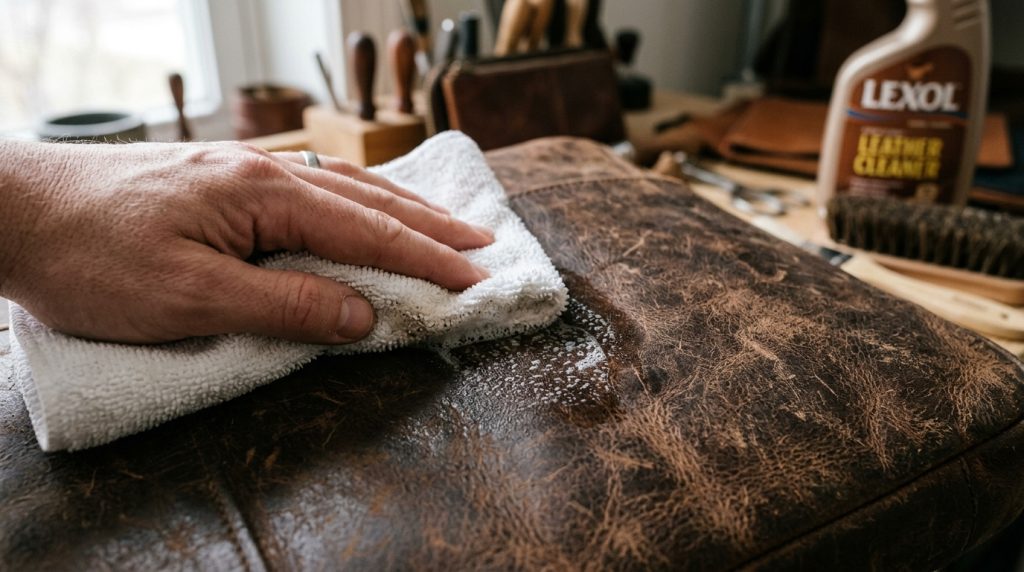
Use a damp cloth with a mild leather cleaner. No harsh soaps, no alcohol wipes and no soaking.
Go in small circles and work section by section. The goal here is to lift surface dirt without stripping the natural oils from the leather. Those oils are what give the jacket its look and feel.
Key facts worth knowing:
- Over 60% of leather jacket damage comes from incorrect cleaning methods
- Alcohol-based cleaners strip natural oils and speed up cracking
- pH-neutral leather cleaners are the safest option for aged and distressed leather
Step 3: Condition the Leather Deeply
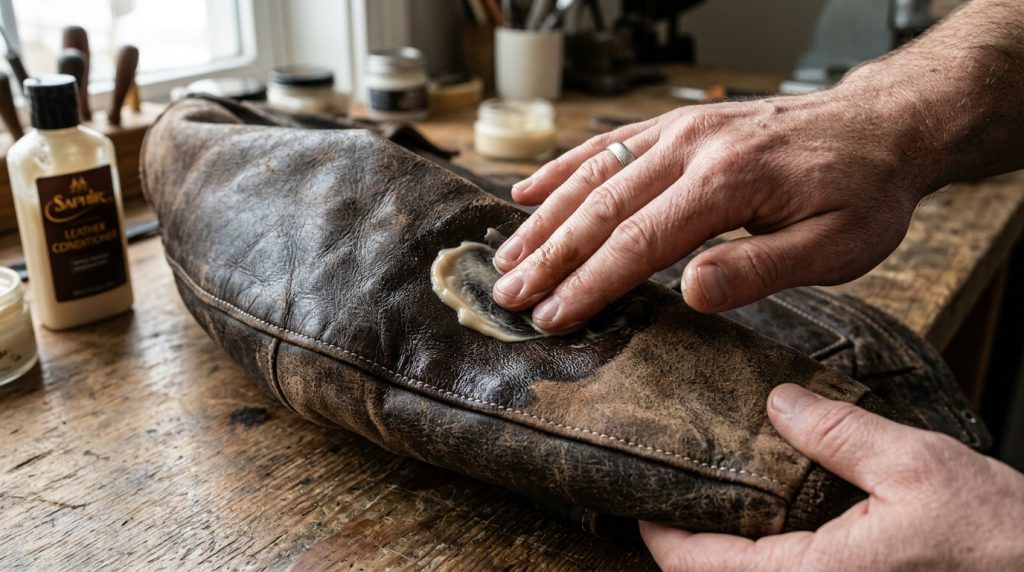
This is the most important step. Dry leather cracks. Conditioned leather lasts.
Use a good quality leather conditioner and apply it with a soft cloth in circular motions. Let it sit for at least 30 minutes before wiping off the excess. For heavily distressed areas, do two coats.
This step alone can transform a stiff, cracked jacket back into something that feels alive again. The leather absorbs moisture and softens up. That characteristic worn-in look you love? It stays. It just looks better.
Step 4: Restore Color Without Painting Over the Character
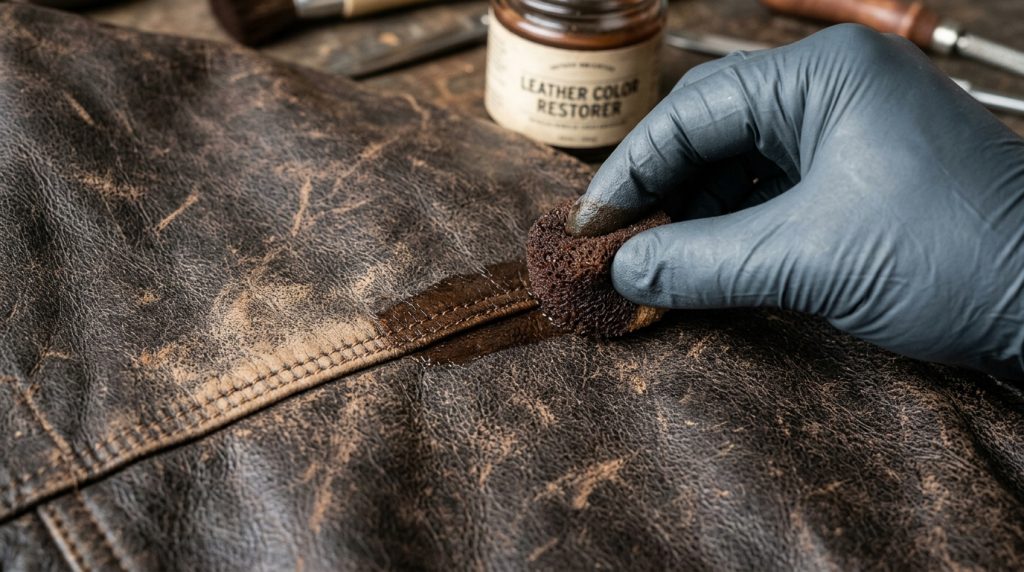
This is where most people mess up. They reach for shoe polish or spray paint and end up with a jacket that looks flat and fake.
Instead, use a leather dye or a color-matched leather repair kit. Apply it thin. Build it up in layers. The idea is to restore the base tone, not cover every mark. Those marks and scuffs are part of the story. Leave them.
Step 5: Deal With Cracks the Right Way
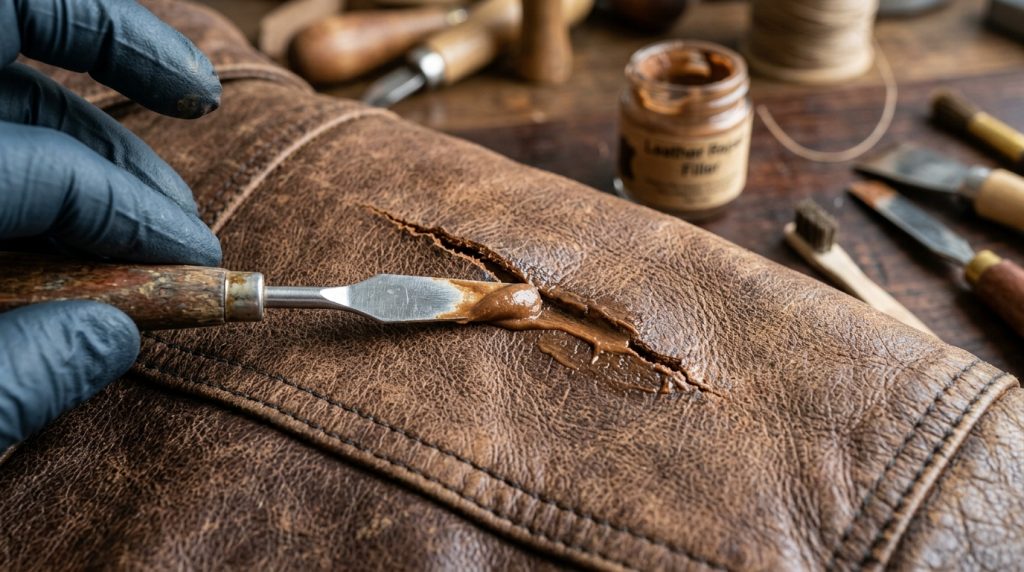
Small cracks respond well to conditioning alone. Deeper cracks need a leather filler.
Apply the filler in thin layers, let each layer dry before adding the next, and then buff the area gently. Do not rush this. Rushing it causes the filler to sit on top instead of bonding with the leather.
Once the cracks are treated, condition over the top again to blend everything together.
Step 6: Protect It So You Are Not Back Here in 6 Months
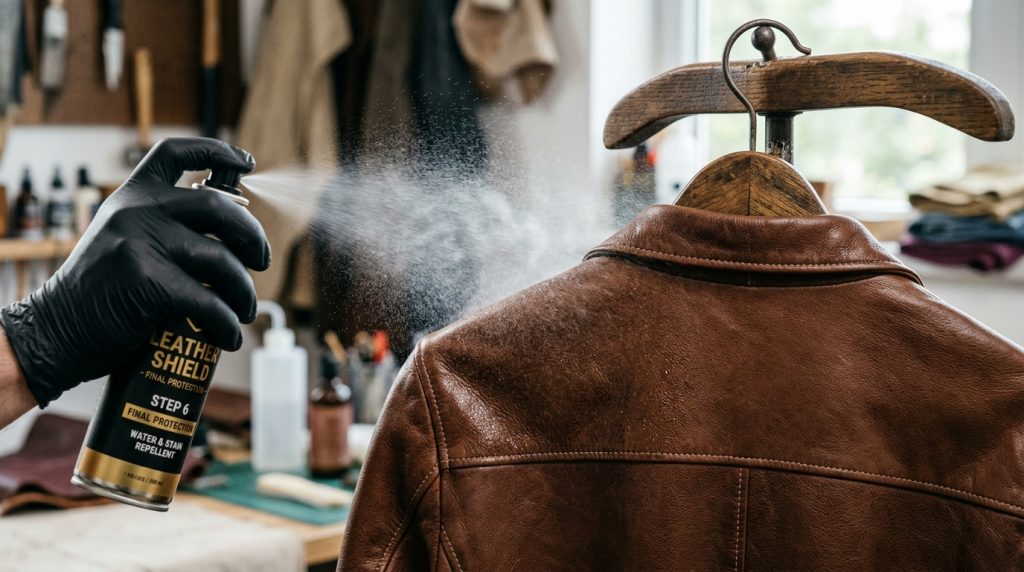
Restoration without protection is pointless. Once your jacket looks the way you want it, apply a leather protector or water repellent spray. This seals in the conditioner and creates a barrier against moisture, sweat, and UV light.
If you are storing it, keep it in a breathable garment bag. Never in plastic. Plastic traps moisture and causes mold.
And hang it properly. An oversized leather jacket that gets folded or stuffed loses its shape over time and develops stress creases that are hard to fix later.
What About Buying a Better Distressed Jacket to Begin With?
Here is the honest truth. Some jackets are not worth restoring. If the leather is thin, poorly tanned, or the stitching is already separating, no amount of conditioning will save it long-term.
If you are starting fresh or just want a jacket that ages well from day one, the quality of the leather matters more than anything. At Leather Jacket Black, the distressed leather jacket are made with full-grain leather that actually responds to conditioning and develops a richer patina over time. Unlike fast-fashion alternatives that crack and peel after a season, quality leather just gets better.
Why full-grain leather outperforms cheaper alternatives:
- It absorbs conditioner properly and holds moisture longer
- The surface improves with age rather than deteriorating
- Repairs blend naturally because the grain pattern is consistent throughout
- It develops a patina that adds value over time, not just wear
Looking for something with a bit more edge? A leather jacket with hood gives you that same rugged character in a more casual, streetwear-friendly silhouette. Great for everyday wear and just as restorable.
Frequently Asked Questions
Can all distressed leather jacket be restored?
Most can be restored to good condition. But the quality of the original leather determines how well it responds. Full-grain and top-grain leather restores beautifully. Bonded or faux leather tends to peel and cannot be truly restored.
How often should I condition my leather jacket?
Every 3 to 6 months for regular use. If you wear it daily in dry or cold weather, condition it every 2 to 3 months.
Will restoring my jacket make it look too new?
Not if you are careful with the color step. The goal is to restore, not refinish. Thin, layered application keeps the aged character intact.
Is it better to restore a jacket or buy a new one?
If the leather is good quality, restore it. Leather improves with age and care. If the leather is cheap or badly damaged, it may be worth investing in a well-made replacement instead.
What is the biggest mistake people make when restoring a leather jacket?
Over-cleaning or using the wrong products. Harsh chemicals and excessive scrubbing remove the oils that give distressed leather its character. Always test any product on a hidden area first.