

There is something almost automatic about the way certain sounds make the body soften. A distant rain on a rooftop, the low hum of a cello, the shimmer of a struck singing bowl fading into silence. You did not decide to relax. It simply happened. And while that experience can feel mysterious, there is increasingly solid reasoning behind why specific sound frequencies interact with the mind and body in ways that support deep, lasting relaxation.
This is not about background music or white noise machines, though those have their place. What we are talking about is the more intentional use of particular frequencies, each with its own relationship to the nervous system, the brain, and even cellular function. Understanding how the different frequencies interact with different issues of mind and body is the first step toward using sound as a genuine wellness tool rather than just a pleasant atmosphere.
Why the Body Responds to Frequency at All
Before getting into specific numbers, it helps to understand why the human body cares about frequency in the first place. Sound is not just something you hear. It is mechanical vibration traveling through air, through water, through bone and tissue. The human body is approximately 60 percent water, and water is one of the most efficient conductors of vibration that exists. When a sound wave enters the room, your entire body participates in receiving it, not just your ears.
At the neurological level, the brain has a remarkable tendency to synchronize its own electrical rhythms with external rhythmic input. This is called the frequency-following response, and it is the foundation of most therapeutic sound work. Present the brain with a sustained 10 Hz rhythmic stimulus and its dominant brainwave activity tends to shift toward 10 Hz, which corresponds to the alpha state associated with relaxed, open awareness. Present it with 4 to 7 Hz and you begin nudging toward theta, the territory of deep meditation, dream-adjacent consciousness, and emotional processing.
This means that sound is not merely a mood enhancer. Used with intention, it is an environmental input that measurably shifts the state of the brain and, through the brain, the entire nervous system.
How the Different Frequencies Interact With Different Issues of Mind and Body
This is where the real depth of sound therapy begins. Different frequency ranges do not produce the same effects, and matching the right frequency to the right intention is what distinguishes therapeutic sound practice from simply playing calming music. Here is a grounded look at how the different frequencies interact with different issues of mind and body across the most commonly used therapeutic ranges.
Starting at the lower end, frequencies in the 1 to 40 Hz range correspond directly to brainwave states. Delta frequencies between 0.5 and 4 Hz are associated with deep dreamless sleep, immune restoration, and the kind of unconscious physical repair the body prioritizes during its most restorative rest cycles. When sound therapy induces delta-adjacent states, people often report waking from a session feeling as though they have slept deeply, even if they were technically conscious throughout.
Theta frequencies between 4 and 8 Hz are among the most therapeutically interesting. This is the range where the conscious mind loosens its grip on the narrative of the day and the deeper layers of emotional and somatic memory become accessible. Trauma-informed practitioners often work with theta-inducing sound because this state allows difficult material to surface with less resistance than ordinary waking consciousness permits. It is also the state associated with spontaneous insight, creative connection, and the early stages of dream formation.
Alpha frequencies between 8 and 13 Hz represent the relaxed alertness that most people experience as the ideal working meditation state. You are present, you are aware, and the background noise of anxious self-talk has quieted. Sound frequencies in this range, or binaural beats engineered to produce alpha entrainment, are among the most widely researched for anxiety reduction, focus enhancement, and the kind of diffuse, receptive attention that allows both creative work and genuine rest.
Moving into the commonly discussed solfeggio and healing frequency ranges, 174 Hz is often the opening note of therapeutic sessions designed for physical pain or tension. Its low, grounding quality appears to signal safety to the nervous system, which is important because a body holding chronic pain is often a body in a sustained low-grade threat response. Introducing 174 Hz is in many ways an invitation to the nervous system to stand down.
285 Hz is associated in healing traditions with tissue regeneration and cellular repair, though clinical evidence here is limited. What practitioners consistently observe is that this frequency seems to work at a physical rather than psychological level, with participants reporting warmth, tingling, or a sense of physical settling rather than the mental quieting that higher frequencies tend to produce.
396 Hz is often described as the frequency of liberation from fear and guilt. Whether or not those specific emotional labels hold up to scrutiny, there is something observationally consistent in how this range affects the body’s held tension. It seems to address the kind of chronic muscular bracing that is the physical residue of unprocessed worry, the tightened jaw, the raised shoulders, the shallow thoracic breathing that becomes habitual under prolonged stress.
417 Hz is associated with facilitating change and clearing what practitioners call stagnant energy, the functional equivalent of what a psychologist might call a stuck pattern or an entrenched cognitive schema. People who have been in the same emotional loop for a long time often respond to this frequency with what feels like a loosening, a slight but perceptible sense that the grip of a recurring mental pattern has softened.
432 Hz deserves mention because it has become one of the most discussed frequencies in alternative wellness conversations. Proponents argue that it aligns more naturally with the mathematical constants found in nature and the human body than the current international standard of 440 Hz, and that music tuned to 432 Hz therefore feels more resonant and less fatiguing to listen to over long periods. The acoustic and psychoacoustic research is genuinely mixed here, and strong claims should be treated with some skepticism. That said, many people do report a subjectively warmer, more organic quality to 432 Hz music, and if that quality supports deeper relaxation for a given individual, the practical outcome is valid regardless of the theoretical debate.
440 Hz is worth understanding as a reference point. It is the current international tuning standard for Western music, meaning that when you activate a standard singing bowl, tuning fork, or concert instrument, it is calibrated to 440 Hz as its A. Neither superior nor inferior to 432 Hz from a purely physical standpoint, its primary relevance in sound therapy is as a baseline from which other frequency choices are made.
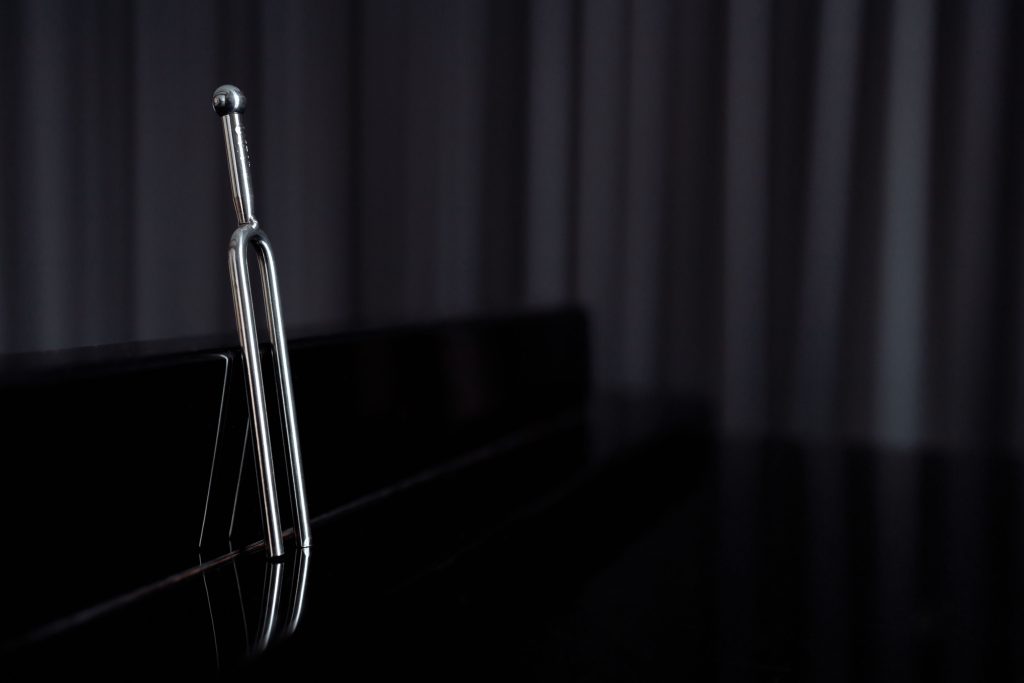
The 512 Hz tuning fork occupies a unique position in how the different frequencies interact with different issues of mind and body because of its dual history in medicine and healing. Clinically, it has been used for generations in audiology to test hearing and bone conduction precisely because of its acoustic clarity and stability. Therapeutically, that same clarity makes it an exceptionally useful anchoring frequency. Unlike the complex overtone stacks produced by bowls and gongs, the 512 Hz tuning fork produces a nearly pure tone. This purity is what makes it effective as a focal point in meditation-adjacent practice and as a tool for stimulating the vagal pathways that run through the jaw, skull, and upper chest when the stem is placed against bone.
528 Hz is one of the most talked-about frequencies in sound healing, sometimes called the love frequency or the miracle tone. It has attracted more research attention than most healing frequencies, and while the results are genuinely interesting, they are often overstated in wellness marketing. A study published in the Journal of Addiction Research and Therapy found that 528 Hz music reduced cortisol levels and increased testosterone in a small sample of participants. Another study found modest anti-anxiety effects. These are real findings. They do not, however, support the broader claims sometimes made about DNA repair or cellular transformation. What can be said reasonably is that 528 Hz appears to have measurable physiological effects consistent with relaxation and stress reduction, and that it occupies a frequency range the nervous system seems to receive positively.
639 Hz is associated in sound healing traditions with interpersonal connection, empathy, and the heart space more broadly. Practitioners who work with grief, relationship rupture, or the emotional aftermath of loss often favor this frequency because it seems to create an opening rather than a resolution, an atmosphere in which emotional material can be felt without being suppressed or immediately analyzed. Whether you frame this neurologically, as a particular pattern of limbic activation, or intuitively, as the frequency of the open heart, the practical effect is similar.
741 Hz is associated with detoxification and the clearing of energetic and emotional residue. In a more grounded framing, it appears to support what might be called cognitive clarification, a sharpening of mental signal from noise. Some practitioners use it with clients who feel mentally foggy, emotionally cluttered, or overwhelmed by excessive stimulation, and report that it helps restore a quality of discernment.
852 Hz and 963 Hz sit at the upper range of commonly used healing frequencies. 852 Hz is associated with awakening intuition and returning to spiritual order, language that maps roughly onto states of heightened present-moment awareness and reduced narrative self-referencing in more secular terms. 963 Hz is sometimes called the frequency of the crown or the God frequency in certain traditions, pointing toward transcendent or mystical states of consciousness. At a practical level, these higher frequencies tend to produce their effects more through the subtle quality of the listening environment than through felt physical vibration, since their wavelengths are shorter and their tissue penetration less pronounced than lower frequencies.
The Nervous System Connection
Across all of these frequency ranges, there is a single underlying mechanism that deserves special attention: the vagus nerve. This long, wandering nerve connects the brainstem to the heart, lungs, gut, and many other organs, and it is the primary pathway through which the parasympathetic nervous system, your rest and digest mode, communicates with the body. Vagal tone, the degree of healthy vagal activity, is one of the most robust biomarkers of resilience, emotional regulation capacity, and overall health.
Sound is one of the most direct ways to stimulate the vagus nerve non-invasively. The inner ear and the auditory processing pathways are heavily connected to vagal circuitry, which is why certain sounds trigger an almost visceral relaxation response before the conscious mind has had any chance to evaluate whether relaxation is appropriate. Sustained low to mid-range frequencies, particularly those in the ranges produced by singing bowls, gongs, and instruments like the cello and bassoon, appear to create conditions particularly favorable for vagal activation. The 512 Hz tuning fork, when placed against the mastoid bone behind the ear or along the sternum, directly contacts bone structures that conduct vibration to vagal pathways.
This is why practitioners who understand the anatomy of sound therapy often speak not about relaxation as a goal but about safety as a foundation. A nervous system that feels safe is a nervous system capable of genuine rest. Sound, at the right frequencies and in the right environment, is one of the most efficient ways to communicate safety to a system that has forgotten how to receive it.
Practical Guidance for Using Frequency-Based Sound for Relaxation
If you are new to intentional frequency work, the most accessible starting point is a good quality sound bath recording, ideally one that uses live instruments rather than synthesized tones, since the overtone complexity of acoustic instruments provides richer neurological input. Allow yourself to lie down, close your eyes, and give the first five minutes entirely to simply receiving the sound without evaluating it.
For home practice, a 512 Hz tuning fork is one of the most cost-effective and versatile tools available. Activate it and hold it near your ear or against your sternum and follow the tone as it fades. This simple practice can shift the nervous system measurably within minutes and serves as an accessible bridge into deeper states before a meditation session.
Binaural beat recordings designed for alpha or theta entrainment are widely available and well suited to use with headphones during rest periods. Starting with alpha range beats in the 8 to 10 Hz difference frequency is gentler than diving straight into deep theta, particularly for people with anxiety who may find very deep states initially disorienting rather than relaxing.
If you are drawn to working with solfeggio frequencies specifically, playlists built around 396 Hz or 528 Hz are good starting points for general stress and anxiety. For physical tension and body-level holding, 174 Hz and 285 Hz sessions tend to work at a more somatic register. For emotional opening or grief work, 639 Hz creates a supportive environment without forcing resolution.
A Few Honest Cautions
Sound frequency therapy is genuinely promising and broadly safe for most people, but it benefits from some honest framing. The evidence for specific frequency-to-outcome mappings is stronger for brainwave entrainment than for the solfeggio system specifically. The solfeggio frequencies have deep historical and cultural roots, and the experiential reports of practitioners and participants are consistent enough to take seriously, but robust clinical trials for most individual frequencies remain sparse.
What the evidence does support clearly is that immersive, sustained sound in the right environment produces measurable relaxation responses, reduces cortisol, improves vagal tone, and shifts brainwave activity in directions consistent with rest and integration. Whether those effects come precisely from 528 Hz versus 532 Hz is a more open question than some sound healing content suggests.
Use sound as a tool, bring your own attentive awareness to the experience, and let the results speak for themselves over time. The frequencies are real. The responses are real. The science is still arriving at the party that practitioners and their clients have been attending for a long time.