
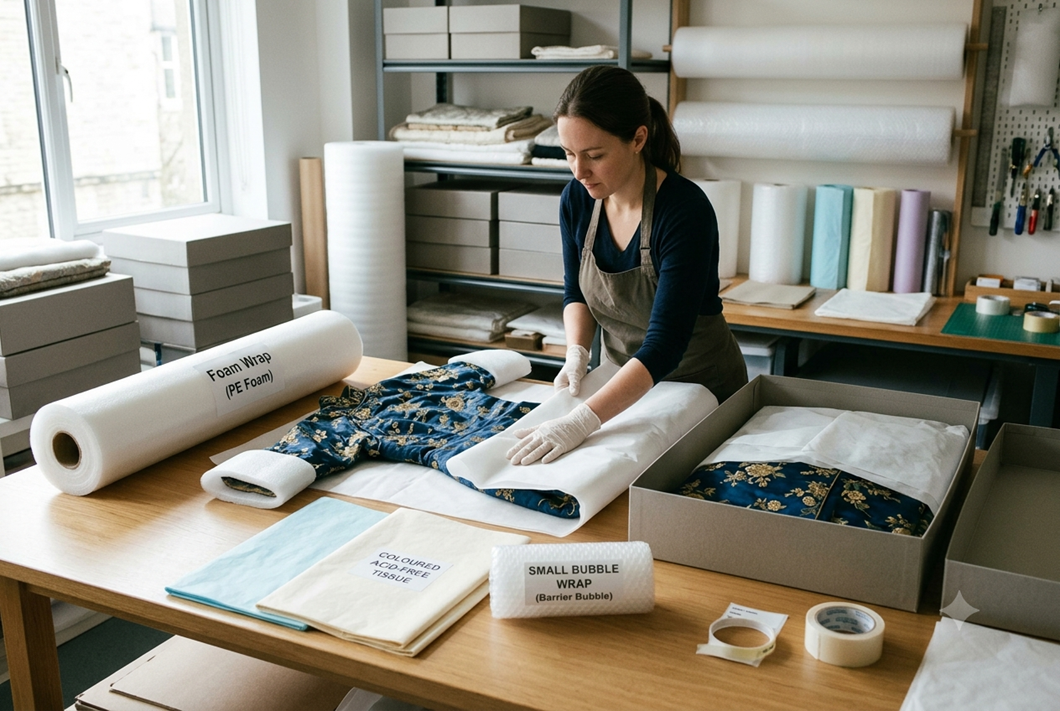
Yes, acid-free tissue really can protect delicate fabrics, and it’s one of the easiest ways to keep garments looking their best during storage and shipping. I’ve packed everything from embroidered outfits to silk scarves, and one thing has become clear over the years: the material touching the fabric matters just as much as the outer box. A strong carton protects the parcel, but acid-free tissue helps reduce creases, prevents rubbing and keeps delicate fibres in better condition. If you’re sending premium clothing, bridal wear or handmade textiles, this simple layer can make a noticeable difference. Pair it with the right protective packaging, and your garments are far more likely to arrive looking as though they were packed only moments earlier.
Why Does Acid Free Tissue Matter More Than You Think?
The first time you pack a delicate garment, it’s easy to focus on the shipping box. I used to do exactly that. Then I started noticing a pattern. Parcels were arriving safely, yet some customers still mentioned crease marks or flattened embroidery. The box had done its job, but the fabric inside hadn’t been protected well enough.
That’s when I realised acid-free tissue isn’t just there to make packaging look attractive. It acts as a soft layer between folds, helping fabrics move less and reducing friction while they’re packed away. For delicate materials like silk, satin and linen, that extra layer can make a surprising difference.
I’ve found it especially useful because it can:
- Help soften fold lines during storage.
- Reduce rubbing between delicate fabrics.
- Minimise the chance of colour transfer.
- Keep garments looking fresh when they’re unpacked.
These aren’t dramatic changes, but together they improve the customer’s first impression when they open the parcel.
Which Type of Acid Free Tissue Should You Choose?
There’s no universal answer because different garments deserve different presentation. I normally think about two things before choosing tissue paper: how delicate the fabric is and what sort of unboxing experience I want the customer to have.
Coloured Acid Free Tissue
If you want your packaging to feel a little more premium, coloured acid free tissue is a great option. Before customers even touch the product, they’re already forming an opinion about your brand. Neatly wrapped tissue gives the parcel a thoughtful finish without adding much extra effort.
I often recommend it for:
- Boutique fashion orders.
- Gift packaging.
- Handmade garments.
- Luxury accessories.
It protects the fabric while adding a polished presentation that customers tend to remember.
White Acid Free Tissue
When protection is the main priority, white acid free tissue is usually my preferred choice. It’s simple, clean and suitable for almost every fabric colour, which is why it’s widely used by bridal boutiques, textile collectors and alteration specialists.
You’ll commonly see it used for:
- Wedding dresses.
- Silk garments.
- Vintage clothing.
- Cotton and linen textiles.
One packing mistake I still come across is folding garments too tightly before placing them straight into a carton. I once watched a boutique send embroidered scarves without tissue between the folds. The scarves weren’t damaged, but they arrived with stubborn crease lines that spoiled the presentation. Once tissue was added between each layer, those complaints almost disappeared.
That experience reminded me that good packaging isn’t always about spending more money. Sometimes it’s simply about choosing the right material before you close the box.
Why Should You Combine Acid Free Tissue with Other Packaging Materials?
Acid-free tissue does a brilliant job of protecting the fabric, but it isn’t designed to handle the bumps and knocks that happen during shipping. That’s why I never stop at one layer. Once the garment is wrapped, I think about what could happen during transport. Boxes get stacked, parcels slide across conveyor belts, and delivery vans don’t always offer the smoothest ride. A little extra protection goes a long way.
Foam Wrap Rolls
When I’m packing garments with embroidery, sequins or delicate embellishments, I always add Foam Wrap Rolls. The soft foam cushions raised details without putting pressure on them, which helps them hold their shape throughout the journey.
I usually recommend foam wrap for:
- Embroidered outfits.
- Bridal accessories.
- Handbags and belts.
- Decorative fashion pieces.
It’s a simple addition, but it can prevent small marks that are expensive to fix later.
Small Bubble Wrap
If the parcel is travelling a long distance, I also use Small Bubble Wrap as the outer protective layer. It absorbs knocks and vibrations that naturally occur during parcel sorting and transport.
It’s particularly useful for:
- Luxury clothing orders.
- Shoes packed with garments.
- Gift boxes.
- Fashion accessories.
One thing I never do is place bubble wrap directly against delicate fabrics. Wrapping the garment in tissue first protects the material, while the bubble wrap cushions the parcel.
Which Packaging Material Should You Use?
| Packaging Material | Best Use |
| Acid-free tissue | Protecting delicate fabrics from creases and rubbing |
| Foam Wrap Rolls | Cushioning embroidery and delicate accessories |
| Small Bubble Wrap | Absorbing impacts during transport |
| Kraft paper | Filling empty spaces inside cartons |
| Corrugated boxes | Protecting parcels during shipping |
Conclusion
Over the years, I’ve realised that no single packaging material does everything. Acid-free tissue protects the fabric, foam cushions delicate details, and bubble wrap absorbs shocks during transport. When these materials are used together inside a sturdy carton, delicate garments arrive looking much closer to the way they left your packing table. If you’re choosing protective materials, suppliers such as Globe Packaging offer a wide range of options for different packaging needs. Spending a few extra minutes packing carefully today is often far cheaper than dealing with damaged products and disappointed customers later.
FAQs
1. Is acid-free tissue suitable for silk and satin?
Yes. It helps reduce creases and protects delicate fibres during storage and shipping.
2. Can foam wrap replace tissue paper?
No. Foam provides cushioning, while tissue protects the fabric itself.
3. Should bubble wrap touch delicate clothing?
It’s better to wrap garments in tissue first and use bubble wrap as the outer protective layer.
4. Is acid-free tissue only used for luxury garments?
No. It can be used for everyday clothing whenever extra protection is needed.
5. Do I still need a sturdy shipping box?
Absolutely. A strong outer carton completes the packaging and helps protect garments throughout their journey.