

Building a beautiful deck or balcony requires balancing modern visual appeal with uncompromising structural safety. Architectural trends lean heavily toward open layouts that integrate your living space with outdoor landscapes. Property owners regularly choose minimalist barrier designs to secure their perimeters without blocking scenic views. Among these options, installing a sleek cable railing with wood posts has become an exceptionally popular choice for residential properties.
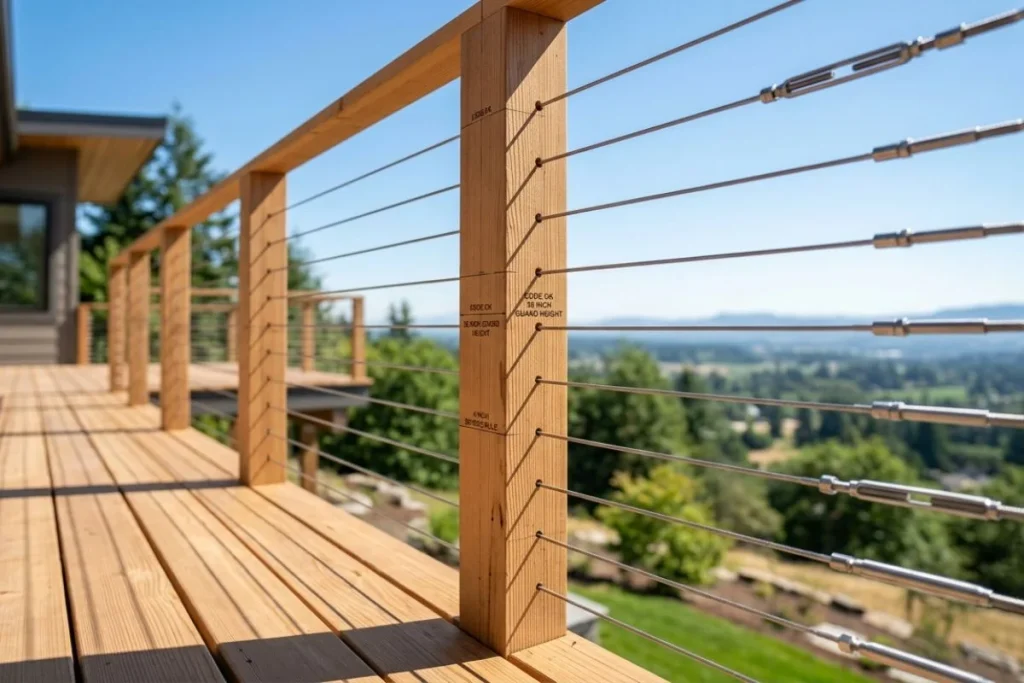
However, building an elegant system involves more than just selecting high-quality metallic components. You must understand and adhere strictly to local safety regulations. Every jurisdiction enforces strict rules governing guardrail design, post stability, and line opening limits. Failing to meet these standards can lead to costly project delays, failed building inspections, and dangerous structural failures.
Understanding the legal and technical boundaries ensures your project remains durable, secure, and compliant. By partnering with an industry-leading manufacturer like UNIKIM, you gain access to precision-engineered assemblies that make compliance straightforward. Our complete line of cable railing systems simplifies layout math, allowing you to build an elegant system that passes inspection with ease.
Why Building Code Compliance Matters
Building codes exist to prevent accidents, injuries, and structural collapses in residential and commercial properties. Guardrails are safety structures designed to withstand continuous horizontal loads, severe weather, and unexpected impacts. Because horizontal wire configurations lack a solid surface, code inspectors look closely at line movement and tension levels during reviews.
[Non-Compliant Railing] ──> Loose wires, wide gaps ──> Failed inspection, high safety risk
[UNIKIM Code Setup]     ──> Rigid tension, tight spacing ──> Passed inspection, permanent security
Ignoring code standards compromises your family’s safety and can create significant legal vulnerabilities. If you sell your property later, a non-compliant deck structure will show up on home inspection reports, stalling the transaction. Furthermore, insurance companies can deny injury claims if they discover the deck barriers do not meet code requirements.
Taking the time to study safety rules before ordering hardware saves time, minimizes material waste, and ensures structural integrity. If you are exploring alternative unobstructed designs for your property, consulting an established glass railing systems supplier will give you a clear view of different structural codes.
Cable Railing Height Requirements
The overall height of your guardrail is the first structural element an inspector will measure. Code enforcement agencies set distinct height thresholds depending on how the property is used and the height of the floor deck.
Residential Deck Code (IRC Code Requirements)
The International Residential Code, or IRC code, dictates safety requirements for one- and two-family homes. Under the IRC, any deck, balcony, or porch raised 30 inches or more above the ground must have a protective guardrail. The minimum legal cable railing height for these residential structures is 36 inches from the finished deck floor to the top of the upper handrail.
Property owners often choose a 36-inch frame because it provides excellent fall protection while keeping the top rail below the natural line of sight when seated. However, if you are building a cable railing with wood posts near a steep drop-off, choosing a taller 42-inch frame can provide extra peace of mind and enhanced wind protection.
Commercial Code (IBC Cable Railing Standards)
The International Building Code, or IBC cable railing standard, governs commercial properties, multi-family apartment complexes, offices, and public spaces. Because public environments handle much heavier foot traffic, safety requirements are significantly stricter.
The IBC mandates a minimum guardrail height of 42 inches for all elevated platforms. This extra height prevents accidental falls in crowded spaces. Additionally, commercial handrails must feature specific graspable profiles to ensure all users can easily maintain their balance.
Cable Spacing — The 4-Inch Sphere Rule
The most critical regulation for horizontal line systems is the 4 inch sphere rule. This rule is designed to protect infants, toddlers, and small pets from slipping through the gaps or getting trapped between the wires.
[ 3-Inch Fixed Wire Gap ] ───> ( 4-Inch Rigid Inspection Sphere Cannot Pass ) ───> [ 3-Inch Fixed Wire Gap ]
According to international safety standards, the clear gap between horizontal lines must never allow a rigid 4-inch sphere to pass through under pressure. Because stainless steel lines are naturally flexible, setting your physical drill holes exactly 4 inches apart will result in a failed inspection. When an inspector applies force to the center of a wire run, the line will deflect, creating an unsafe opening.
To pass this strict safety check, professional builders space their horizontal drill holes no more than 3 inches apart on center. This tight vertical layout ensures that even when the cables flex slightly under pressure, the gap never expands wide enough to violate the 4 inch sphere rule. Adhering to this layout rule creates a secure barrier that easily passes code verification.
Managing Cable Deflection Limits
Understanding cable railing deflection is essential for designing a compliant horizontal barrier. Deflection refers to the distance a stainless steel line stretches out of alignment when a lateral force is applied to it. If your lines sag or stretch too easily, a child could step on the lower wires, expanding the gap and creating a fall hazard.
High Wire Tension + Proper Post Spacing = Minimal Deflection (Passes Inspection)
Low Wire Tension + Wide Post Spacing = High Deflection (Fails Inspection)
Controlling deflection requires balancing high wire tension with rigid vertical supports. If you use low-tensile wires or skip intermediate supports, the lines will easily pull apart under a light load.
To ensure safety, inspectors often test the lowest strands with a specialized tension gauge. Choosing a high-quality cable railing with wood posts layout provides the necessary structural rigidity to limit deflection, provided you place your vertical supports correctly.
Post Spacing Requirements
To control wire movement and maintain clean lines across your deck perimeter, you must limit your horizontal cable railing post spacing. Placing your structural vertical posts too far apart allows the long wires to stretch excessively, resulting in a failed inspection.
| Support Frame Setup | Maximum Center Spacing | Recommended Role in Structure |
| Heavy Structural Wood Posts | 4 Feet to 5 Feet Maximum | Bears the primary tension load of the system. |
| Slim Metallic Intermediate Bars | 3 Feet Maximum | Controls line deflection without adding visual weight. |
| Commercial Steel Posts | 4 Feet Maximum | Delivers maximum rigidity for heavy public foot traffic. |
For a standard residential deck, primary structural posts should be placed no more than 5 feet apart. If your layout requires a longer run between heavy wood timbers, you must install thin intermediate spacer pickets every 3 feet. These slim vertical bars keep the horizontal lines aligned and prevent deflection without blocking your view. Keeping your post gaps tight ensures your framework remains completely secure.
End Post and Corner Post Strength
A common mistake during installation is underestimating the immense pull forces that tensioned wires exert on a frame. When you tighten ten or twelve rows of steel wire to the required tension, the structural end posts experience thousands of pounds of constant pulling force.
[End Post] <─── (Thousands of Pounds of Total Pull Force) ─── [End Post]
If your end termination posts are weak or poorly anchored, the tension will pull them inward, causing the wires to sag. When planning a cable railing with wood posts, use heavy 6×6 timbers for your corners and end runs rather than standard 4x4s.
Additionally, you must anchor these end posts directly into the deck’s underlying joist network using heavy-duty structural through-bolts. Securing these posts to thin surface deck boards alone will lead to structural shifting and eventual frame failure.
Cable Tension Requirements
To ensure long-term stability and pass safety checks, each individual line must be tensioned to between 200 and 300 pounds of force. Reaching this tension requires high-quality, marine-grade hardware components.
- Preventing Frame Deflection: The top rail must be fully installed and secured before you tighten any wires. Tightening lines on an open frame will bend the posts inward.
- Systematic Tensioning Order: Always tighten your lines using a center-outward pattern. Start with the middle strand, then alternate moving upward and downward toward the top and bottom rails to distribute the structural load evenly.
- Using Precision Hardwear: Using premium cable railing fittings wood posts ensures your tensioning adjustments remain securely locked over time.
Step 1: Tighten Center Row ──> Step 2: Alternate Up/Down ──> Step 3: Secure Top/Bottom Strands
Investing in specialized hardware prevents the threads from stripping under heavy tension. For projects requiring continuous, long wire runs, choosing premium stainless steel cable components ensures the lines maintain their tension without stretching or sagging over time.
Regional Code Differences
While the IRC and IBC provide the foundation for most building codes, regional enforcement can vary significantly. Local municipalities often add specific amendments based on geography, climate, or regional safety trends.
For example, coastal areas with high wind hazards often enforce strict regulations regarding lateral wind loads and salt-spray corrosion resistance. Conversely, some urban areas ban horizontal layouts entirely due to concerns that children might climb the horizontal wires like a ladder.
Always check with your local building department before purchasing tools or starting construction. Knowing your regional guidelines prevents expensive mistakes and ensures your project meets local safety standards. For a historical perspective on traditional vertical barriers, you can read about the architectural history of the baluster.
How to Pass a Building Inspection
Passing a structural building inspection requires careful planning, accurate layout measurements, and clean craftsmanship. Following a systematic checklist will help you avoid delays during the final walkthrough:
- Verify Handrail Height: Double-check that your top rail sits at least 36 inches above the finished flooring for residential decks, or 42 inches for commercial properties.
- Test for Deflection: Apply firm manual pressure to the center of your longest wire run. If the gap between lines expands past 4 inches, tighten the hardware turnbuckles.
- Check Vertical Guardrail Gaps: Ensure the clearance between your bottom wire and the deck floor stays under 4 inches, even when upward pressure is applied.
- Inspect Structural Anchors: Make sure all base mounting plates, lag screws, and structural through-bolts are tight and flush against the deck joists.
Using pre-engineered component kits from trusted suppliers simplifies this verification process. Homeowners looking for a complete layout checklist can consult the UNIKIM DIY railing installation guide for homeowners.
Common Code Violations to Avoid
Many DIY builders make predictable mistakes that result in failed inspections. Avoiding these common installation errors saves time and protects your budget:
Overspaced Drill Holes
Spacing your horizontal drill holes exactly 4 inches apart is a frequent mistake. Because steel lines flex, this layout will fail the 4-inch sphere test every time. Keep your drill spacing to a maximum of 3 inches apart on center.
Weak Top Rail Connections
The top rail holds your vertical posts in alignment and keeps them from leaning inward under the tension of the wires. If you use weak screws or thin wood for the top rail, the frame will bow, causing the lines to sag. For extra strength on glass setups, adding a matte black stainless steel glass handrail cap railing provides excellent rigid reinforcement.
Skipping Intermediate Supports
Attempting to run wires across a 10-foot span without an intermediate support post or spacer picket will result in excessive wire deflection. Ensure you install a vertical support every 3 to 4 feet to keep the lines secure.
[End Post] ───── (10-Foot Unsupported Span = Fails Code) ───── [End Post]
[End Post] ─── [Spacer] ─── [Spacer] ─── [Spacer] ─── [End Post] (Supported = Passes Code)
If you prefer a solid panel partition over horizontal wires for parts of your property, you can integrate premium frameless glass railing systems using heavy-duty glass clamps & connectors. To understand how these components hold panels securely without vertical posts, read our article explaining what are glass clamp systems. For exterior pool zones, using specialized glass railing spigots for pool fencing ensures excellent moisture protection.
UNIKIM Certified Structural Hardware
Building a code-compliant deck requires high-quality, reliable hardware. UNIKIM manufactures a premium selection of marine-grade 316 stainless steel wires, heavy-duty tensioners, and specialized mounting hardware designed to meet strict residential and commercial safety codes. Our components are precision-engineered to handle high tension loads while delivering a clean, modern look.
To see our automated production lines and quality testing processes, visit our global UNIKIM Made-In-China portal. You can also watch detailed installation walkthroughs and product tutorials on our official UNIKIM YouTube channel. Working with code-certified hardware ensures your next home improvement project is safe, successful, and built to last.
For custom project estimates, engineering advice, or assistance choosing components, please reach out to the UNIKIM design desk directly.
Summary
Designing a code-compliant cable railing with wood posts system requires careful attention to height limits, post spacing, and wire deflection. By keeping your horizontal lines spaced 3 inches apart on center, you can easily pass the 4-inch sphere test and build a secure barrier. Using heavy-duty posts, installing a solid top rail, and choosing certified hardware ensures your hybrid system remains beautiful, legal, and safe for decades.
Frequently Asked Questions
What is the maximum post spacing for a cable railing with wood posts deck?
For a code-compliant deck, the maximum structural cable railing with wood posts spacing should not exceed 5 feet on center. If your project layout requires a longer run between wood posts, you must install a slim intermediate spacer picket every 3 feet to minimize cable deflection and keep the wires properly aligned.
How do I pass the 4-inch sphere test with a cable railing with wood posts layout?
To easily pass the 4-inch sphere test using a cable railing with wood posts setup, you should space your drill holes no more than 3 inches apart on center. This tight spacing ensures that even when the horizontal stainless steel cables flex under pressure, the gap never opens wide enough to allow a 4-inch sphere to pass through.
What height should I choose for a residential cable railing with wood posts system?
According to the residential IRC code, the minimum legal height for a guardrail is 36 inches from the finished floor to the top of the handrail. If you are building a cable railing with wood posts system near a high drop-off or steep slope, you can use a 42-inch height for enhanced safety and wind protection.
Can I install a cable railing with wood posts system around an outdoor swimming pool?
Yes, you can install a cable railing with wood posts system around an outdoor pool, provided the layout complies with your local pool safety codes. Pool barriers typically require a minimum height of 48 inches and must include self-closing, self-latching structural safety gates to prevent unsupervised access by children.
Why do end posts on a cable railing with wood posts deck sometimes bend inward?
End posts bend inward when they cannot handle the high tension load of the tightened steel cables. When building a cable railing with wood posts system, always use heavy 6×6 timbers for your end runs, anchor them securely to the deck framing with through-bolts, and install a rigid top rail before tensioning the lines.