

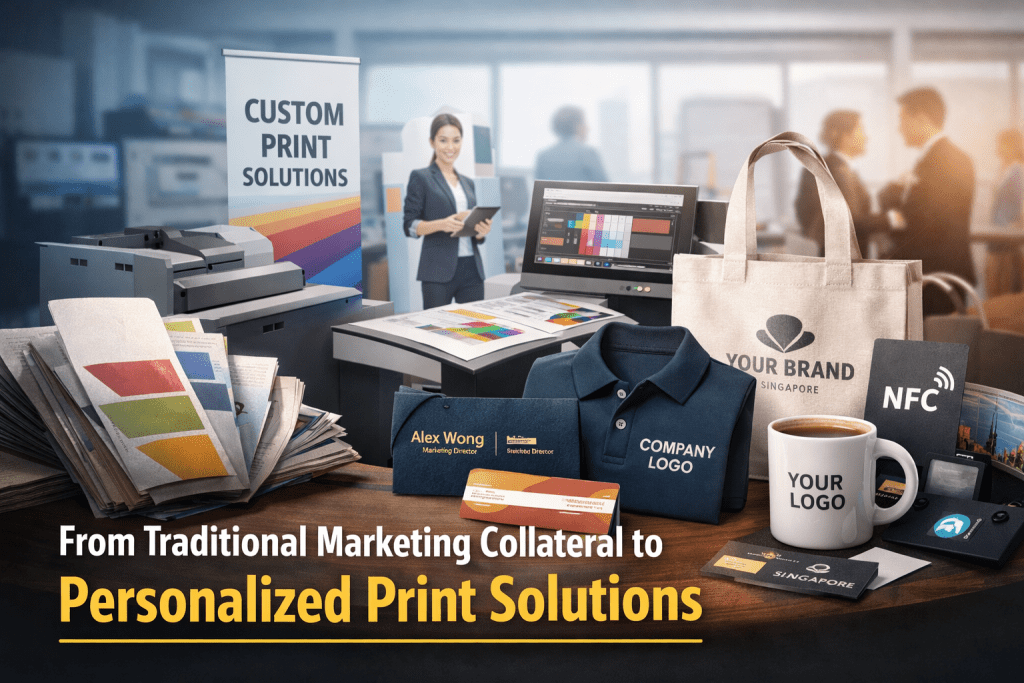
In an era dominated by digital advertising, businesses are rediscovering the power of physical brand experiences. From personalized business cards to customized retail signage, companies across industries are moving beyond generic marketing collateral and investing in print solutions that create stronger brand recall, trust, and engagement. This shift reflects a broader market trend: personalization is no longer a premium feature. It is fast becoming a baseline expectation.
As competition intensifies and customer attention becomes harder to capture, businesses are reassessing how offline brand touchpoints contribute to long-term visibility and growth.
The Market Forces Driving the Shift Toward Personalization
Marketing leaders today face a familiar challenge. Digital channels are saturated, customer acquisition costs are rising, and brand differentiation is increasingly difficult. According to global consulting firms, consumers and B2B buyers alike now expect personalized experiences at every interaction point, not just online but offline as well.
Studies from firms such as McKinsey and Deloitte consistently show that personalization can significantly improve customer engagement, brand recall, and conversion rates. While much of this conversation has focused on digital personalization, physical branding is quietly undergoing a similar transformation.
Print materials, once considered static and interchangeable, are now being redesigned as strategic brand assets. Customized signage, branded packaging, premium business cards, and personalized merchandise allow companies to create tangible experiences that digital ads alone cannot replicate.
This trend is especially visible among small and mid-sized enterprises, where offline visibility often plays a critical role in customer trust and local market presence.
How Print Solutions Are Evolving to Meet Business Needs
The shift toward personalization has pushed the print industry to evolve beyond traditional production models. Modern print providers are integrating digital workflows, faster turnaround times, and customization at scale to meet growing business demands.
Website-optimized tools such as online design previews, automated order management systems, and short-run printing options are becoming standard across the industry. These tools allow businesses to experiment with branding, test campaigns quickly, and align print assets with digital marketing strategies more efficiently.
Rather than ordering large volumes of generic materials, companies are increasingly opting for targeted, purpose-driven print assets tailored to specific events, locations, or customer segments.
A Market Example: How Businesses Are Applying Personalized Print
One example of how this trend is playing out can be seen in Singapore, where companies like PrintVolution, a modern printing company in Singapore, are responding to rising demand for customized print solutions. Serving as a case study within the broader industry shift, Companies offers a wide range of personalized print products designed to support modern branding needs.
These include advertising and visibility assets such as roll-up banners, X-stand banners, PVC canvas displays, life-size standees, car decals, and flyers. These tools are commonly used for events, retail promotions, and on-ground marketing. On the business identity side, demand continues to grow for name cards, luxury business cards, NFC cards, letterheads, envelopes, stickers, and UV DTF stickers that reflect brand differentiation.
Packaging and merchandise such as paper bags, tote bags, mugs, and money packets are also increasingly used to reinforce brand presence beyond the point of sale. Meanwhile, branded wearables including polo shirts, round-neck shirts, embroidery, and aprons are becoming common across corporate events, retail teams, and service businesses.
Together, these offerings reflect how print solutions are aligning more closely with branding strategy rather than serving as standalone marketing materials.
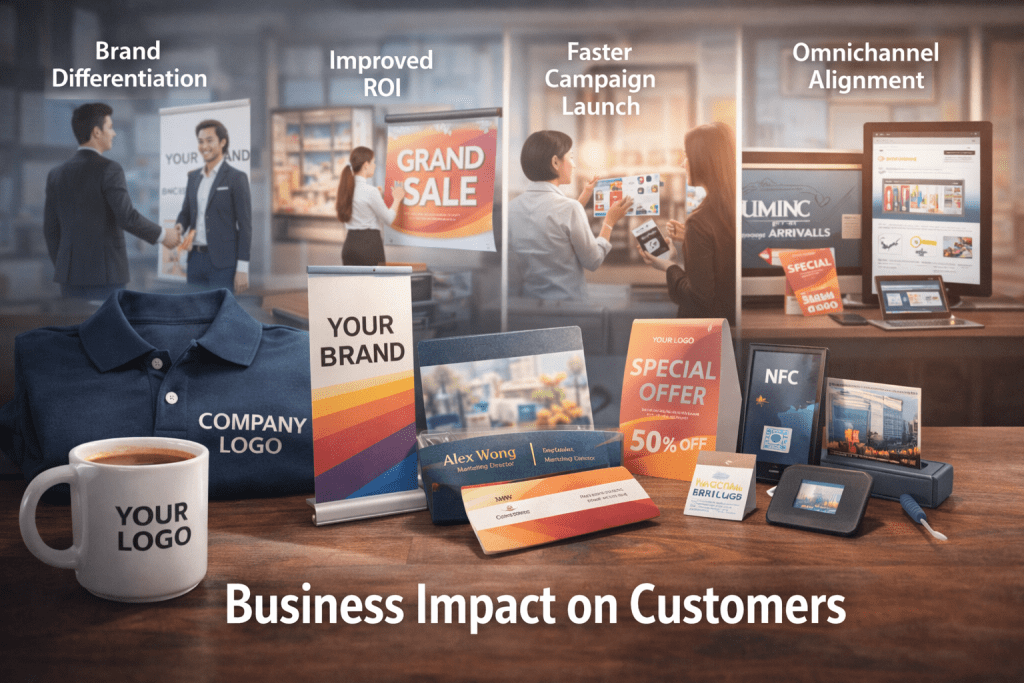
Business Impact on Customers
1: Stronger Brand Recall and Differentiation
Personalized print assets help brands stand out in competitive environments. Physical materials with customized design and messaging tend to leave a more lasting impression, particularly in B2B and local markets.
2: Improved Marketing ROI
Unlike short-lived digital ads, print materials often deliver extended value. Banners, signage, and branded merchandise can be reused across campaigns, events, and physical locations, improving return on investment.
3: Faster Market Activation
Short-run and on-demand printing allow businesses to launch promotions quickly, test messaging, and adapt campaigns without committing to large inventories.
4: Omnichannel Brand Alignment
Print increasingly complements digital efforts. NFC cards, QR-enabled packaging, and branded collateral help bridge offline and online engagement, creating a more cohesive customer journey.
5: Expert Insights and Industry Perspectives
A PrintVolution executive notes that business expectations around print have evolved significantly.
“Companies today are no longer ordering print products in isolation. They are building brand systems that emphasize consistency, personalization, and speed across every touchpoint.”
Marketing thought leaders have long emphasized the importance of differentiation. As author Seth Godin famously observed, “People do not buy goods and services. They buy relations, stories, and magic.” Personalized print assets play a growing role in delivering that story in physical form.
Industry analysts echo this view, suggesting that as personalization becomes the norm, businesses that fail to adapt risk blending into the background, both online and offline.
What This Shift Means for Business Leaders
For founders, marketers, and decision-makers, the message is clear. Print is no longer a secondary consideration. As customer expectations evolve, personalized print solutions are becoming a strategic tool for visibility, credibility, and engagement.
Retail, real estate, education, events, and service-based businesses stand to benefit most from this shift, particularly in markets where physical presence remains influential.
Looking Ahead: The Future of Print in a Personalization-Driven Economy
The future of print lies at the intersection of customization, technology, and brand experience. As digital tools continue to integrate with print workflows, businesses will gain more flexibility to personalize at scale without sacrificing efficiency.
What was once optional is quickly becoming essential. Companies that recognize print as part of a broader brand ecosystem, rather than just a marketing expense, are likely to gain a competitive edge in an increasingly crowded marketplace.