
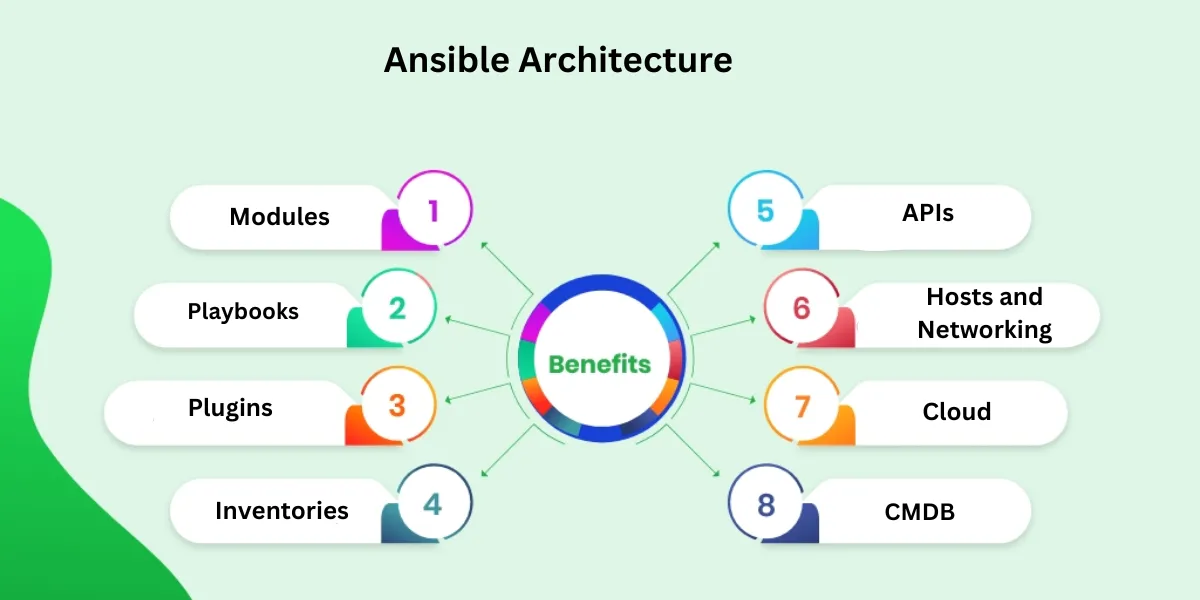
Modern IT environments demand speed, consistency, and scalability. Organizations of all sizes are increasingly turning to automation tools to streamline infrastructure management, reduce manual effort, and ensure reliable deployments. Among the many automation platforms available today, Ansible has emerged as one of the most popular solutions because of its simplicity, agentless architecture, and powerful automation capabilities. Learning how to deploy, manage, and secure infrastructure using Ansible can significantly improve operational efficiency and support long-term growth.
One of the most important aspects of secure infrastructure automation is establishing trusted communication between control systems and managed nodes. Understanding SSH key-based authentication for secure Ansible connectivity helps administrators create a reliable foundation for automation workflows while ensuring seamless communication across managed environments.
Understanding Infrastructure Automation
Infrastructure automation refers to the process of using software tools to manage and provision computing resources automatically. Instead of manually configuring servers, networks, and applications, administrators can define desired configurations and allow automation tools to execute the tasks consistently.
Automation offers numerous benefits, including:
- Faster deployment cycles
- Improved consistency across systems
- Reduced operational overhead
- Enhanced scalability
- Simplified maintenance
- Better resource utilization
As organizations expand their digital operations, automation becomes essential for maintaining efficiency and reliability.
Why Ansible Has Become a Preferred Automation Tool
Ansible is widely adopted because it provides a simple yet powerful approach to automation. Unlike many traditional management platforms, Ansible does not require agents to be installed on managed systems.
Simplicity
Ansible uses human-readable YAML files known as playbooks. This makes automation scripts easier to understand, maintain, and share among team members.
Agentless Architecture
Communication occurs through standard protocols such as SSH, eliminating the need for additional software installations on target systems.
Scalability
Organizations can manage a few servers or thousands of systems using the same automation framework.
Flexibility
Ansible supports cloud platforms, virtual machines, containers, networking devices, databases, and application deployments.
The Foundation of Secure Automation
Security is a critical component of every automation strategy. Before organizations automate infrastructure tasks, they must ensure that communication channels are secure and properly authenticated.
A well-designed automation environment includes:
Secure Authentication
Authentication mechanisms verify the identity of systems before allowing access.
Access Control
Role-based permissions help ensure that only authorized personnel can execute automation tasks.
Encrypted Communication
Encryption protects sensitive information as it travels across networks.
Credential Management
Organizations should use secure methods for storing and managing credentials used by automation tools.
These practices create a trusted environment that supports efficient automation while maintaining strong security standards.
Designing a Scalable Automation Framework
Scalability should be considered from the beginning of any automation initiative. A scalable framework allows organizations to expand infrastructure without significantly increasing administrative effort.
Key principles include:
Standardized Configurations
Using consistent configurations across environments simplifies management and troubleshooting.
Modular Automation Components
Breaking automation tasks into reusable modules improves maintainability and reduces duplication.
Centralized Management
Managing infrastructure from a central control system improves visibility and operational efficiency.
Version Control Integration
Storing playbooks and configurations in version control systems helps teams track changes and collaborate effectively.
Automating Server Provisioning
Server provisioning is one of the most common use cases for infrastructure automation. Instead of manually preparing servers, administrators can automate the entire lifecycle.
Provisioning tasks often include:
- Operating system configuration
- Package installation
- User management
- Security policy enforcement
- Service deployment
- Network configuration
Automation ensures these tasks are performed consistently every time a new server is introduced.
Configuration Management Best Practices
Configuration management ensures systems remain in their desired state over time.
Define Desired State
Administrators should clearly specify how systems should be configured.
Maintain Idempotency
Automation tasks should produce the same result regardless of how many times they run.
Use Templates
Templates simplify configuration file management and enable dynamic customization.
Organize Playbooks Logically
Well-structured playbooks improve readability and long-term maintainability.
These practices help organizations achieve reliable and predictable infrastructure operations.
The Role of Documentation in Automation
Even highly automated environments require thorough documentation.
Good documentation should include:
Architecture Diagrams
Visual representations help teams understand infrastructure relationships.
Workflow Descriptions
Documentation should explain how automation processes operate.
Configuration Standards
Clearly defined standards improve consistency across teams.
Operational Procedures
Documented procedures support onboarding, maintenance, and auditing activities.
Comprehensive documentation strengthens the effectiveness of automation initiatives.
Monitoring and Observability
Automation does not eliminate the need for monitoring. In fact, monitoring becomes even more important in highly automated environments.
Performance Monitoring
Track server and application performance metrics.
Availability Monitoring
Ensure critical services remain accessible.
Log Collection
Centralized logging simplifies troubleshooting and analysis.
Alerting Systems
Automated alerts help teams respond quickly to changing conditions.
Observability tools provide valuable insights that support proactive infrastructure management.
Managing Multi-Environment Deployments
Many organizations operate multiple environments, including development, testing, staging, and production.
Automation simplifies environment management by:
- Applying consistent configurations
- Reducing deployment variability
- Accelerating testing processes
- Supporting continuous delivery workflows
Maintaining consistency across environments improves software quality and operational stability.
The Importance of Roles and Reusability
Reusable automation components significantly improve efficiency.
Modular Design
Roles allow teams to separate functionality into manageable units.
Reduced Duplication
Reusable components eliminate repetitive code.
Faster Deployment
Predefined roles accelerate project implementation.
Easier Maintenance
Updating a single role can automatically improve multiple deployments.
This modular approach supports scalability and long-term maintainability.
Supporting Cloud and Hybrid Infrastructure
Modern organizations often operate a mix of on-premises and cloud resources.
Automation helps unify management across:
Public Cloud Platforms
Infrastructure can be deployed and configured automatically.
Private Data Centers
Existing systems can be integrated into automation workflows.
Hybrid Environments
Consistent automation practices can be applied across multiple infrastructure models.
This flexibility allows organizations to adapt to evolving business requirements.
Building Efficient Web Server Infrastructure
Web servers are the backbone of countless business applications and online services. Managing multiple web servers manually can become increasingly complex as environments grow.
Automation simplifies:
- Web server installation
- Service configuration
- Load balancing setup
- Application deployment
- Maintenance activities
Organizations that automate web server management can achieve greater consistency, faster deployments, and improved operational efficiency.
As infrastructure requirements expand, many administrators explore advanced techniques such as automating multi-node web server provisioning with Ansible roles and handlers to streamline deployments and ensure standardized configurations across large-scale environments.
Future Trends in Infrastructure Automation
The future of infrastructure management continues to be shaped by automation technologies.
AI-Assisted Operations
Artificial intelligence is helping organizations optimize infrastructure performance and resource allocation.
Self-Healing Systems
Automated remediation can resolve common issues without manual intervention.
Infrastructure as Code Expansion
Organizations are increasingly managing entire environments through code-based definitions.
Enhanced Cloud Automation
Cloud-native automation capabilities continue to evolve rapidly.
These advancements will further improve efficiency, scalability, and operational reliability.
Conclusion
Infrastructure automation has become a fundamental requirement for modern IT operations. By leveraging tools such as Ansible, organizations can improve consistency, enhance security, reduce administrative effort, and support scalable growth. From secure authentication and configuration management to server provisioning and multi-node deployments, automation enables teams to manage increasingly complex environments with confidence. As technology continues to evolve, organizations that invest in strong automation practices will be better positioned to achieve operational excellence and long-term success.