
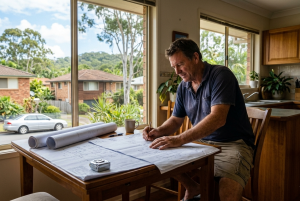
Thinking about building a new home, adding a shed, extending your kitchen, or knocking down and rebuilding? Before a single brick is laid or a slab is poured, understanding building approvals Brisbane requirements is essential.
Building approvals might not be the most exciting part of any construction project, but they are arguably the most important. Without the correct permits in place, your project can be stopped mid-construction, fined heavily, or — in worst-case scenarios — demolished at your own expense. The good news is that understanding the process takes most of the stress out of it.
In this guide, we break down everything you need to know about building approvals in Brisbane — what they are, when you need them, how to get them, and how to avoid the costly mistakes that trip up thousands of homeowners every year.
What Are Building Approvals in Brisbane?
A building approval — also called a building permit or development permit — is the formal written permission from a local authority or private certifier that confirms your proposed construction meets Queensland’s building standards and local planning regulations. Think of it like a green light from the government saying: your plans are safe, legal, and appropriate for this site.
Without this approval, you are legally not permitted to begin construction on most types of building work in Brisbane. The approval process exists to protect you, future occupants, and the broader community by ensuring structures are safe and built to standard.
Why Building Approvals Matter in Brisbane
Brisbane’s subtropical climate, flood-prone areas, steep terrain, and growing urban density make building regulation more critical here than in many other Australian cities. Queensland’s unique combination of council planning overlays, heritage protections, and the National Construction Code (NCC) creates a regulatory environment where the specifics of your site — not just your design — determine what you can and cannot build.
Beyond legal compliance, having proper approvals protects your property value, makes your home insurable, and gives you peace of mind that what you have built will stand safely for decades.
Understanding the Brisbane Building Approval Process
Development Approval vs Building Approval
One of the most common points of confusion for homeowners is the difference between a Development Approval (DA) and a Building Approval (BA). They are related but distinct — and in some cases, you will need both.
| Approval Type | What It Covers | Who Issues It |
| Development Approval (DA) | Land use, planning, zoning, overlays | Brisbane City Council or relevant council |
| Building Approval (BA) | Construction standards, safety, NCC compliance | Private certifier or council building certifier |
| Both Required | Major builds, knockdown-rebuilds, multi-dwellings | Council (DA) + certifier (BA) |
For straightforward residential projects like a standard new home on a flat block, you often only need a Building Approval. However, if your project involves land use change, significant site impact, or heritage considerations, a Development Approval will likely be required first.
Key Authorities and Regulations
Building work in Brisbane is governed by several layers of regulation that work together:
- National Construction Code (NCC) — sets the minimum performance requirements for all buildings across Australia, covering structural integrity, fire safety, access, and energy efficiency
- Queensland Development Code (QDC) — Queensland-specific standards that supplement the NCC for residential construction
- Brisbane City Council Planning Scheme — local rules covering zoning, overlays, setbacks, height limits, and neighbourhood character
- Queensland Building and Construction Commission (QBCC) — licenses builders and certifiers, and handles complaints and insurance
When Do You Need Approval?
Not all building work requires formal approval. However, the threshold is lower than most homeowners expect. In Brisbane, you generally need building approval for:
- New homes and dwelling construction
- Extensions and additions over 10 square metres
- Garages, carports, and sheds over a certain size
- Retaining walls over 1 metre in height
- Pools and spas
- Decks, patios, and pergolas attached to the home
- Demolition of structures
- Certain fencing, particularly near boundaries
When in doubt, always check with your local council or a licensed certifier before starting any work. Assuming you do not need approval is one of the most expensive assumptions a homeowner can make.
Step-by-Step Guide to Getting Building Approval in Brisbane
The building approval process in Brisbane follows a clear sequence — and understanding each stage helps you plan your timeline and budget accurately. Here is how it works from start to finish.
Step 1: Site Feasibility and Planning
Before engaging a designer or builder, the smartest first step is understanding your site’s constraints. In Brisbane, this means investigating:
- Zoning — what is your land zoned for, and what building types are permitted?
- Overlays — is your property affected by flood, bushfire, character, heritage, or other overlays that restrict what you can build?
- Setbacks — what are the minimum distances required from boundaries, roads, and waterways?
- Hidden costs — site preparation, retaining walls, easements, and infrastructure connections can add significantly to your budget if not identified early
Brisbane City Council’s online mapping tool (PD Online) allows you to search your property address and view all applicable zoning and overlay information for free. Spending 30 minutes on this early can save you months of delays later.
Step 2: Design and Documentation
Once you understand your site’s constraints, work with a licensed architect, building designer, or draftsperson to prepare your plans. The documentation required for a building approval in Brisbane typically includes:
- Site plan showing the property boundaries, building footprint, setbacks, and site features
- Floor plans drawn to scale
- Elevations showing all four sides of the building
- Engineering reports (structural and geotechnical, if required)
- Energy efficiency report (NatHERS or equivalent)
- Bushfire Attack Level (BAL) assessment if in a bushfire overlay
Getting your documentation right the first time is the single most effective way to avoid delays. Incomplete or inconsistent plans are the leading cause of approval hold-ups in Brisbane.
Step 3: Lodging Your Application
In Queensland, you can lodge your building approval application through either Brisbane City Council or a private building certifier. Both pathways are legitimate — but they have different timeframes and processes.
Pre-lodgement advice (optional but recommended): For complex projects, many homeowners and developers seek pre-lodgement meetings with council or their certifier before formally submitting. This informal review can identify issues before they become formal refusals, saving significant time and money.
For most residential projects, lodgement is now handled online through the Queensland Development Assessment system. Your builder or certifier can assist with this process.
Step 4: Assessment and Approval
Once lodged, your application enters the assessment phase. The certifier or council will review your plans against the NCC, Queensland Development Code, and Brisbane City Council’s planning scheme. During this stage:
- Additional information requests (AIRs) may be issued if documentation is incomplete or requires clarification
- Referral agencies (such as Queensland Fire and Emergency Services or the Department of Transport and Main Roads) may need to review specific aspects of your project
- Conditions may be attached to the approval — these are requirements you must meet during or after construction
Importantly, approval does not mean unconditional permission. Read your conditions carefully — they are legally binding, and failing to comply with them can jeopardise your completion certificate.
Step 5: Construction and Inspections
With your approval in hand, construction can begin. However, the approval process does not end when building starts. Mandatory inspections are a condition of every building approval and must be completed at specific stages:
| Inspection Stage | What Is Checked | Who Inspects |
| Slab/footing inspection | Foundation depth, reinforcement, formwork | Licensed certifier |
| Frame inspection | Structural framing, bracing, connections | Licensed certifier |
| Pre-lining inspection | Insulation, waterproofing, fire elements | Licensed certifier |
| Final inspection | Overall compliance, fixtures, finishes | Licensed certifier |
Never skip or delay a required inspection. If construction proceeds past an inspection point without sign-off, your certifier may require walls or slabs to be opened up for verification — a costly and disruptive outcome.
Step 6: Final Approval and Handover
Once all inspections are passed and any conditions are satisfied, your certifier will issue a Certificate of Occupancy (for new homes) or a Certificate of Classification (for other building types). This document confirms your building is legally habitable and compliant.
Keep all approval documentation, inspection records, and certificates in a safe place. These documents are required when selling your property, making insurance claims, or applying for future building approvals on the same site.
Types of Building Approvals in Brisbane
Not all building approvals are the same — the type of work you are undertaking determines the specific approval pathway required. Here is a breakdown of the most common types:
- Residential Building Approvals — Standard new home construction on a single residential lot. The most common type of approval in Brisbane.
- Renovation and Extension Permits — Required for most structural additions and alterations, including extensions, additional storeys, and major internal reconfigurations.
- Knockdown Rebuild Approvals — Demolishing an existing home and constructing a new one typically requires both a demolition permit and a new build approval. Heritage and character overlays can significantly affect this process.
- Demolition Approvals — Separate approval required before demolishing any structure, particularly pre-1946 homes in Brisbane which may be subject to character protection overlays.
- Townhouse and Multi-Dwelling Approvals — More complex approval pathways involving both Development Approval and Building Approval, with additional referral agencies and community notification requirements.
Special Cases in Building Approvals
Heritage-Listed and Pre-1946 Homes
Brisbane has thousands of pre-1946 timber Queenslander homes, many of which fall within character residential zones or are individually heritage-listed. If your property is in one of these categories, even routine renovations may require additional approvals and must meet specific design standards to preserve the character of the building. Always check your overlay status before planning any work on an older Brisbane home.
Environmental and Overlay Regulations
Brisbane’s geography creates a complex web of environmental overlays that affect building approvals across the city. Flood overlays, steep land overlays, wetland buffers, and waterway corridor setbacks all impose additional requirements that can affect your design, engineering requirements, and approval timeframe. Identifying these early — at the feasibility stage — is essential for accurate project planning.
Termite-Damaged or Unsafe Structures
If your property contains a termite-damaged or structurally unsafe building, you may need an urgent demolition approval before any remediation work can begin. In these cases, contact your local council immediately — emergency approval pathways exist for genuine safety risks.
Building Approval Requirements and Regulations
| Regulation | Scope | Key Requirement |
| National Construction Code (NCC) | All buildings nationally | Structural, fire, energy, access standards |
| Queensland Development Code (QDC) | Queensland residential | Siting, design, setbacks |
| Brisbane City Council Planning Scheme | Brisbane properties | Zoning, overlays, character areas |
| QBCC Licensing | Builders and certifiers | Must be licensed for all regulated work |
| Energy Efficiency (NatHERS) | New homes & major extensions | Minimum 7-star energy rating |
Risks of Unapproved Building Work
Every year, Brisbane homeowners face serious consequences for building without approval. The risks are real, significant, and often far more expensive than the approval process itself.
- Legal consequences and penalties — Queensland law allows councils to issue on-the-spot fines for unapproved building work. Continuing to build after a stop-work order can result in substantial penalties.
- Demolition orders — In serious cases, council can issue an order requiring unapproved structures to be demolished entirely at the owner’s expense — even if the building is structurally sound.
- Safety risks — Unapproved buildings have not been inspected for compliance with safety standards. Structural failures, fire hazards, and electrical faults are more common in unapproved structures.
- Impact on property value — Unapproved building work must be disclosed to buyers. It can delay or derail property sales, reduce your selling price, and make it difficult to refinance.
How to Check Existing Building Approvals
If you are buying a property or investigating historic work on your land, there are two reliable ways to check what building approvals exist:
- Brisbane City Council’s PD Online system — search by address to view approved development and building applications on a property
- Engage a licensed building inspector — a pre-purchase building inspection will identify any structures that appear to have been built without approval, giving you important information before you buy
It is worth noting that the absence of a building approval on council records does not automatically mean the work was illegal — records from older properties can be incomplete. A building inspector can assess whether existing structures appear to be built to code regardless of paperwork.
Costs and Timeframes for Building Approvals in Brisbane
| Project Type | Approximate Approval Cost | Typical Timeframe |
| New home (standard residential) | $1,500 – $3,500 | 6 – 12 weeks |
| Extension or renovation | $800 – $2,000 | 4 – 8 weeks |
| Shed or carport | $500 – $1,200 | 3 – 6 weeks |
| Knockdown rebuild | $2,500 – $5,000+ | 8 – 16 weeks |
| Townhouse or multi-dwelling | $5,000 – $15,000+ | 12 – 26 weeks+ |
| Pool or spa | $600 – $1,500 | 4 – 8 weeks |
These figures are indicative and can vary based on project complexity, site conditions, and whether referral agencies are involved. Using a private certifier rather than council can often reduce timeframes by 2 to 4 weeks for straightforward residential projects.
Expert Tips to Fast-Track Building Approvals
| Pro tip:The fastest approvals are for well-prepared applications. Every week saved in the approval process is a week earlier you can start — and finish — your project. |
- Get your plans right the first time — incomplete or inconsistent documentation is the leading cause of delays. Invest in a thorough set of plans prepared by a licensed designer.
- Check zoning and overlays early — before engaging a designer, confirm what your land allows. Discovering a flood overlay after your plans are drawn means expensive redesigns.
- Use a private certifier for residential projects — private certifiers typically offer faster turnaround than council for straightforward residential building approvals, often processing applications in 3 to 5 weeks.
- Prepare complete documentation upfront — include all required reports (engineering, energy efficiency, geotechnical) with your initial submission to avoid additional information requests.
- Engage experienced building approval specialists — professionals who specialise in Brisbane building approvals understand local requirements, common pitfalls, and how to present applications for the fastest possible assessment.
Common Mistakes During Building Approvals Brisbane Applications
Many homeowners seek professional help to simplify building approvals Brisbane requirements and documentation. Even well-intentioned homeowners make mistakes that cost them time and money. Here are the most common ones — and how to avoid them:
- Starting construction without approval — no matter how straightforward the project seems, always get written approval before work begins. Verbal advice from council is not an approval.
- Ignoring overlays and zoning rules — Brisbane’s overlay system is complex. A flood, character, or bushfire overlay can fundamentally change what you can build, how you build it, and what it costs.
- Underestimating costs and timelines — budget for the full approval process, including consultant fees, engineering reports, and council levies. And always add a buffer to your timeline — approvals rarely come faster than expected, and often take longer.
- Choosing an unlicensed builder or certifier — always verify QBCC licensing before engaging anyone for regulated building work in Queensland.
Why Professional Help Is Important
Navigating building approvals in Brisbane without professional guidance is possible for simple projects — but for anything beyond a basic shed or small extension, the complexity of Queensland’s regulatory environment makes expert help genuinely valuable.
Licensed builders who specialise in full-service construction — handling everything from council approvals to earthworks and final construction — remove the administrative burden entirely. Working with experienced building approval specialists in Brisbane means your application is prepared correctly, submitted strategically, and followed up professionally throughout the assessment process. The result is faster approvals, fewer surprises, and a project that proceeds on schedule.
When choosing an approval specialist or certifier, look for Queensland QBCC licensing, demonstrated experience with Brisbane City Council’s planning scheme, and clear communication throughout the process.
Building a New Home in Brisbane – What to Expect
For those embarking on a new home build in Brisbane, the approval process fits within a broader project timeline. Here is what the full journey typically looks like:
- Planning and budgeting (1–3 months) — research your site, establish your budget, engage a builder or designer, and begin the feasibility assessment
- Design and documentation (2–4 months) — work with your designer to produce a full set of plans and supporting reports ready for lodgement
- Approval phase (6–12 weeks) — lodge your application and manage the assessment process, responding promptly to any additional information requests
- Construction phase (6–18 months depending on size) — build proceeds through mandatory inspection stages
- Final inspections and handover (2–4 weeks) — final compliance checks, certificate of occupancy, and handover of the completed home
Throughout this process, clear communication with your builder, certifier, and designer keeps the project on track. Delays most often occur when communication breaks down or documentation is missing at critical points.
FAQs About Building Approvals Brisbane
Do small renovations need approval?
It depends on the scope of work. Minor cosmetic renovations — painting, flooring, cabinetry replacement — generally do not require approval. However, structural work, extensions over 10 square metres, plumbing changes, and electrical work typically do. When in doubt, check with a licensed certifier before starting.
How Long Do Building Approvals Brisbane Applications Take?
Timeframes vary by project type and complexity. For standard residential projects in Brisbane, expect 6 to 12 weeks when using council, or 3 to 6 weeks when using a private certifier. Complex projects involving referral agencies or Development Approval can take significantly longer.
Can I get retrospective approval?
Yes — retrospective building approvals (also called show cause processes) are possible in Queensland, but they are significantly more complex, time-consuming, and expensive than getting approval before you build. If unapproved work is found to be non-compliant with current standards, you may be required to modify or demolish it even if it has been in place for years.
What happens after approval?
After approval is granted, you can begin construction — but you must comply with all conditions attached to the approval, complete all mandatory inspections at the required stages, and obtain your completion certificate before occupying the building. Keep all documents safely for future reference.
Conclusion – Simplifying Your Building Approval Journey
Building approvals in Brisbane do not have to be overwhelming. When you understand the process, prepare thoroughly, and work with the right professionals, what seems like a bureaucratic hurdle becomes a manageable — and even straightforward — part of your construction project.
The key takeaways are simple: check your site’s zoning and overlays before you design, engage licensed professionals for your plans and certification, prepare complete documentation the first time, and never start construction without written approval in hand.
Whether you are building a new home, adding a shed to your property, or undertaking a major renovation, the approval process exists to protect you — and understanding it puts you firmly in control of your project from start to finish.
