
A fabrication workflow is only as predictable as its weakest handoff. A clean cut does not help much if the bending station is overloaded. A strong welding cell cannot reach full value if upstream parts arrive late, inconsistent or poorly prepared. For modern US fabrication teams, productivity depends on planning the entire route from cutting to forming, fit-up, welding and finishing.
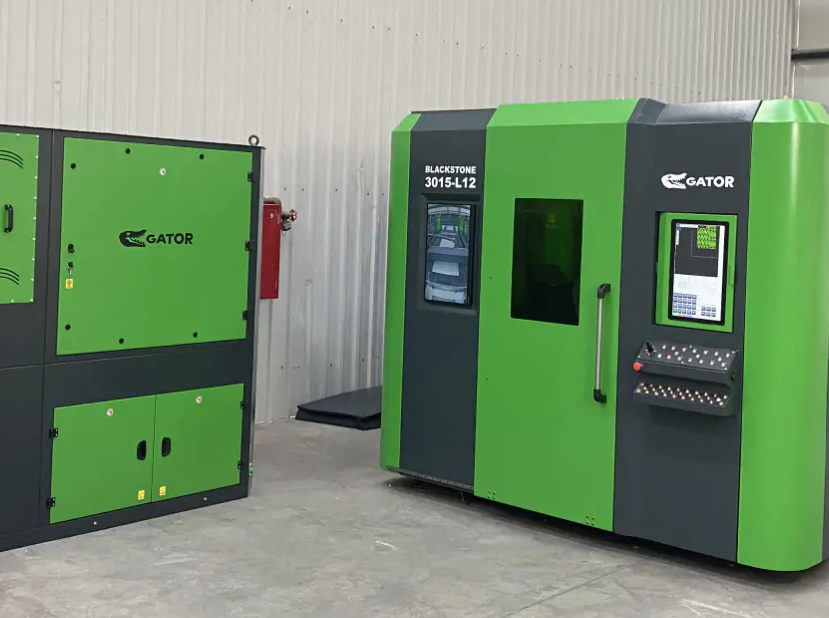
Laser cutting is often one of the first areas shops review because it affects so many downstream steps. Modern fiber laser cutting machines can support sheet, plate and profile preparation with cleaner cuts, repeatable motion and improved material flow. The buyer’s decision should be based on material type, thickness range, table size, tube requirements, automation goals and service support.
For shops that process pipe, square tube, rectangular tube, angle, flat bar or profile-based parts, tube laser cutting systems can reduce secondary layout, drilling, notching or manual cutting steps. This is especially valuable when tube components move directly into frames, supports, assemblies or welded structures.
The planning mistake many teams make is treating cutting as a standalone department. A laser system should be evaluated alongside press brakes, structural steel equipment, tooling, software, material handling and welding stations. If cut parts are more accurate and more repeatable, the entire workflow can become easier to schedule and control.
Welding is another major point of workflow improvement. Shops considering welding automation equipment should look beyond the robot or positioner itself. Material preparation, fit-up, fixturing, weld access, workpiece movement and inspection all affect whether automation will perform as expected.
A simple planning framework can help:
First, identify the bottleneck. Is the shop losing time in cutting, bending, fit-up, welding access or part movement?
Second, define the repeatable work. Automation works best when part geometry, fixtures, weld paths or production volume justify a more controlled process.
Third, evaluate handoffs. A faster cutting process should create better input for bending and welding, not more work-in-progress waiting between stations.
Fourth, plan support. Installation, training, maintenance, parts and operator workflow should be part of the decision from the beginning.
The most predictable fabrication shops are not always the ones with the most machines. They are the ones that understand how each machine affects the next step. Laser cutting can improve the quality of starting parts. Tube lasers can reduce secondary processing. Press brakes and plate rolls can improve forming consistency. Welding automation can improve part handling and repeatable weld access.
A better fabrication workflow starts with one question: where does the current process lose the most time or consistency? Once that is clear, equipment decisions become more strategic and less reactive.