
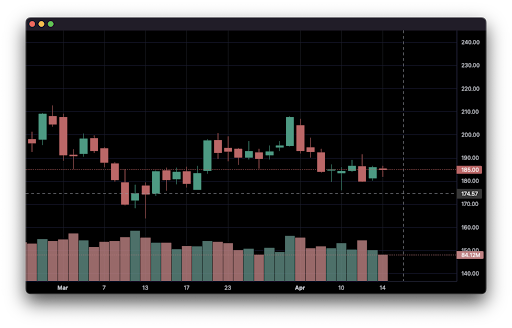
The word most traders reach for when describing what they want is consistency, yet when pressed to define it, most find it difficult. It is neither a winning streak nor a stretch of manageable losses. Consistency comes from a repeatable process that produces dependable decisions regardless of what the market is doing on any given day. Traders who have built that kind of advantage tend to describe it not as a specific strategy but as a structured relationship with their tools, their data, and their own behavioral patterns. It is not peripheral to a trader’s daily process. It is embedded within it.
Building an edge starts with knowing what to measure. Most traders spend months refining entries while ignoring the data that would tell them their entries are not the problem. Win rate, average risk-reward ratio, session performance, instrument performance, and consecutive-loss drawdown all tell a story that gut feel cannot. When traders log their activity systematically and review it through a clear visual interface, they begin to see patterns in their own behavior that are as meaningful as the patterns they track in price. TradingView charts give traders the tools to log setups, annotate decisions, and reexamine trades with the contextual clarity that makes post-trade analysis genuinely productive rather than vague and discouraging.
Most edge-building frameworks break down at the psychological level. A setup may be sound in theory yet poorly executed when the trader has not taken the time to understand how stress, fatigue, and recent losses affect their decision-making. One trader managing a small proprietary desk described their turning point as the moment they stopped asking whether the system worked and started asking whether they were the variable making it fail. That shift in framing prompted the introduction of firm session limits, structured review times, and a pre-session checklist that kept them away from the charts during periods when their own mental state was not conducive to sound judgment.
Backtesting is where theoretical ideas meet reality, and where most of them quickly fail. Running a strategy against historical data with genuine rigor, accounting for spread, execution delay, and the natural variability of real market conditions, is what separates strategies that look compelling on paper from those that perform when put to the test. TradingView charts are visually rich, and the backtesting process is equally intuitive, allowing traders to move through historical price action using the same interface they use when trading live. That continuity matters because it reduces the cognitive gap between analysis and execution.
Position sizing is the mechanical expression of edge, yet even traders who have done serious work on their strategy often treat it too casually. Inconsistent sizing can destroy a system with a genuine statistical advantage. The tendency to increase risk after a winning streak or retreat into paralysis after losses is where that destruction begins. A flat percentage risk per trade is not glamorous, but it provides the structural foundation that allows an edge to express itself across a meaningful sample of trades without being buried by variance before the distribution has the chance to play out.
Markets evolve, and what constitutes a clean edge in one volatility regime may need recalibration when conditions shift. Traders who have sustained strong performance over years are not those who discovered a single perfect setup and protected it indefinitely. They are the ones who developed habits of constant observation and continued to treat the market as a living environment requiring ongoing adaptation. That kind of long-term focus, supported by a platform that can scale with a trader’s analytical demands, is what turns a temporary performance surge into something genuinely worthy of being called an edge.