
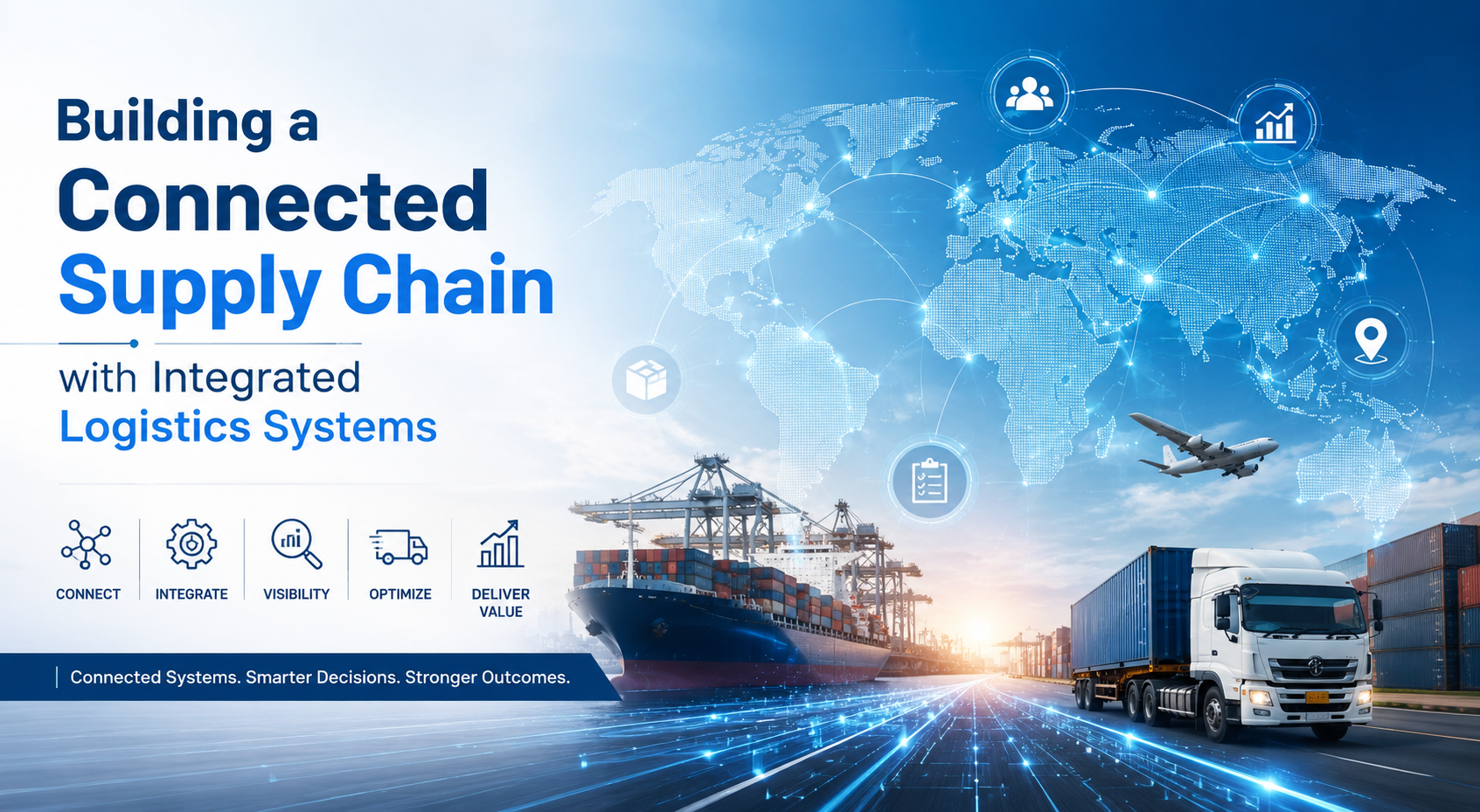
Very few supply chains are dysfunctional; rather, they are disintegrated. Each link in the supply chain operates on its own systems – procurement, inventory management, and shipping each function individually. While each process is conducted efficiently, it is at the point of disconnection where issues arise.
To integrate your supply chain requires a logistics system capable of connecting the elements of the chain together into a single unit that can share information, make decisions based on that information, and respond accordingly.
What is an Integrated Supply Chain?
“Integrated supply chain” refers to those processes where all the processes, ranging from sourcing to procurement, production, and delivery, are interlinked. In the case of an integrated supply chain, there are no bottlenecks present in terms of communication that slow down the decision-making process and result in increased costs.
By connecting procurement, production, logistics, and distribution on a single platform that provides real-time information, the value chain is more responsive, more accurate, and far easier to manage. Integration is the key to converting a functional Supply Chain Management into an effective one for manufacturers, distributors, and retailers.
Key Components of Supply Chain Integration
An integrated supply chain is not an organic process. It is made up of three key components that combine to make an integrated network that can deal with complexity, scale, and change.
1. Process Integration
Integration of processes across functions and partners ensures that plans, actions, and outcomes line up. Uniform processes mean coordination is efficient, and bottlenecks are avoided. Communication between suppliers, manufacturers, and customers ensures that everyone is on the same page.
2. Information Integration
Open sharing of information is how every part of the chain has access to real-time information for making decisions. Data integration prevents conflicting data and delays in out-of-date reporting. Integrating analytics and automation enables data to become an asset, not a liability.
3. Relationship Integration
Collaborative partnerships with suppliers, logistics providers, and customers address the trust and cooperation lacking in the technology-only model. Collaborative systems and communication approaches align the stakeholders, allowing stability and resilience in the network.
Benefits of Integrated Logistics
Integration transforms the entire supply chain. It transforms the possibilities for the whole organization. Networked logistics systems offer visibility, control, and coordination that are lacking in isolated systems. Here are the benefits that ensure logistics companies need supply chain management solutions.
1. Enhanced Coordination and Transparency
System integration brings departments together.
Procurement, warehouse, manufacturing, and distribution are all connected in real time using one platform to make decisions faster and eliminate delays in decision-making. Departmental visibility transforms a transactional supply chain into an integrated, responsive supply chain with departmental visibility and the same real-time view of the data.
2. Easy Access to Data and Demand Visibility
Data is only useful when it is structured, available, and in real time.
Integrated logistics systems give supply chain managers a single data management system. Integrated logistics platforms transform data into information that helps managers make better purchasing decisions, streamline inventory movement, and plan for variations in supply and demand.
3. Reduced Operational Costs
Integration eliminates the insidious costs that accumulate with manual and disjointed processes.
Integrated logistics platforms that run on an ERP system eliminate manual data entry, duplication, and handoffs. Greater efficiency in transport, warehouse, and procurement leads to real cost savings without compromising service and product quality.
4. Higher Profit Margins
Efficient procurement and operations contribute to profitability that cannot be achieved with inefficient systems.
As operations align to demand via integrated platforms, procurement, storage, and transport are all improved. Vendor-managed inventory, payment, and quotation integration also increases profitability in manufacturing and distribution.
5. Waste Elimination Across the Supply Chain
Excess inventory, stockouts, and administrative bottlenecks all stem from one problem: they’re not integrated.
Integrated logistics management allows precise demand forecasting, automatic rescheduling of procurement, and production monitoring. ERP automation detects manufacturing errors early, facilitates team communication, and avoids the stockpiles typical of legacy systems.
How to Improve Supply Chain Integration in Your Organization
Integration of the supply chain is not a one-and-done project. It’s about putting in the right technology, the right culture, and the right work at all levels of the business. Here are four ways to promote integration and develop a digital supply chain ecosystem.
1. Invest in Advanced Technology
- Leverage ERP integration, logistics systems, and API logistics integration tools to integrate data throughout procurement, manufacturing, and logistics
- Use AI-based planning and a single logistics platform to enhance decision-making and speed up processes
- Employ predictive analytics for prescriptive insights along the supply chain before there is a disruption
2. Create a Culture of Collaboration
- Remove internal organisation barriers by having cross-functional teams with common performance measures and planning sessions
- Create collaboration across the enterprise by enabling external stakeholders to access systems and information
- Ensure clarity of common goals so that all parties are focused on the same operational goals
3. Establish Clear Communication Channels
- Promote sharing of common dashboards and digital collaboration platforms to ensure stakeholders and partners are kept up to date
- Establish an escalation protocol so exceptions and delays are identified and addressed efficiently and without confusion
- Promote logistics data integration as the norm for intra-departmental and partner communication, eliminating manual updates with data integration
4. Evaluate and Adapt Continuously
- Track integration performance through key performance indicators (KPIs), such as order fulfilment, shipping speed, and stock turns
- Collect regular feedback from internal and external partners to identify issues and bottlenecks
- Consider supply chain integration as an iterative process and adapt systems and processes accordingly
Conclusion
An integrated supply chain doesn’t happen overnight. It represents an investment in and commitment to technology, processes, and partnerships that provide visibility across all stages. Those who have done so are already reaping the benefits in terms of speed, efficiency, and agility.
Those who are not using integrated solutions are paying for the lack of integration in the form of costs and delays they may not even realize. INTECH Creative Services offers supply chain integration services tailored to the intricacies of your supply chain.
As a leading integrated logistics solutions provider with 21+ years of enterprise IT and logistics experience, we help you join up procurement, warehousing, distribution, and partner networks to deliver an integrated and efficient supply chain. If your supply chain is ready to go from disconnected to connected, we have the technology and the know-how.