
In today’s competitive marketplace, businesses that offer customizable products must respond quickly and accurately to customer requests. Complex configurations, pricing variations, and manual quoting processes often slow sales teams and introduce costly errors. Visual CPQ tools are transforming how companies manage product configuration, pricing, and quoting by combining automation with real-time visual representation. By improving clarity and efficiency, these solutions help sales teams deliver precise quotes faster while enhancing the customer experience.
Understanding Visual CPQ Technology
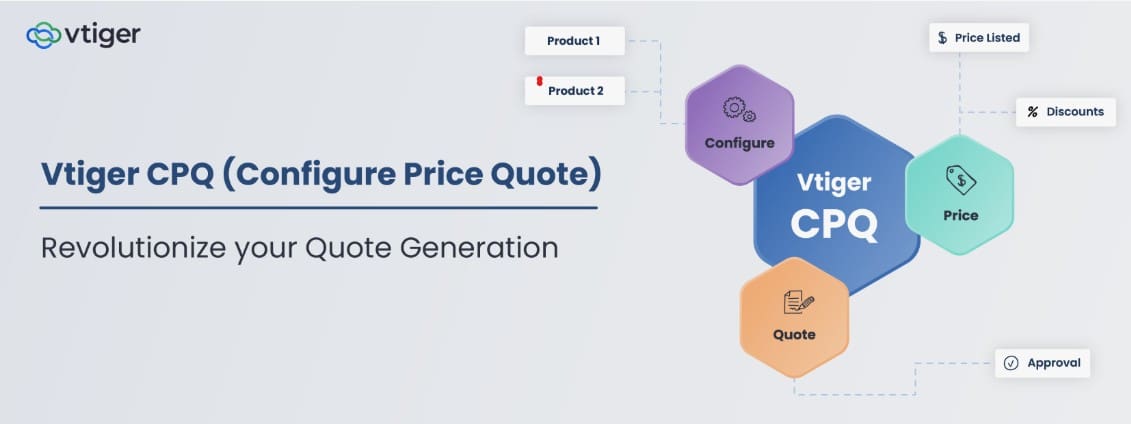
Visual CPQ, which stands for Configure Price Quote, integrates product configuration rules, dynamic pricing, and visual modeling into one streamlined platform. Instead of relying on spreadsheets, manual calculations, or static catalogs, sales representatives can build customized product solutions using interactive visuals. The system ensures that selections remain within engineering and pricing guidelines, preventing incompatible configurations and incorrect quotes.
This visual approach simplifies complex decision-making. The customer can see exactly what they are getting, and the sales team can confidently walk them through the different choices. The buying process is now faster and clearer, and there are fewer mistakes and changes.
Improving Quote Accuracy
One of the biggest challenges in configurable product sales is maintaining quote accuracy. Errors often occur when sales representatives manually select components, apply pricing rules, or interpret technical specifications. Even small mistakes can lead to production delays, reduced profit margins, and dissatisfied customers.
Visual CPQ tools eliminate these risks by enforcing predefined product rules and automated pricing logic. When a configuration is created, the system validates compatibility and calculates pricing instantly. Discounts, taxes, and region-specific adjustments are applied automatically, ensuring consistency across every quote.
Because the process is guided and automated, sales teams no longer need to rely on guesswork or outdated pricing sheets. This leads to improved accuracy, fewer revisions, and increased trust from customers.
Accelerating the Sales Cycle
Speed is critical in modern sales environments. Customers expect quick responses and clear pricing before making purchasing decisions. Traditional quoting methods often require multiple departments to verify configurations and pricing, slowing the sales cycle significantly.
Visual CPQ tools streamline this process by enabling instant configuration and quote generation. Sales representatives can create accurate proposals during the initial customer interaction rather than waiting days for approvals. Automated workflows further reduce delays by routing quotes for approval only when necessary.
Faster quoting not only improves efficiency but also increases conversion rates. When customers receive timely, professional proposals, they are more likely to proceed with the purchase.
Enhancing Customer Experience and Confidence
Modern buyers want clarity and confidence before committing to customized products. Static descriptions and technical drawings can be difficult to interpret, leading to uncertainty and hesitation.
With visual CPQ platforms, customers can interact with 2D or 3D product representations that update in real time as selections change. This visual clarity helps buyers understand features, dimensions, colors, and configurations instantly. Seeing the final product before purchase reduces confusion and strengthens confidence in the decision.
Additionally, visual interaction creates a more engaging and personalized buying journey. Customers feel involved in the design process, which increases satisfaction and brand loyalty.
Enabling Collaboration Across Teams
Complex product sales often involve collaboration between sales, engineering, and manufacturing teams. Miscommunication between departments can result in delays, redesigns, or incorrect orders.
Visual CPQ tools serve as a central platform that aligns all stakeholders. Engineering rules ensure feasibility, pricing remains consistent with finance policies, and production teams receive precise specifications. This shared system reduces back-and-forth communication and ensures everyone works from the same accurate data.
Supporting Scalable Business Growth
As businesses expand their product lines and markets, managing configurations manually becomes increasingly difficult. Visual CPQ solutions provide scalability by automating complexity and maintaining consistency across large product catalogs and sales channels.
Companies can easily introduce new products, update pricing structures, and adapt to market changes without retraining entire sales teams. This flexibility supports growth while maintaining operational efficiency.
Conclusion
Visual CPQ tools are revolutionizing the way businesses handle product configuration and quoting. By improving accuracy, accelerating response times, and enhancing customer understanding, these systems empower sales teams to perform more effectively. Organizations that adopt visual CPQ technology gain a competitive advantage through streamlined workflows, reduced errors, and improved buyer confidence. In an environment where speed and precision determine success, leveraging visual CPQ is a strategic step toward smarter, more efficient sales operations.
