

Sunglasses have come a long way from their origins as simple shields against harsh sunlight. What began as functional eye protection has transformed into a sophisticated category of wearable technology, where cutting-edge optics meet seamless audio integration. Today’s consumers no longer have to choose between looking good and staying connected — but navigating the crowded market of smart eyewear is easier said than done.
For anyone searching for polarized UV400 sunglasses that also deliver Bluetooth functionality, the options can feel overwhelming. Do you prioritize lens clarity, sound quality, battery life, or frame style? How do you know which features are genuinely useful versus clever marketing? These are real questions that fashion-conscious, tech-savvy shoppers face every day.
This guide cuts through the noise. Whether you’re commuting, hitting the trails, or simply want a stylish pair that keeps you hands-free on calls, understanding what to look for makes all the difference. From decoding lens certifications to evaluating Bluetooth performance and finding a design that complements your personal aesthetic, every step of the selection process is covered here — so you can invest confidently in eyewear that works as hard as it looks good.
Understanding Polarized UV400 Sunglasses and Bluetooth Technology
Before investing in a pair of smart sunglasses, it helps to understand exactly what you’re paying for — and why each feature matters to your daily experience.
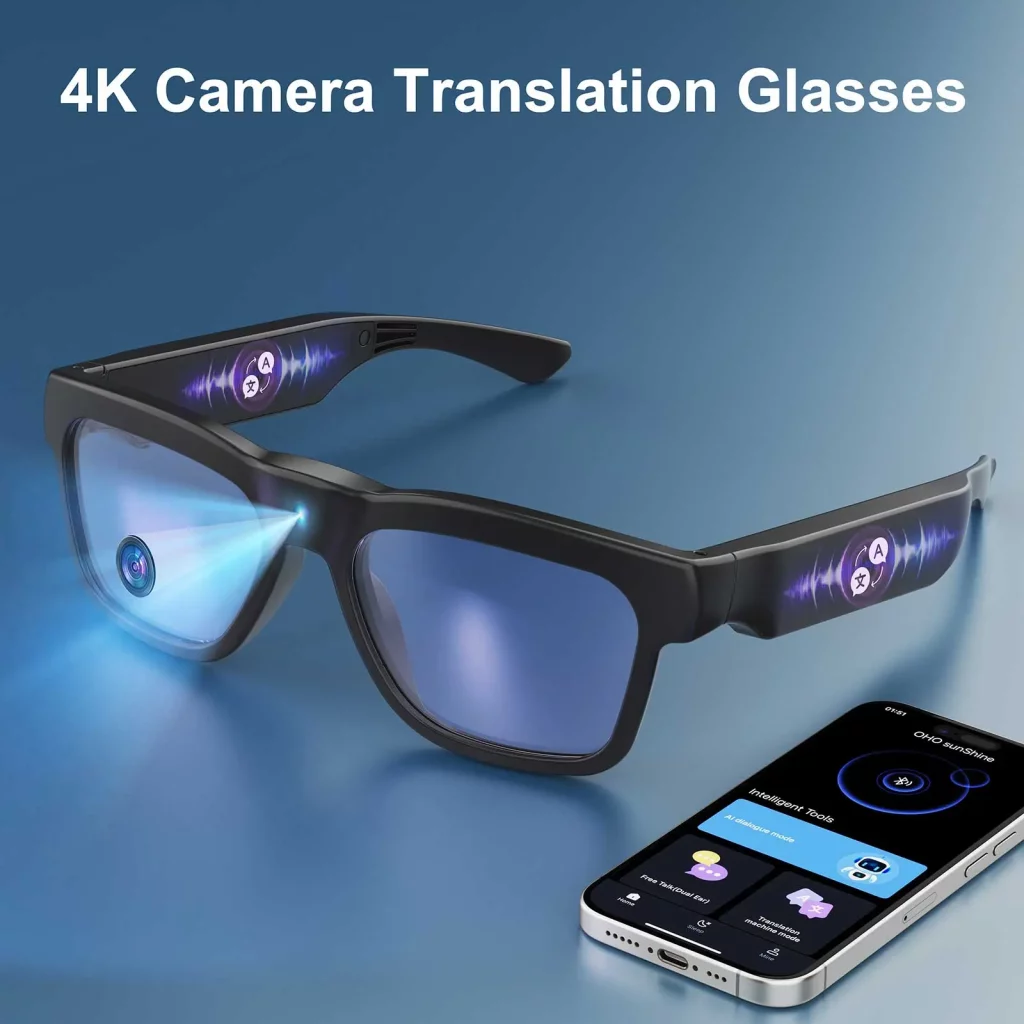
Polarized lenses are engineered with a special chemical film that filters horizontally oriented light waves, which are the primary source of glare from reflective surfaces like water, roads, and car hoods. Unlike standard tinted lenses that simply dim overall brightness, polarization selectively blocks the specific wavelengths that cause visual discomfort and eye strain. The result is sharper contrast, truer color perception, and significantly reduced fatigue during extended outdoor use — a meaningful difference whether you’re driving on a sunny highway or spending the afternoon on the water.
UV400 protection takes eye safety a step further. The “400” refers to nanometers, meaning the lenses block all ultraviolet radiation up to 400nm — covering both UVA and UVB rays completely. Prolonged UV exposure is a well-documented contributor to cataracts, macular degeneration, and other serious eye conditions, making UV400 certification a non-negotiable baseline rather than a premium add-on. Always look for this certification explicitly; dark-tinted lenses without UV400 protection can actually worsen eye damage by causing pupils to dilate while offering no real UV barrier.
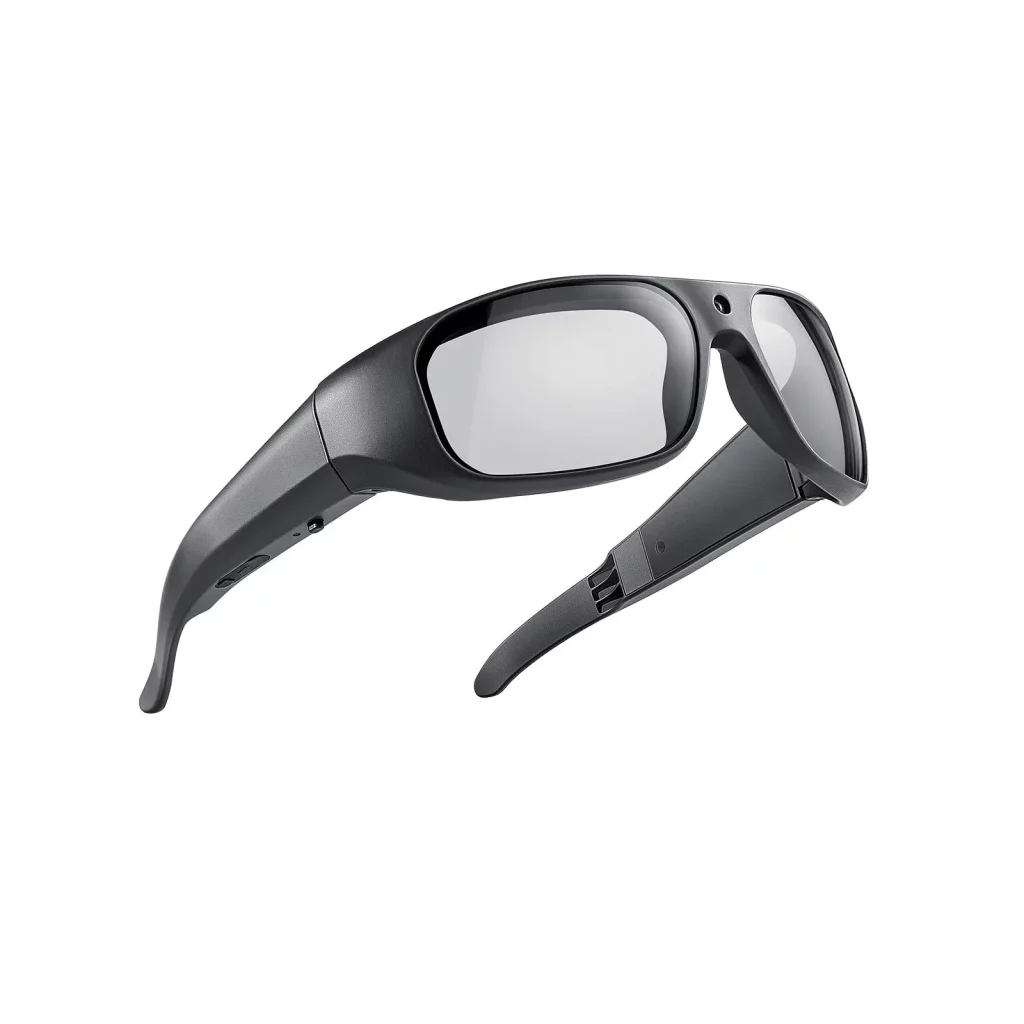
Bluetooth technology in eyewear integrates miniaturized speakers and microphones directly into the frame, typically housed in the temples. Modern smart eyewear connects wirelessly to your smartphone, enabling hands-free calls, music streaming, and even voice assistant access without earbuds blocking ambient sound. Most current models use Bluetooth 5.0 or higher, which provides stable connectivity, lower power consumption, and faster pairing. This open-ear audio design is particularly appealing for outdoor activities where situational awareness matters — you stay connected without losing touch with your surroundings.
The Appeal of Smart Eyewear for Style and Function
There’s a reason Bluetooth sunglasses have moved from novelty gadget to genuine lifestyle staple in just a few years. Today’s fashion-conscious consumers are increasingly unwilling to compromise — they want eyewear that turns heads on the street and keeps them seamlessly connected throughout the day. Smart eyewear answers that demand by collapsing two previously separate categories into one elegant package.
Wearable technology has matured significantly, and nowhere is that more visible than in audio sunglasses. Early versions were bulky and awkward, sacrificing aesthetics entirely for function. Modern designs have flipped that equation, with sleek frames that rival traditional luxury eyewear while embedding high-quality speakers and microphones so discreetly that most people won’t notice them at all. For someone who cares about personal presentation, this matters enormously — you’re not walking around with a gadget strapped to your face; you’re wearing a genuinely stylish accessory.
The lifestyle fit is equally compelling. Commuters can take calls without fumbling for earbuds. Runners and cyclists benefit from open-ear audio that keeps environmental sounds audible for safety. Travelers get a single versatile accessory that handles sun protection, audio entertainment, and voice assistant access across multiple contexts. This kind of functional flexibility resonates with tech-savvy individuals who think carefully about what they carry and wear. When a single pair of sunglasses can replace separate items while looking sharp doing it, the value proposition becomes hard to ignore — and that intersection of aesthetics and intelligent design is exactly what defines the smart eyewear category today. Brands like ohosunshine have built their identity around precisely this balance, offering collections where optical performance and modern design are treated as equally essential.
Essential Features to Evaluate When Choosing
Choosing the right pair of polarized UV400 Bluetooth sunglasses means weighing several interconnected factors — lens performance, audio capability, aesthetic fit, and long-term reliability. Rushing past any one of these areas often leads to buyer’s remorse, whether that means squinting through subpar lenses or dealing with choppy audio on your morning commute. Taking a structured approach to evaluation ensures you end up with a pair that genuinely delivers on every front.
Lens Quality: Polarization and UV400 Protection
Authentic polarization isn’t something to take on faith. A quick field test involves holding the lenses up to a reflective surface — a car windshield or a body of water — and tilting them at a 90-degree angle. Genuine polarized lenses will visibly darken as the angle changes, filtering glare in a way that standard tinted lenses simply cannot replicate. UV400 certification should be explicitly stated by the manufacturer, not implied by lens color or darkness. Polycarbonate lens materials are worth prioritizing, as they offer excellent impact resistance and optical clarity while remaining lightweight enough for all-day comfort.
Bluetooth Technology and Audio Performance
Bluetooth version directly affects your daily experience. Opt for Bluetooth 5.0 or higher — it delivers more stable connections, reduced latency during audio playback, and meaningfully better energy efficiency. Battery life is equally important; look for models offering at least six hours of continuous playback, with a charging case or fast-charge capability for longer days. Don’t overlook microphone quality. Clear call performance in windy or noisy outdoor environments depends on directional microphone placement and noise-cancellation processing, so check real-world user reviews rather than relying solely on manufacturer claims.
Design, Fit, and Aesthetic Considerations
Frame style shapes how the sunglasses integrate into your wardrobe. Aviator and wayfarer silhouettes tend to offer the broadest versatility across casual and semi-formal settings, while sport-wrap frames suit more active use cases. Beyond looks, physical fit determines wearability — frames that are too heavy or too tight become uncomfortable within an hour, regardless of how good they look. Adjustable nose pads and temple length make a real difference for extended wear. Color and finish choices, from matte black to tortoiseshell, should complement your existing accessories and clothing palette rather than clash with them.
Durability, Brand Reputation, and Value
Smart eyewear takes more abuse than standard sunglasses — sweat, rain, accidental drops, and daily handling all take their toll. Water resistance ratings (look for IPX4 or higher) and scratch-resistant lens coatings are practical necessities rather than optional upgrades. Brand reputation carries real weight in this category; established names in either optics or consumer audio tend to produce more reliable products with better post-purchase support. When comparing options, weigh the full feature set against the asking price rather than focusing on a single specification — a mid-range pair that excels across lens quality, audio performance, and build quality often outperforms a cheaper alternative that cuts corners on any one of those dimensions.
A Step-by-Step Guide to Selecting Your Perfect Pair
Knowing what features matter is only half the battle — the other half is applying that knowledge systematically so you don’t get distracted by flashy marketing or miss a critical flaw. Working through a structured selection process keeps your priorities front and center from the first search to the final purchase.
Step 1: Assess Your Lifestyle and Use Cases
Start by being honest about how and where you’ll actually wear these sunglasses. A daily commuter who primarily needs hands-free calling in transit has very different requirements than a weekend cyclist who needs secure fit, open-ear awareness, and sweat resistance. If driving is your main use case, premium polarization becomes especially critical for cutting road glare. If you’re splitting time between office errands and outdoor workouts, prioritize versatile frame styling alongside robust Bluetooth performance. Mapping your real-world scenarios first prevents you from over-investing in features you’ll rarely use or overlooking ones you genuinely need.
Step 2: Research and Shortlist Options Based on Features
Once your use cases are clear, move to focused research. Start with established review platforms and tech-focused publications that test smart eyewear objectively rather than relying solely on brand websites. Filter your search by confirmed polarized UV400 certification and Bluetooth 5.0 or higher. From there, narrow the field by style — if a wayfarer silhouette fits your wardrobe better than a sport wrap, there’s no reason to consider frames that won’t complement how you dress. Aim to shortlist two or three models — including options from dedicated eyewear specialists like ohosunshine — that check both the technical and aesthetic boxes before going deeper on any single option.
Step 3: Test for Comfort, Fit, and Style Compatibility
Whenever possible, try the frames in person before committing. Weight distribution matters more than total weight — a slightly heavier frame that balances well across the nose and temples is far more comfortable over a four-hour stretch than a lighter frame that pinches or slides. Check whether nose pads are adjustable and whether the temple length suits your head width. If in-store testing isn’t available, look for retailers offering generous return windows so you can do a real-world trial at home. Style compatibility is also worth a deliberate check — hold the frames against clothing and accessories you actually wear rather than evaluating them in isolation.
Step 4: Verify Technical Specifications and Performance
Before finalizing a choice, dig into the technical details with a critical eye. Confirm that UV400 certification comes from a recognized testing standard, not just a marketing label. Check independent audio reviews for real-world call clarity, particularly in wind or background noise — manufacturer audio samples are rarely representative. Battery life claims should be cross-referenced with user reviews, since advertised figures are typically measured under ideal conditions. Connect the sunglasses to your phone during any in-store visit or within the return window to personally assess pairing speed, connection stability, and speaker volume at your preferred listening level.
Step 5: Make an Informed Purchase Decision
With your shortlist narrowed and specifications verified, weigh the full picture rather than fixating on a single standout feature. The best choice balances lens quality, audio performance, build durability, and design in a way that fits your lifestyle without unnecessary trade-offs. Before checkout, review the warranty terms and the retailer’s return policy — smart eyewear is a meaningful investment, and knowing you have recourse if something underperforms provides genuine peace of mind. A well-chosen pair should feel like a natural extension of both your style and your daily routine from the first day you wear it.
Caring for Your Polarized UV400 Bluetooth Sunglasses
Protecting your investment starts with how you clean the lenses. Use a microfiber cloth and lens-safe solution — paper towels and household cleaners can scratch polarized coatings permanently. For Bluetooth components, charge via the provided cable only and avoid letting the battery fully deplete regularly, as this degrades cell longevity over time. When not in use, store your sunglasses in a hard-shell case rather than tossing them in a bag where pressure and debris cause frame warping and lens scratches. Keep them away from extreme heat, like a car dashboard in summer, which can warp frames and degrade both lens coatings and internal electronics. Consistent care preserves optical clarity, audio performance, and frame integrity — extending the life of a product that earns its keep across both style and technology.
Smart Eyewear That Protects, Connects, and Impresses
Finding the right pair of polarized UV400 Bluetooth sunglasses doesn’t have to feel like navigating a maze of technical jargon and competing marketing claims. At its core, the decision comes down to three pillars: genuine eye protection, reliable audio performance, and a design that fits naturally into your personal style. UV400 certification ensures your eyes are shielded from the full spectrum of harmful ultraviolet radiation, while authentic polarization delivers the visual clarity and comfort that standard tinted lenses simply can’t match. Layer in Bluetooth connectivity done right — stable pairing, clear call quality, and respectable battery life — and you have an accessory that genuinely earns its place in your daily routine.
The step-by-step framework in this guide exists precisely to cut through the overwhelm. By starting with your actual lifestyle needs, researching objectively, testing for fit and comfort, and verifying specifications beyond manufacturer claims, you arrive at a purchase decision grounded in real-world priorities rather than impulse or hype. Smart eyewear at its best doesn’t ask you to compromise — it delivers on both the technology and the aesthetic in equal measure.
Now it’s your turn to put this guide to work. Revisit your daily routines, identify the features that matter most to you, and apply these criteria as you evaluate your options. The ideal pair is out there — one that protects your eyes, keeps you connected, and looks exactly the way you want it to.
