
In the bustling market square of Jos, a woman named Miriam arranges bright red tomatoes on a wooden table. Beside her, Yusuf stacks peppers and onions. Their banter soft teasing, shared jokes about the day’s prices, quick exchanges about their children’s schools captures something real and often overlooked: in the everyday life of Nigeria, peace is not abstract. It is practiced. It is chosen. It is lived.
For Miriam and Yusuf, faith is part of who they are, but it does not dictate how they treat each other. Like millions of Nigerians, they wake up each morning to responsibilities that transcend religious labels: raising children, paying rent, hustling for income, helping relatives back home. Their lives are shaped by a quiet, steady commitment to coexistence a commitment stronger than the noise of online outrage or the polarizing narratives that outsiders often project onto the country.
This reality is not anecdotal. Surveys and social-cohesion studies consistently show high levels of acceptance and cooperation across communities. Nigerians routinely form interfaith business partnerships, join mixed civic associations, and build multi-faith neighborhood networks that look out for each other in times of need. Researchers who map social attitudes note that while political elites sometimes exploit religious identity for advantage, ordinary citizens overwhelmingly prioritize security, livelihoods, and practical conflict resolution. Where organizations invest in cross-faith youth initiatives or shared livelihood programs, measurable declines in tension and retaliation follow.
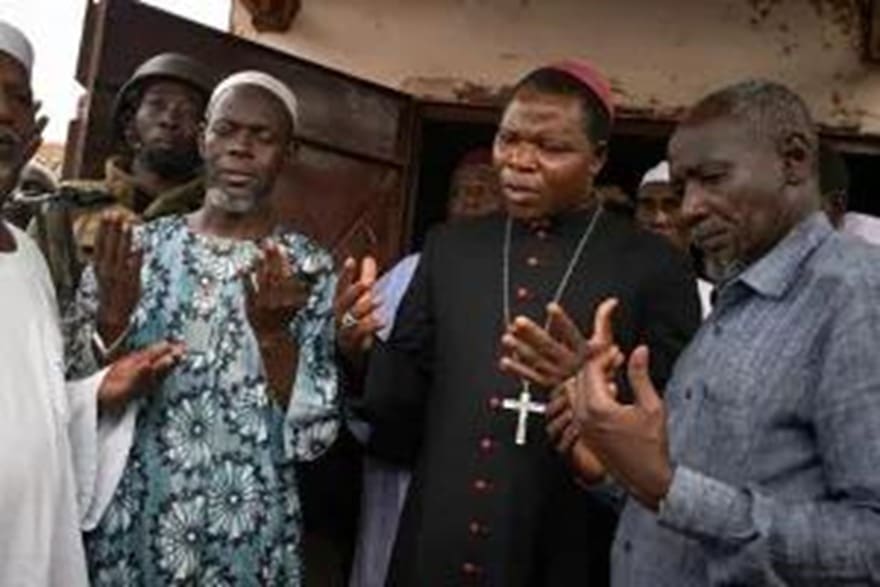
But statistics alone cannot capture the moral texture of Nigerian coexistence. Personal stories reveal why peace endures even in the face of pressure. In towns across Kaduna, Plateau, and Taraba, intermarriage creates families that span faith lines blending traditions, cultivating empathy, and making violence against “the other” far more difficult. In many neighbourhoods, when rumours of tension begin to spread, pastors and imams walk door to door together, urging calm. Their joint presence two spiritual authorities’ shoulder to shoulder carries immense power, dissolving fear before it hardens into hostility.
This is peacebuilding at its most human: Muslim neighbours guarding a church during a midnight vigil; Christian youth forming an escort line to protect Muslims attending Friday prayers after an attack; communities pooling money for shared relief when bandit raids displace families, regardless of their religious identity. These acts rarely make headlines, but they form the invisible architecture of pluralism the moral scaffolding that holds Nigeria together during its hardest moments.
Still, these bottom-up peacebuilders cannot bear the burden alone. Their courage needs the backing of fair institutions. They need policing that responds without bias, prosecutors who pursue justice without fear or favour, and economic opportunities that give young people better options than recruitment into criminal or extremist networks. Strengthening these institutions is not simply a policy recommendation; it is the most direct way to nourish the instincts toward coexistence that already pulse through Nigerian society.
Nigeria’s story is not only one of conflict. It is also a story of ordinary people choosing peace every day, in markets and mosques, churches and compounds, in moments big and small. Their choices deserve to be seen, supported, and amplified. They are the quiet heroes of a plural nation determined to hold together.
