

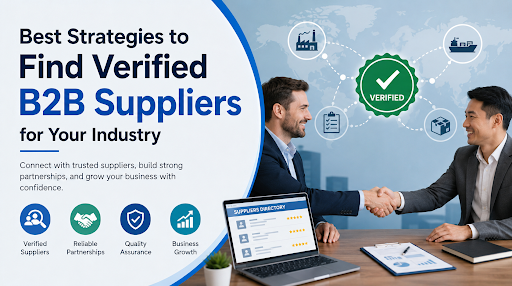
Finding the right supplier can determine whether a business grows consistently or struggles with quality issues, delayed shipments, and unreliable partnerships. In today’s competitive global market, companies need more than just a long list of manufacturers. They need trusted business partners that can deliver quality products, maintain clear communication, and support long-term growth.
Many businesses spend weeks searching online only to discover that some suppliers lack proper credentials or cannot meet production requirements. This is why learning how to find verified B2B suppliers has become an essential business skill rather than just another procurement task.
Whether you are a startup looking for your first manufacturing partner or an established company expanding into new markets, the right sourcing strategy can reduce risk and improve profitability. This guide explores practical methods for identifying trustworthy suppliers while building relationships that benefit your business for years to come.
Understand What Makes a Supplier Verified
Before beginning your search, it is important to understand what “verified” actually means. A verified supplier has undergone some level of authentication regarding its business registration, manufacturing capabilities, certifications, or operational legitimacy.
Verification may include:
- Business registration documents
- Factory inspections
- Product quality certifications
- Export licences where applicable
- Financial stability checks
- Customer references
- Third-party audits
Verification does not guarantee perfection, but it significantly reduces the chances of working with fraudulent or unreliable businesses.
Start with a Reliable Verified Suppliers Directory
One of the most effective ways to begin your supplier search is by using a verified suppliers directory. These directories organise businesses based on industry, product category, certifications, production capacity, and geographical location.
Instead of spending hours searching through random websites, businesses can quickly compare qualified suppliers within a structured platform. Many directories also include company profiles, production information, customer reviews, and verification badges that simplify the decision-making process.
Using a trusted verified suppliers directory saves valuable time while improving confidence during supplier selection.
Clearly Define Your Business Requirements
Many sourcing problems begin because buyers do not fully understand what they need before contacting suppliers.
Create a detailed requirement list including:
- Product specifications
- Required materials
- Quality standards
- Estimated order quantity
- Packaging requirements
- Delivery timelines
- Budget expectations
- Preferred certifications
Providing complete information allows suppliers to determine whether they are genuinely capable of fulfilling your requirements, resulting in faster and more accurate quotations.
Evaluate Industry Experience
Not every supplier is suitable for every business.
A manufacturer producing automotive components may not have sufficient expertise in medical equipment or food packaging. Experience within your specific industry often translates into better production methods, improved quality control, and a stronger understanding of market expectations.
When reviewing suppliers, consider:
- Years in business
- Industry specialisation
- Existing client portfolio
- Export experience
- Technical capabilities
Experienced suppliers often anticipate challenges before they become costly problems.
Request Business Certifications
Professional suppliers understand that buyers expect proof of quality.
Ask potential suppliers to provide copies of relevant certifications such as:
- ISO quality certifications
- Product compliance certificates
- Environmental management certifications
- Safety standards
- Industry-specific approvals
Always review the validity of these documents instead of simply accepting uploaded certificates without verification.
Reliable suppliers are usually transparent and willing to provide supporting documentation when requested.
Communicate Before Making Any Commitment
A supplier’s communication style often reflects its professionalism.
Pay attention to how quickly questions are answered, whether responses are detailed, and how willing the supplier is to discuss production capabilities.
Professional suppliers typically:
- Respond promptly
- Provide complete information
- Ask relevant technical questions
- Explain production timelines
- Offer practical recommendations
Poor communication during initial discussions often becomes a much larger issue after production begins.
Compare Multiple Suppliers Instead of Choosing the First Option
One common mistake businesses make is selecting the first supplier offering an attractive price.
Instead, compare several verified companies based on:
- Product quality
- Production capacity
- Communication
- Delivery performance
- Certifications
- Pricing
- Payment terms
- Customer support
This comparison creates a balanced decision rather than relying solely on price.
The lowest quotation may ultimately become the most expensive option if product quality or delivery reliability is poor.
Use B2B Supplier and Buyer Matchmaking Services
Many organisations now offer B2B supplier and buyer matchmaking services that introduce businesses to compatible partners.
Rather than searching independently, companies submit their sourcing requirements and receive recommendations based on product type, production capability, location, certifications, and business goals.
This approach significantly reduces the time required to identify suitable manufacturers while improving the likelihood of building productive business relationships.
Businesses involved in international sourcing increasingly rely on B2B supplier and buyer matchmaking because it provides a more focused and efficient supplier selection process.
Verify Manufacturing Capacity
An attractive company profile does not always reflect actual production capability.
Before placing significant orders, verify:
- Factory size
- Number of employees
- Production equipment
- Monthly output
- Quality control procedures
- Research and development capabilities
A supplier that comfortably handles current demand is more likely to support future business growth without compromising quality.
Order Product Samples
Never place a large order without evaluating samples first.
Product samples help assess:
- Material quality
- Finishing standards
- Dimensions
- Durability
- Packaging quality
- Product consistency
Testing samples also reveals whether the supplier fully understands your specifications.
If sample quality fails to meet expectations, production quality is unlikely to improve later.
Check Customer Reviews and References
Previous customers often provide valuable insights that cannot be found in supplier marketing materials.
Look for feedback regarding:
- Product consistency
- Delivery reliability
- Customer service
- Problem resolution
- Communication quality
- Long-term cooperation
If possible, request references from existing customers within your industry.
Honest feedback can highlight strengths as well as potential concerns before any financial commitment is made.
Visit Manufacturing Facilities Whenever Possible
Nothing replaces seeing production operations firsthand.
Factory visits allow buyers to evaluate:
- Production organisation
- Equipment quality
- Employee working conditions
- Inventory management
- Quality inspection procedures
- Overall professionalism
If international travel is impractical, many suppliers now offer live virtual factory tours that provide useful operational insights.
Build Long-Term Supplier Relationships
Successful sourcing is about more than completing individual transactions.
Long-term partnerships often result in:
- Better pricing
- Priority production scheduling
- Improved communication
- Faster issue resolution
- Joint product development
- Greater flexibility during market fluctuations
Treat suppliers as business partners rather than simply vendors.
Mutual trust frequently creates opportunities for innovation and continuous improvement.
Integrate Supplier Search with Business Growth
Supplier sourcing should not exist independently from overall business development.
As companies expand, sourcing strategies should also support efforts to discover new markets and customers.
Many businesses searching to find verified B2B suppliers are simultaneously exploring how to find new B2B customers through trade events, business directories, industry networking, and strategic partnerships.
Reliable suppliers strengthen customer satisfaction because consistent product quality leads to repeat business, positive referrals, and stronger brand reputation.
When sourcing and customer acquisition work together, businesses become far more competitive in domestic and international markets.
Watch for Common Warning Signs
Even experienced buyers occasionally overlook obvious warning signs.
Be cautious if a supplier:
- Refuses to provide business documentation
- Avoids video meetings
- Offers unrealistically low prices
- Requests unusual payment arrangements
- Provides inconsistent information
- Has no verifiable business presence
- Frequently changes contact details
Recognising these warning signs early can prevent costly sourcing mistakes.
Professional suppliers understand the importance of transparency and willingly answer reasonable questions throughout the evaluation process.
Making Smarter Supplier Decisions for Sustainable Growth
Finding dependable suppliers requires research, patience, and careful evaluation. Businesses that invest time in verifying credentials, comparing manufacturers, reviewing certifications, and testing product quality are far more likely to establish successful long-term partnerships.
Using a trusted verified suppliers directory simplifies the search process while reducing unnecessary risk. Combining this approach with B2B supplier and buyer matchmaking services allows businesses to connect with manufacturers that genuinely meet their operational requirements.
At the same time, companies should remember that supplier selection is only one part of sustainable growth. Learning how to find new B2B customers while working with dependable suppliers creates a stronger foundation for expansion, customer satisfaction, and long-term profitability.
Businesses that consistently find verified B2B suppliers through structured research and careful verification position themselves to compete more effectively, adapt to changing market conditions, and build resilient supply chains that support future success.