
Introduction
Choosing the right golf ball is one of the most overlooked decisions in golf. Many players spend significant time selecting drivers, irons, and wedges, yet continue using golf balls that may not match their swing speed, skill level, or performance needs.
However, golf ball selection can directly influence key aspects of performance, including:
- Distance off the tee
- Shot accuracy and dispersion
- Spin control around the greens
- Feel and consistency
- Forgiveness on off-center strikes
These factors become particularly important for mid and high handicappers, where small improvements in consistency and control can translate into measurable score reductions.
Golfers at different skill levels typically benefit from different ball characteristics. For example:
- High handicappers and beginners often benefit from lower compression balls that provide forgiveness, easier launch, and straighter ball flight.
- Mid handicappers generally require a balance of distance, feel, and spin control as their shot-making ability improves.
- Lower handicappers and competitive players tend to prioritize precision, shot shaping, and greenside control.
Despite these differences, many golfers continue to play balls designed for performance levels that do not align with their current game.
This guide provides a structured, level-by-level analysis of the best golf balls for mid and high handicappers in 2026, while also including options suitable for beginners and more advanced players. The recommendations are based on:
- Construction type (2-piece, 3-piece, multi-layer)
- Compression ratings and swing speed compatibility
- Cover material (urethane vs ionomer)
- Distance and launch characteristics
- Spin performance and control
- Feel and consistency
- Overall value and usability across skill levels
The goal is to present a neutral, data-focused overview that helps golfers identify the most suitable golf ball based on their playing level, swing characteristics, and performance priorities.
The following sections will first explain the key factors that influence golf ball performance, followed by categorized recommendations for high handicappers, mid handicappers, and lower handicap players, along with a quick-reference guide to simplify the selection process.
Why Golf Ball Choice Matters for Mid & High Handicappers
For mid and high handicappers, golf ball selection often has a greater impact on performance than many players realize. While lower handicappers typically have consistent swing mechanics and precise strike patterns, mid and high handicappers often experience greater variability in contact, launch, and spin. Because of this, the characteristics of the golf ball can either help stabilize performance — or make inconsistencies more pronounced.
Mid & High Handicappers Typically Need:
More Forgiveness
High and mid-handicappers do not strike the center of the clubface consistently. Off-center hits are common, especially with longer irons and drivers. Forgiving golf balls help minimize the performance loss from these mishits by:
- Reducing side spin that causes slices and hooks
- Maintaining ball speed on off-center contact
- Producing more consistent launch conditions
Balls designed with larger cores and lower compression tend to offer better forgiveness, helping players keep more shots in play.
Easier Distance
Generating distance can be a challenge for golfers with moderate or slower swing speeds. Many mid and high handicappers benefit from golf balls engineered to compress more easily, allowing them to:
- Generate higher ball speed
- Launch the ball more easily
- Achieve longer carry distances
Straighter Shots
For many golfers, finding the perfect combination of golf ball distance and accuracy is more important than maximizing spin control. High handicappers often struggle with excessive side spin, which can exaggerate slices and hooks.
Golf balls designed with:
- Lower driver spin
- Stable aerodynamic patterns
- Reduced side spin characteristics
help produce straighter ball flights and tighter dispersion patterns, improving overall consistency.
Better Control
As golfers progress from high to mid handicap levels, control becomes increasingly important. Players begin to:
- Target specific landing areas
- Control distance more precisely
- Improve short-game performance
Mid-handicap golfers often benefit from multi-layer golf balls that provide:
- Balanced spin characteristics
- Improved iron control
- More predictable stopping power on greens
This balance between forgiveness and control is where many modern mid-handicap golf balls are specifically designed to perform.
Who This Guide Is For
This guide is designed to assist golfers across multiple skill levels, with a primary focus on mid and high handicappers, while also including recommendations suitable for beginners and improving players.
This Guide Covers:
Mid Handicap Golfers (10–20 Handicap)
Golfers in this range typically have established fundamentals and improving consistency. At this level:
- Equipment differences begin to matter more
- Distance gaps become more noticeable
- Short-game control becomes increasingly important
These players often benefit most from 3-piece golf balls that provide a balance of distance, feel, and spin control.
High Handicap Golfers (20+ Handicap)
High handicappers typically prioritize:
- Forgiveness
- Straighter ball flight
- Easier launch
- Distance consistency
Two-piece golf balls with lower compression and reduced spin often provide the best performance for players in this category.
Beginners
New golfers benefit from balls that:
- Are forgiving on mishits
- Launch easily
- Provide consistent distance
- Are durable and affordable
Beginner-friendly balls also allow players to focus on swing development without being penalized excessively for inconsistent contact.
Average Golfers
Many recreational golfers fall between high and mid handicap ranges. These players often:
- Play occasionally
- Have moderate swing speeds
- Seek consistency rather than shot shaping
Balanced performance golf balls often work best for this group.
Improving Golfers
Players actively working to lower their handicap benefit from golf balls that:
- Offer forgiveness while allowing growth
- Provide increasing levels of spin control
- Deliver predictable performance
These golfers often transition from distance-focused balls to more balanced, multi-layer designs.
Best Golf Balls for High Handicappers & Beginners
High handicappers and beginners typically benefit from golf balls designed to make the game easier rather than more technical. At this stage, forgiveness, straighter ball flight, and easy distance are usually more valuable than high spin or shot-shaping control.
Unlike tour-level balls, which can exaggerate mishits and require consistent strike quality, beginner-friendly golf balls are engineered to:
- Launch easily
- Reduce slices and hooks
- Maintain distance on off-center hits
- Provide predictable flight
The following golf balls are among the best options for high handicappers and beginners in 2026, offering a balance of forgiveness, distance, and overall ease of play.
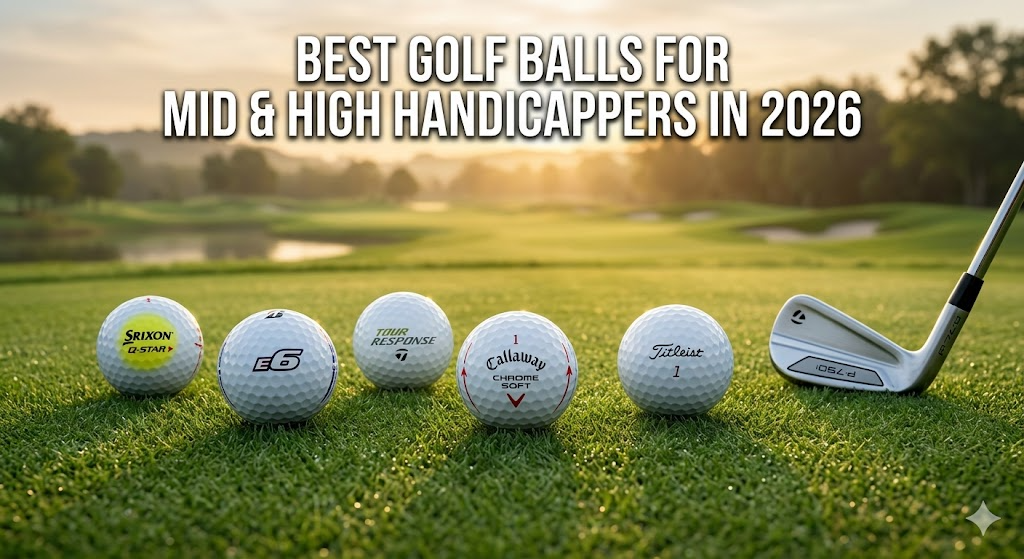
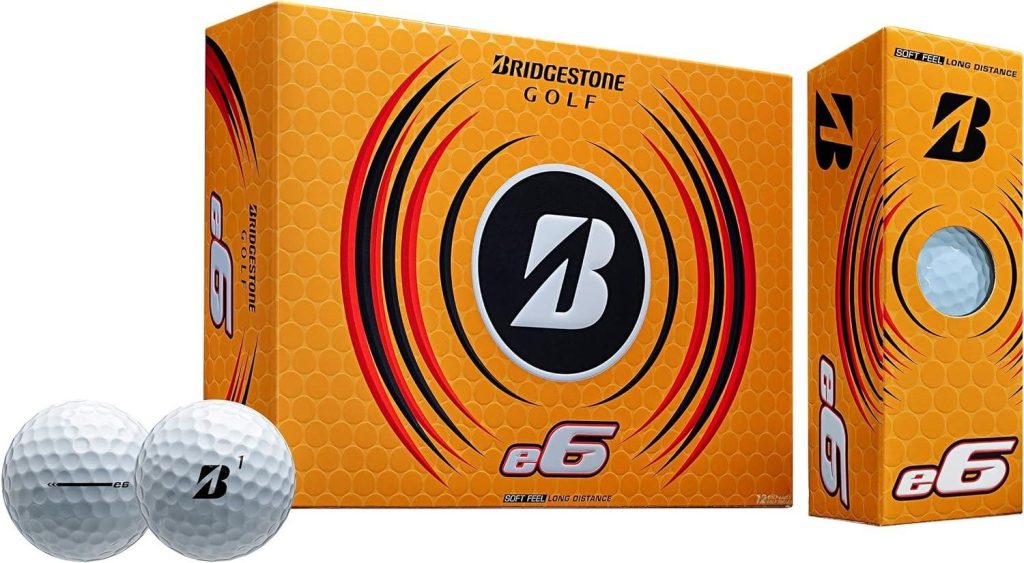
- Bridgestone e6
Best for Stress-Free Consistency
Who it’s for:
High handicappers and beginners who want straighter shots and fewer big misses.
Specs:
- 2-piece construction
- Ionomer cover
- Low compression
- Budget-friendly price range
Performance:
The Bridgestone e6 is designed to reduce side spin, which helps minimize slices and hooks. This produces a more stable, predictable flight off the tee. The ball also compresses easily, making it suitable for moderate to slower swing speeds. Iron shots provide reliable carry distance, while the soft core helps maintain performance on off-center strikes.
Key Technology:
Bridgestone’s seamless cover design promotes smoother aerodynamics and consistent spin, while the larger soft core improves compression and distance.
Pros:
- Straighter ball flight
- Reduces slices and hooks
- Forgiving on mishits
- Affordable and consistent
- Easy to compress for slower swing speeds
Cons:
- Limited greenside spin
- Slightly firmer feel on chips
- Not ideal for aggressive pin-seeking shots
Bottom Line:
The Bridgestone e6 is built for simplicity and consistency, making it one of the most reliable options for golfers focused on keeping the ball in play.
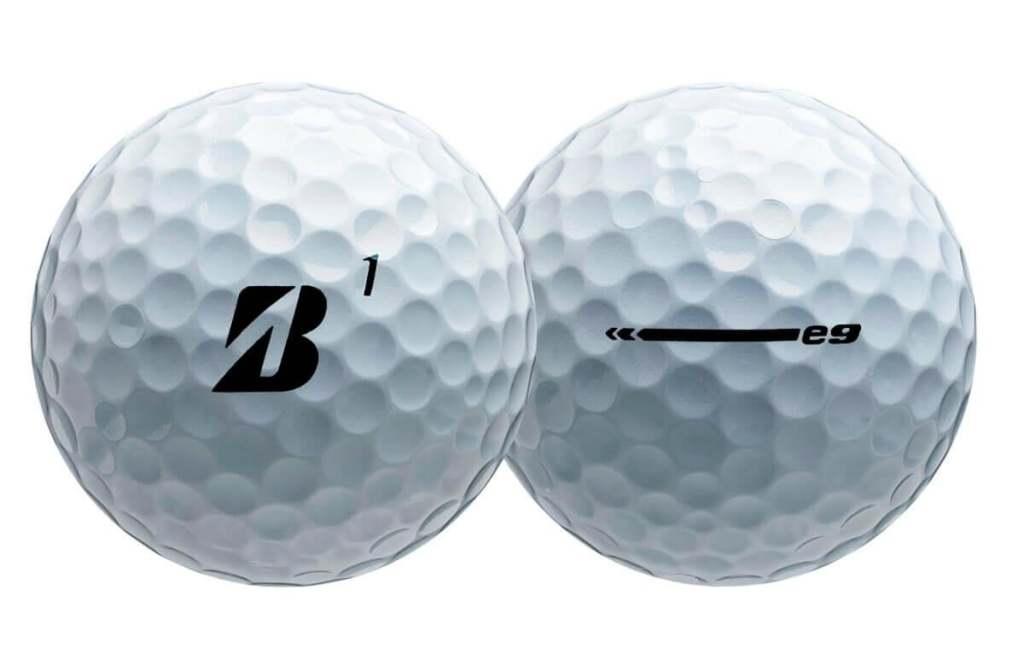
- Bridgestone e9
Best Budget Distance Ball
Who it’s for:
Average golfers and high handicappers looking for more distance without sacrificing forgiveness.
Specs:
- 2-piece construction
- Seamless Surlyn cover
- 330-dimple aerodynamic pattern
Performance:
The Bridgestone e9 is designed to launch high with low driver spin, helping maximize carry distance. The ball provides stable flight and playable feel around the greens. It offers consistent performance without requiring high swing speed.
Key Technology:
The 330-dimple aerodynamic design improves lift and reduces drag, promoting higher launch and longer carry.
Pros:
- Strong distance performance
- High launch and low spin
- Forgiving on off-center hits
- Affordable price point
- Suitable for average swing speeds
Cons:
- Firmer feel compared to urethane balls
- Limited stopping power on faster greens
Bottom Line:
The Bridgestone e9 is a practical distance-focused golf ball that provides easy performance at an affordable price.
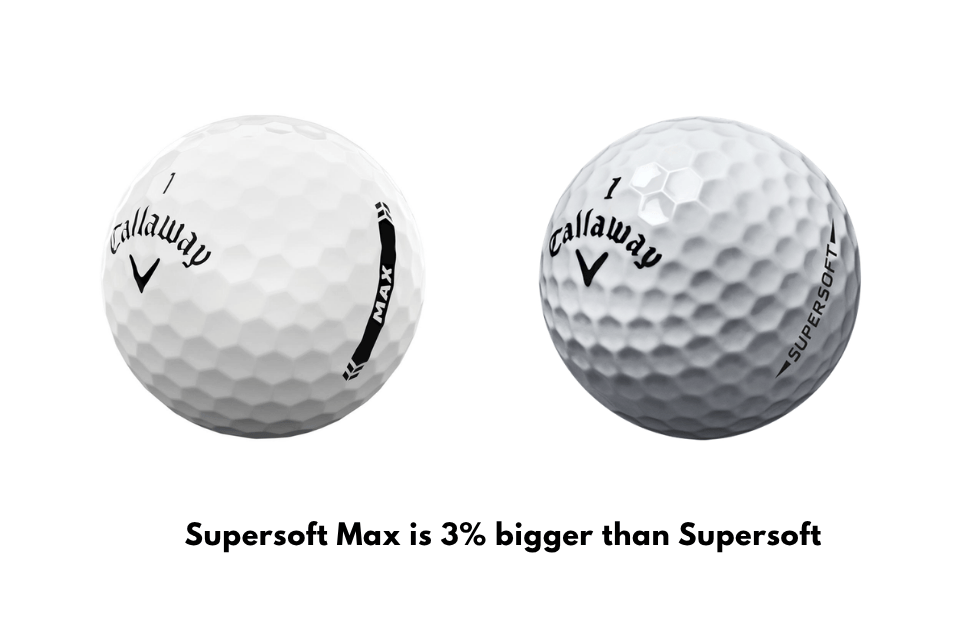
- Callaway Supersoft
Best for Feel + Easy Distance
Who it’s for:
Golfers shooting in the 80s–90s or beginners seeking soft feel and easy distance.
Specs:
- 2-piece construction
- HyperElastic SoftFast core
- Ultra-soft cover
Performance:
The Callaway Supersoft is designed for easy compression and consistent distance. The soft feel is noticeable in short-game shots, helping improve confidence around the greens. The ball also launches easily and maintains stable flight.
Key Technology:
The HyperElastic SoftFast core increases ball speed while maintaining soft feel, making it suitable for moderate and slower swing speeds.
Pros:
- Very soft feel
- Easy distance for moderate swing speeds
- Forgiving performance
- Short-game friendly
- Consistent ball flight
Cons:
- Limited shot-shaping ability
- Less greenside spin than urethane balls
Bottom Line:
The Callaway Supersoft is designed to make golf feel easier, especially for beginners and high handicappers.
- Titleist Velocity
Best Budget Two-Piece for Extra Distance
Who it’s for:
Golfers seeking maximum distance at a budget-friendly price.
Specs:
- 2-piece construction
- High-speed LSX core
- NaZ+ cover
- 350 octahedral dimple pattern
Performance:
The Titleist Velocity focuses on distance and straight flight. The low-spin design promotes longer carry and additional roll. Iron shots launch easily, and the ball maintains consistent performance across clubs.
Key Technology:
The 350 octahedral dimple design improves aerodynamics, helping maintain high launch and stable ball flight.
Pros:
- Strong distance performance
- Straighter flight
- Easy launch
- Affordable price
Cons:
- Firmer feel
- Limited greenside spin
Bottom Line:
The Titleist Velocity is a solid option for golfers prioritizing distance and consistency at an accessible price point.
Best Golf Balls for MID Handicappers
Mid-handicap golfers sit in the most important improvement zone in golf.
You’re no longer a beginner…
But you’re not quite ready for full tour-level balls either.
At this stage, the wrong golf ball can quietly cost you distance, accuracy, and consistency — while the right one can help you break 90, and even push toward breaking 80.
Unlike high handicappers who mainly need forgiveness, mid-handicap golfers need balance:
• Distance off the tee
• Control into the greens
• Consistent ball flight
• Softer feel without losing speed
That’s why 3-piece, mid-compression golf balls tend to work best for this category — they offer a blend of distance, spin, and feel, which is exactly what mid-handicap golfers need to improve scoring performance.
Top Golf Balls for Mid Handicappers
1. TaylorMade Tour Response
Best Overall for Mid Handicappers
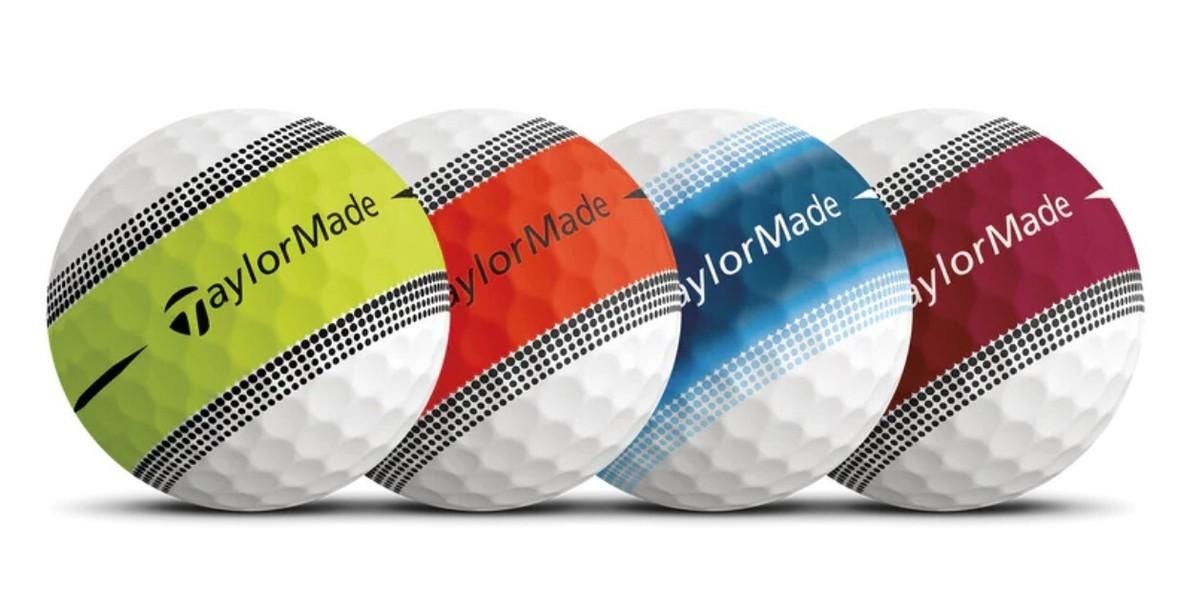
The TaylorMade Tour Response is often considered one of the best “bridge” golf balls between beginner-friendly distance balls and premium tour balls.
Why it stands out:
• 3-piece construction
• Urethane cover (tour-level feel)
• Mid compression (~70)
• Excellent balance of distance and control
This ball gives mid-handicap golfers:
• More greenside spin
• Softer feel on wedges
• Straight and stable ball flight
Many golfers consider it a tour-level performance ball without the premium price, making it ideal for improving golfers.
2. Srixon Q-Star Tour
Best for Feel and Control
The Srixon Q-Star Tour is designed specifically for moderate swing speeds — exactly where most mid-handicap golfers fall.
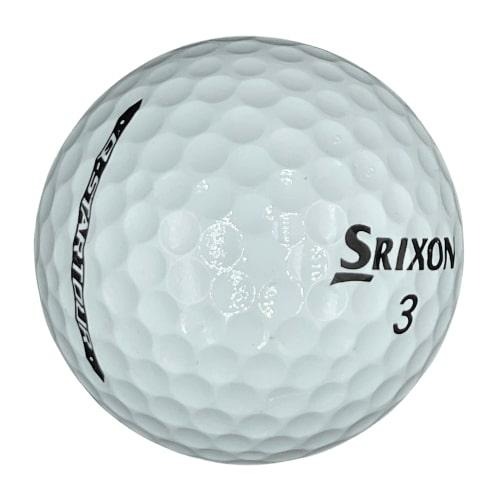
Key Features:
• 3-piece urethane construction
• Mid compression
• High greenside spin
• Soft feel
This ball helps with:
• Better stopping power on greens
• More controlled iron shots
• Consistent distance
Reddit golfers often describe it as:
“Great in-between ball… middle ground… softer with better spin” (Reddit)
That’s exactly what mid-handicap golfers typically need.
3. Wilson Triad
Best for Straight Shots & Consistency
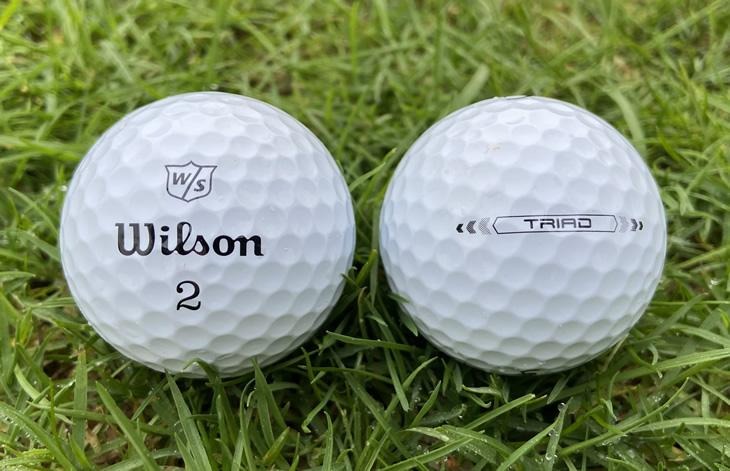
The Wilson Triad is becoming one of the most underrated golf balls for mid-handicap players.
Why it’s popular:
• 3-piece urethane ball
• Balanced weight design
• Lower side spin
• Stable ball flight
This results in:
• Straighter drives
• More consistent distance
• Better putting feel
It’s especially helpful for golfers who struggle with slight slices or hooks.
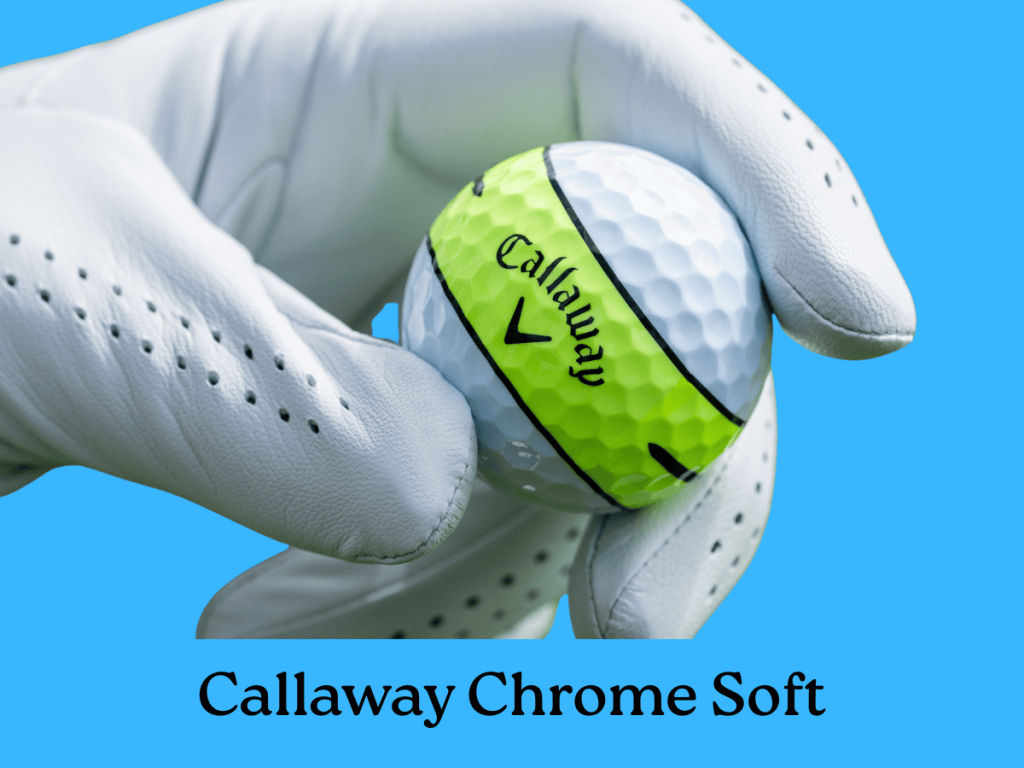
4. Callaway Chrome Soft
Best Premium Option for Mid Handicappers
If you’re ready to move toward a premium golf ball, the Callaway Chrome Soft is one of the best choices.
Why it works:
• Soft feel
• High greenside spin
• Consistent ball speed
• Multi-layer construction
Mid-handicap golfers benefit from:
• Better wedge control
• Improved short game
• Consistent trajectory
Many mid-handicap golfers prefer Chrome Soft for its balanced performance across all clubs.
5. Bridgestone e12 Contact
Best for Straighter Shots
If accuracy is your biggest struggle, this is one of the best choices.
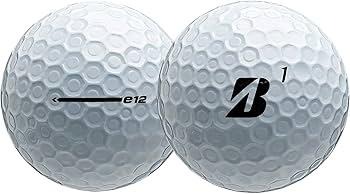
Key Benefits:
• Straight-flight design
• Reduced side spin
• High launch
• Forgiving performance
This ball is especially helpful for:
• Slice reduction
• Straighter drives
• More fairways hit
This makes it ideal for mid-handicap golfers working on consistency. (youtube.com)
Quick Comparison — Mid Handicap Golf Balls
| Golf Ball | Best For | Compression | Type |
| TaylorMade Tour Response | Best Overall | ~70 | 3-Piece Urethane |
| Srixon Q-Star Tour | Best Feel | Mid | 3-Piece Urethane |
| Wilson Triad | Best Accuracy | ~80 | 3-Piece Urethane |
| Callaway Chrome Soft | Premium Performance | Mid | Multi-Layer |
| Bridgestone e12 Contact | Straighter Shots | Mid | 3-Piece |
What Most Mid-Handicap Golfers Should Choose?
If you’re unsure, here’s the simple rule:
• Want best overall → TaylorMade Tour Response
• Want softer feel → Srixon Q-Star Tour
• Want straighter shots → Wilson Triad
• Want premium performance → Callaway Chrome Soft
• Want forgiveness + accuracy → Bridgestone e12
Head-to-Head Data Spotlight — Wilson Triad vs. TaylorMade Tour Response
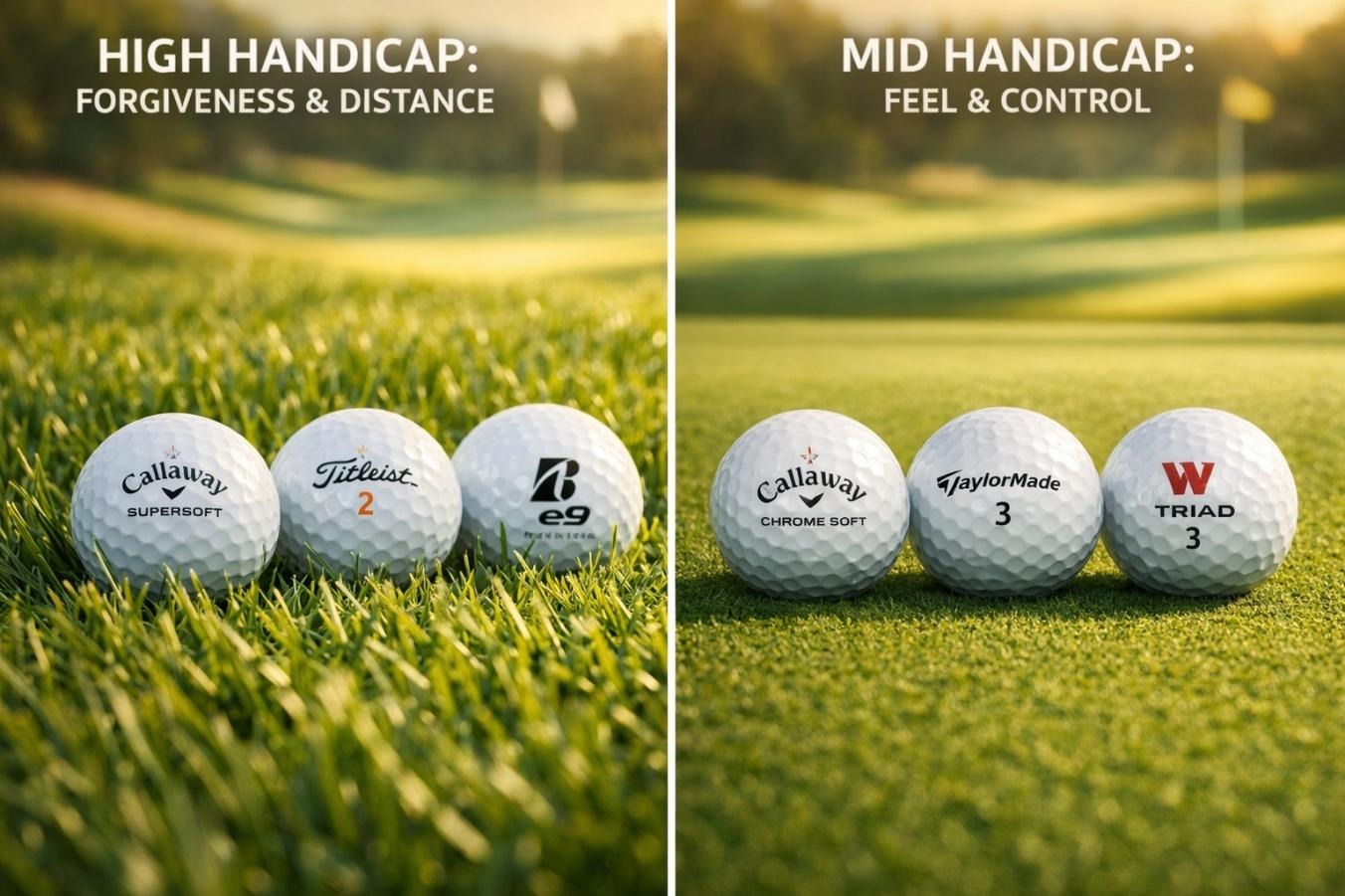
Out of all the golf balls evaluated for this guide, the comparison between the Wilson Triad and the TaylorMade Tour Response produced the most detailed, club-by-club data breakdown. Relying on real launch monitor results rather than manufacturer claims, the following table illustrates exactly what the numbers revealed across four different clubs.
Launch Monitor Data Comparison
| Club | Metric Focus | Wilson Triad | TaylorMade Tour Response | Round Winner |
| Lob Wedge (50 mph) | Carry, Ball Speed, Spin, Descent | Near identical | Near identical | Tied |
| Pitching Wedge (77 mph) | Carry, Ball Speed, Spin, Descent | Lower carry, more spin | 3-yard more carry, 600 less spin | TaylorMade (3/4) |
| 7 Iron (87 mph) | Carry, Ball Speed, Spin, Descent | Longer, faster, more spin, steeper | Noticeably behind | Wilson (4/4) |
| Driver (100 mph) | Carry, Ball Speed, Spin, Descent | Near identical | Near identical | Tied |
Overall Scorecard Across the 16 recorded metrics, the Wilson Triad secured 7 wins, the TaylorMade Tour Response secured 5 wins, and there were 4 ties.
The Real Story Recording 4 dead ties out of 16 metrics is a rare occurrence in head-to-head golf ball testing. The objective data suggests that the actual difference between these two models ultimately comes down to individual swing speed and personal feel preferences, rather than a definitive gap in overall performance.
The Verdict
- For swing speeds above 93 mph: Wilson Triad
- For swing speeds below 93 mph: TaylorMade Tour Response
- For players who prefer a softer feel: TaylorMade Tour Response
For players who prefer a firmer, more responsive feel: Wilson Triad