
Problem:
You publish solid content, yet Google AI Overviews ignore it. No citations. No visibility.
Agitation:
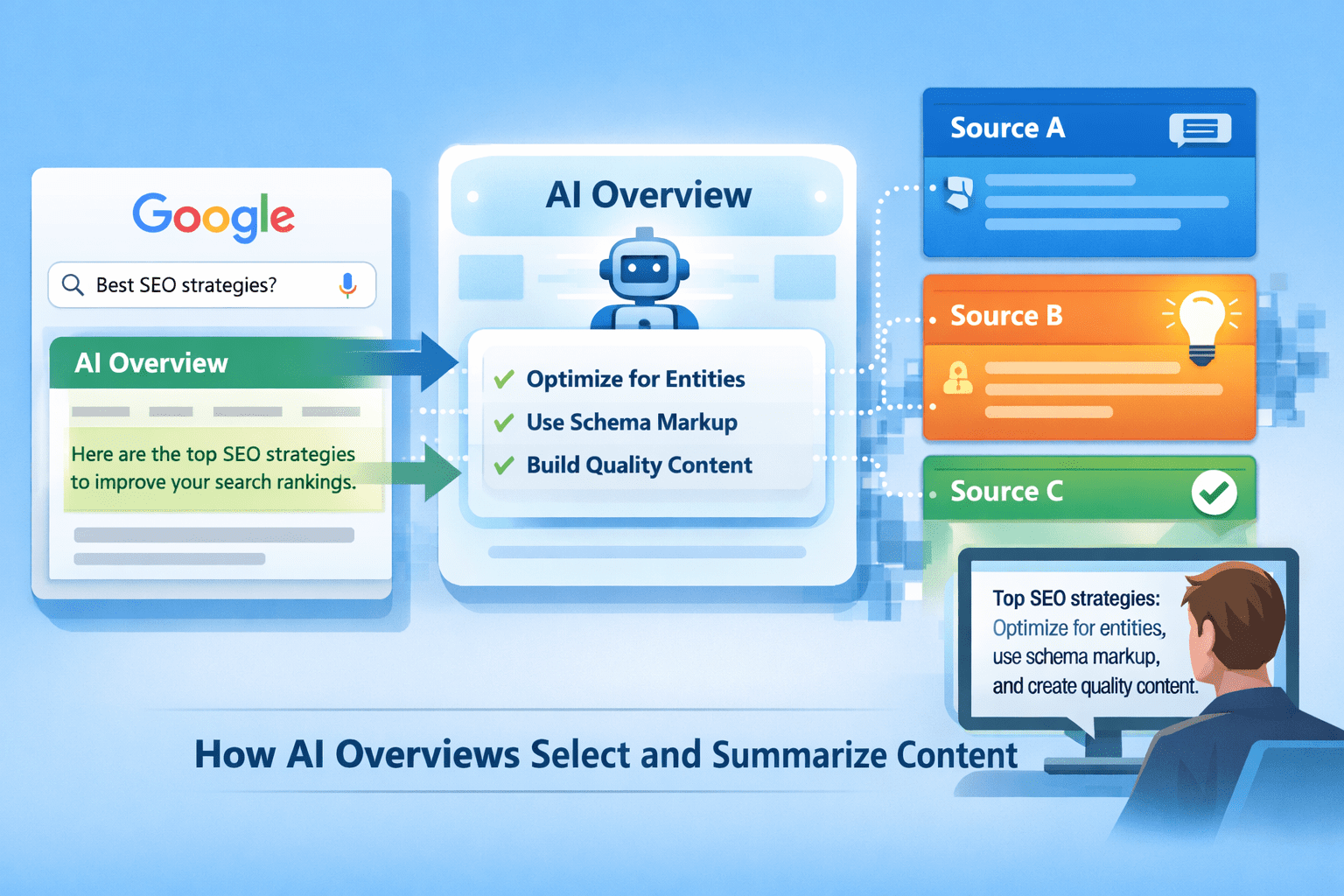
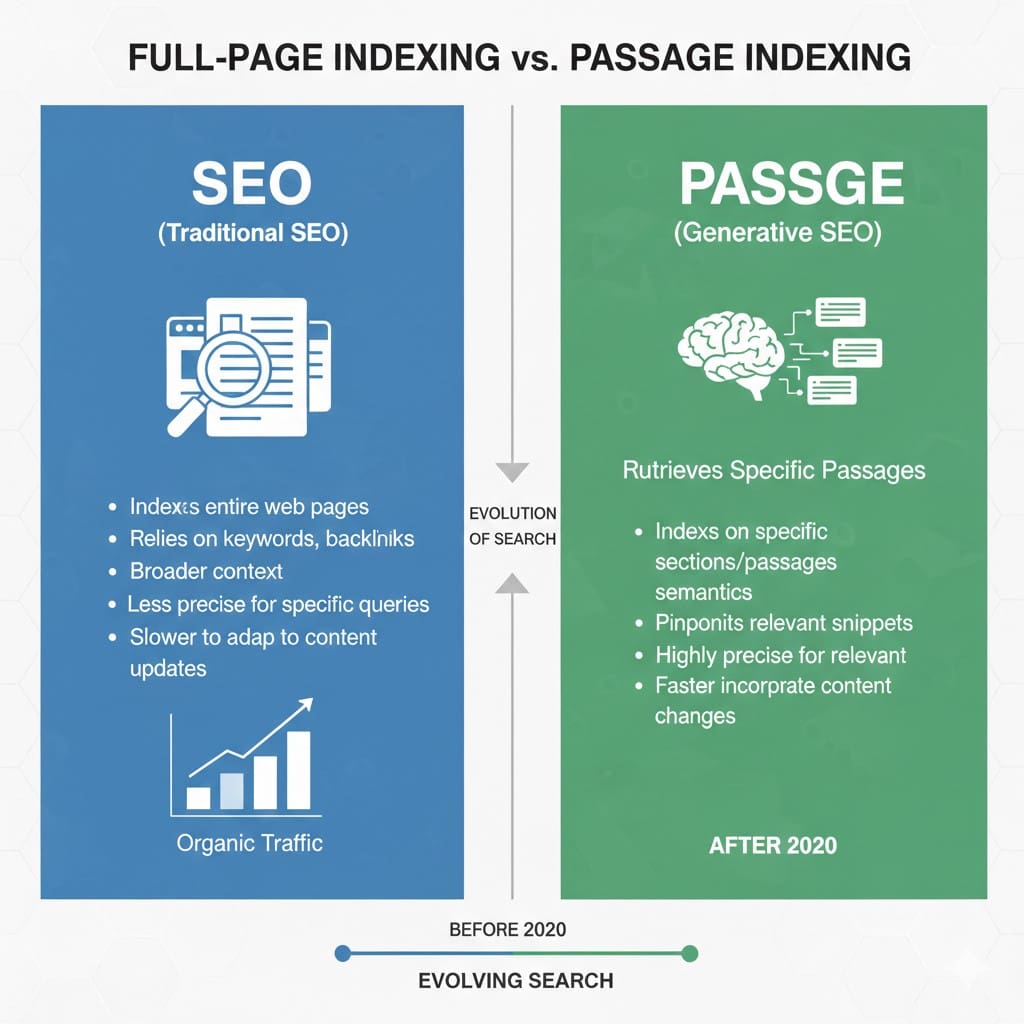
AI search doesn’t rank pages the old way. It extracts passages, trusts entities, and favors reference-style sources. Traditional SEO alone won’t get you quoted.
Solution:
This guide breaks down 10 proven GEO (Generative Engine Optimization) strategies that align your content with how AI Overviews actually retrieve and assemble answers.
KhalidSeo: “SEO & AI Search Specialist | Win on Google, ChatGPT, and AI Search in 2026.”
## What Is GEO (Generative Engine Optimization)?
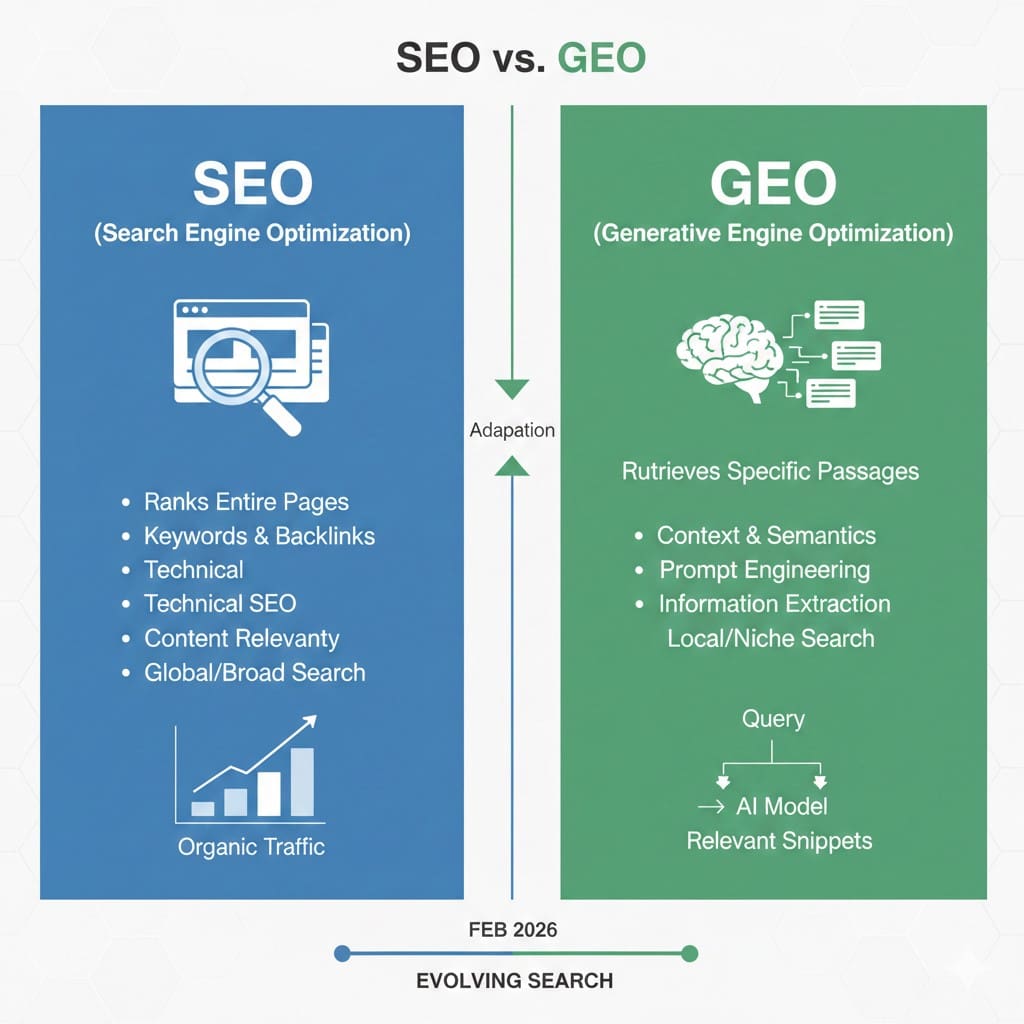
Generative Engine Optimization (GEO) is the practice of optimizing content so AI-driven search engines can understand, trust, and cite it in generated answers. It focuses on entities, context, and factual clarity rather than rankings alone.
GEO doesn’t replace SEO.
It extends it into AI retrieval systems like Google AI Overviews, ChatGPT, Gemini, and Perplexity.
## How Google AI Overviews Actually Choose Content
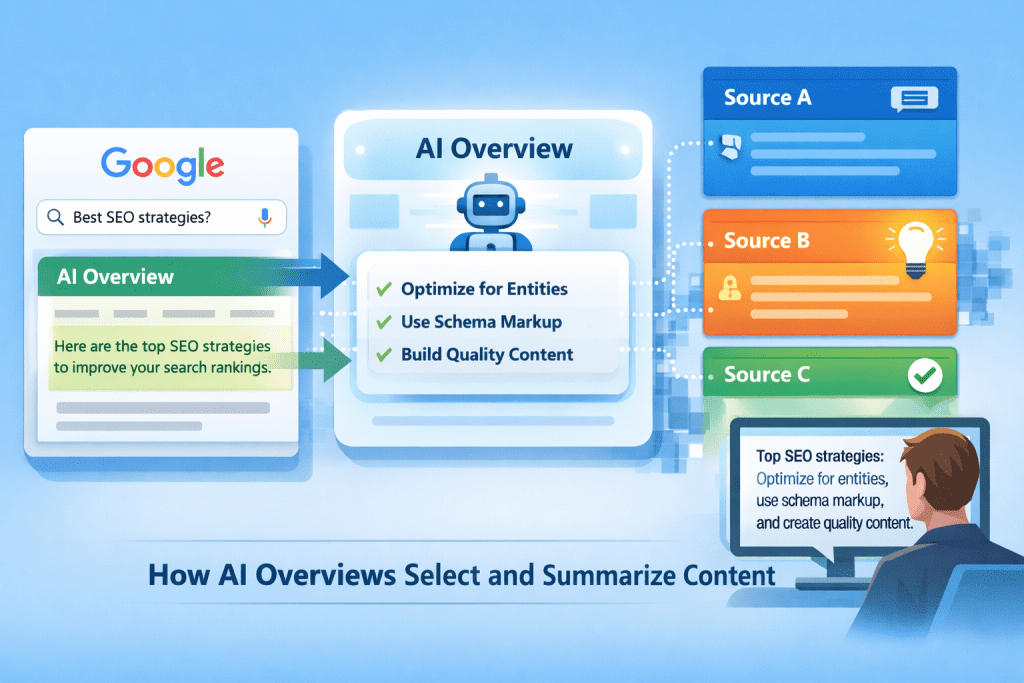
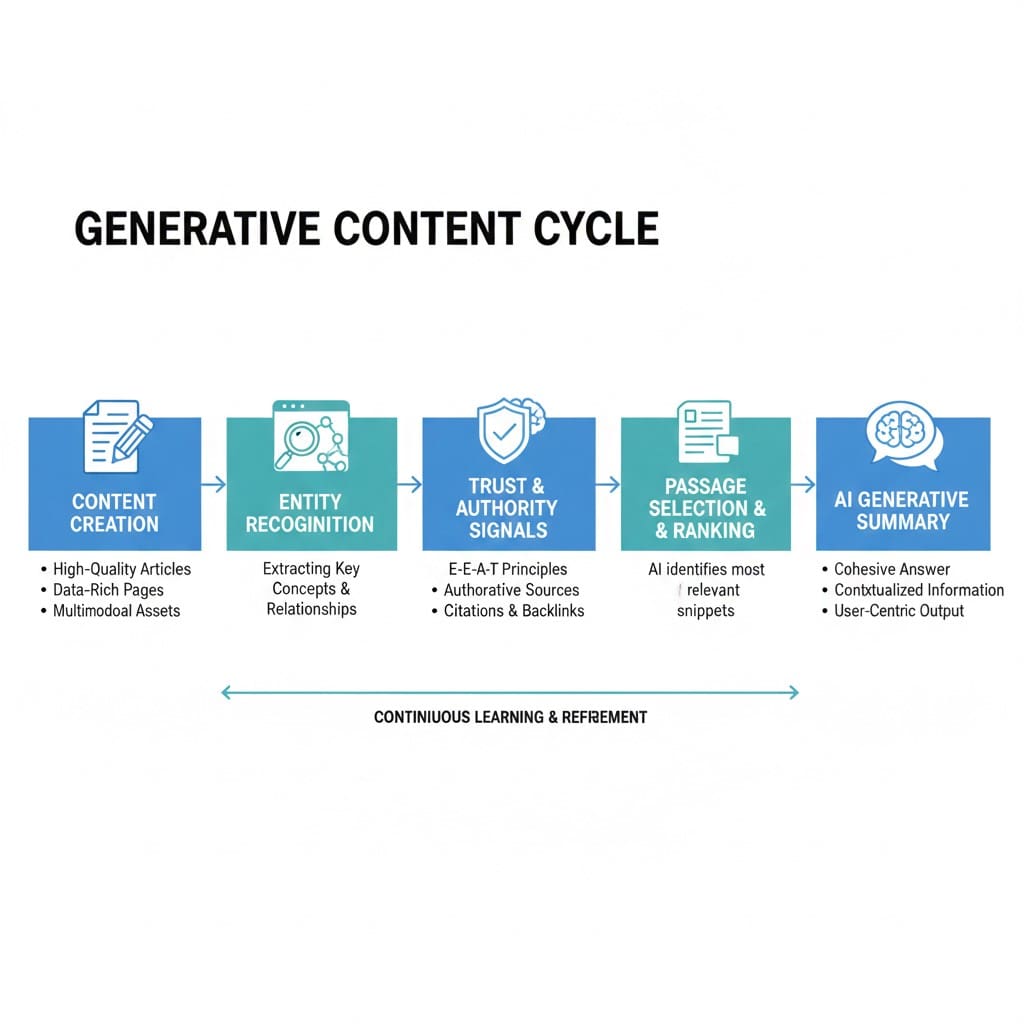
AI Overviews don’t scan full pages.
They extract specific passages that best answer a query.
Key selection factors include:
- Entity recognition and relevance
- Passage-level clarity
- Trust and source consistency
- Neutral, factual tone
If your content isn’t easy to extract, it won’t be cited.
## Strategy #1: Optimize for Passage-Level Retrieval, Not Pages
AI systems work with small context windows.
That means:
- Each section should answer one question
- Headings must be descriptive
- Paragraphs should stand alone
Best practices:
- 2–3 sentence paragraphs
- Clear definitions near headings
- Lists over long prose
## Strategy #2: Build Strong Entity Salience (Not Keyword Density)
AI connects topics through entities, not repetition.
Entity salience improves when you:
- Reference known concepts and tools
- Explain relationships between ideas
- Use consistent terminology
Examples of relevant entities:
- Google AI Overviews
- Knowledge Graph
- E-E-A-T
- Answer engines
## Strategy #3: Write Definitions AI Can Trust and Reuse
Definitions are high-value AI assets.
A strong definition is:
- Neutral
- Fact-based
- Non-promotional
Simple rule:
Define first. Explain second.
## Strategy #4: Use Q&A Blocks to Trigger AI Citations
AI Overviews mirror People Also Ask and voice queries.
Structure matters:
- Question as a subheading
- Direct answer immediately below
- Short, clear sentences
This format increases extractability.
## Strategy #5: Strengthen E-E-A-T Signals for AI Trust
AI prefers content written by verifiable experts.
Ways to reinforce trust:
- Clear author attribution
- Demonstrated experience
- Consistent topical focus
Sites that publish reference-style content, like khalidseo.com, tend to earn higher trust because they explain topics rather than sell them.
## Strategy #6: Use Schema to Improve AI Understanding (Not Rankings)
Schema helps AI interpret context, not boost rankings.
Useful schema types:
- Article
- FAQ
- Author
- Organization
Schema clarifies relationships between content, entities, and expertise.
## Strategy #7: Become the “Reference Source,” Not the Loudest Page
AI Overviews cite the same sites repeatedly for a reason.
They act as reference hubs.
To achieve this:
- Build topic clusters
- Link supporting articles to pillars
- Maintain neutral, explanatory tone
## Strategy #8: Optimize Content for Vector Similarity
AI compares meaning using vector embeddings.
To align with this:
- Cover the topic fully
- Use related concepts naturally
- Avoid thin or repetitive sections
Semantic depth beats surface-level coverage.
## Strategy #9: Ensure AI Crawlability and Accessibility
AI can’t cite what it can’t access.
Check for:
- Clean HTML rendering
- Minimal JavaScript dependency
- Open access for AI bots
Blocked content stays invisible.
## Strategy #10: Measure AI Visibility Beyond Rankings
Rankings don’t show AI exposure.
Better signals include:
- Brand mentions in AI answers
- Citations across platforms
- Inclusion in summaries
Visibility in AI search is about presence, not position.
## GEO vs Traditional SEO (Comparison Table)
| Traditional SEO | GEO |
|---|---|
| Ranks pages | Retrieves passages |
| Keyword-focused | Entity-focused |
| Link-driven | Trust-driven |
| SERP visibility | AI citation visibility |
## Frequently Asked Questions (FAQ)
### What is GEO in SEO?
Generative Engine Optimization focuses on making content understandable and citable by AI-driven search engines rather than ranking pages alone.
It emphasizes entities, passage clarity, and trust so AI systems can reuse your content in generated answers.
### How do you rank in Google AI Overviews?
You don’t rank pages; you earn citations by publishing clear, trusted, passage-optimized content.
AI Overviews select short sections that best answer a question and come from reliable sources.
### Is GEO replacing traditional SEO?
No. GEO extends SEO by optimizing content for AI retrieval systems.
Traditional SEO builds discoverability. GEO ensures your content is usable by generative engines.
### What type of content works best for AI Overviews?
Structured, factual content with definitions, lists, and direct answers performs best.
AI prefers neutral explanations that can be summarized without distortion.
### How can websites prepare for AI search?
Websites should focus on topical authority, entity clarity, schema, and AI crawlability.
Publishing reference-style content and measuring AI citations helps future-proof visibility.
Final Thought
AI Overviews reward clarity, credibility, and context.
If your content reads like a reference, AI treats it like one.
That’s the real goal of GEO.
