

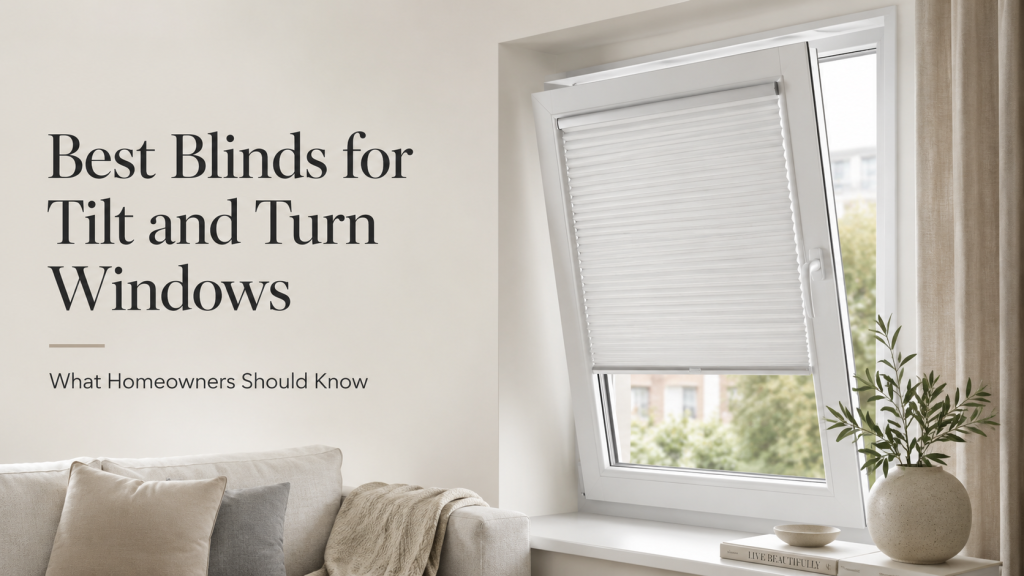
Tilt and turn windows are a smart choice for modern homes. They bring in natural light, help with airflow, and give homeowners more control over how the window opens. You can tilt the window inward from the top for fresh air or turn it open like a door when you need wider access.
But when it comes to blinds, tilt and turn windows need a little more thought. Regular blinds can work well on standard windows, but they are not always the best fit for tilt and turn windows. The window moves differently, so the blind needs to work with that movement instead of getting in the way.
That is why choosing the right tilt and turn window blinds matters. The best blinds for these windows should look clean, stay secure, protect privacy, control light, and let the window move the way it was designed to move.
Why Tilt and Turn Windows Need Special Blinds
Tilt and turn window blinds are different from regular windows because the sash moves inward. This makes them very practical, but it also creates issues for standard blinds.
A regular blind may hang in front of the window. That can be fine until you tilt or open the window. Once the sash moves, the blind may swing, shift, rattle, or block the opening. Common issues include:
- Blinds swinging away from the glass
- Cords are getting caught near the frame
- Uneven lines after opening the window
- Bulky hardware around a clean frame
- Poor fit on narrow window areas
- Gaps that affect privacy
- Blinds need adjustment every time the window opens
These problems are not always obvious when the blinds are first installed. They usually show up during daily use. If you open your windows often, the wrong blinds can become annoying fast.
What Makes a Blind Good for Tilt and Turn Windows?
The best blinds for tilt and turn windows are the ones that stay controlled. They should sit close to the glass, move with the sash, and avoid blocking the window’s function. The goal is to keep the window easy to use while still getting privacy and light control. A good setup should offer:
- Clean fit around the window
- Smooth use when the window tilts or turns
- Stable coverage without swinging
- Proper privacy
- Practical light control
- Custom sizing
- A neat look on modern frames
- Little to no frame damage
This is why window fit blinds are often a better option than standard blinds for tilt and turn windows.
Window Fit Blinds Are Often the Best Choice
Window fit blinds are designed to sit close to the glass and frame area. Instead of hanging loosely in front of the window, they feel more connected to the window itself. For tilt and turn windows, this is a major benefit.
When the window tilts or opens, the blind can stay aligned with the sash. That means less movement, less swinging, and a cleaner daily experience. Window fit blinds work well for:
- Tilt and turn windows
- Tilt and turn patio doors
- French doors
- Modern condo windows
- Narrow window frames
- Glass-heavy openings
- Windows used often for airflow
Ray Blinds offers window fit blinds designed for tilt and turn windows, helping homeowners get a clean, secure look without turning the blind into a daily hassle.
No-Drill Blinds Help Protect the Frame
Many homeowners do not want holes drilled into their window frames, especially if the windows are newer, modern, or part of a condo unit. Drilling into the frame can leave marks and may affect the clean finish. In some cases, renters or condo owners may also want to avoid permanent changes.
No-drill style blinds can be a better fit because they help protect the window frame while still giving the room proper coverage. This is useful for:
- Newer window frames
- Minimal modern trim
- Condo units
- Rental properties
- Patio doors
- Clean white or black frames
- Homeowners who want a less bulky look
A no-drill option does not mean the final look has to feel temporary. With proper measurement and installation, window fit blinds can look neat and finished.
Custom Sizing Matters More Than You Think
Tilt and turn window blinds should not be treated like basic, one-size-fits-all blinds. These windows need a more exact fit because the blind has to sit properly while the window moves. If the blind is slightly too wide, too narrow, or poorly placed, it can affect both the look and daily use.
Custom sizing helps with:
- Better glass coverage
- Fewer privacy gaps
- Cleaner window lines
- Smoother movement
- Consistent fit across multiple windows
- Better light control
- Less shifting during use
This is especially important if you have a row of tilt and turn windows in one room. If one blind person looks off, the whole setup can feel uneven. A measured fit gives the space a cleaner and more intentional look.
Privacy Is a Big Part of the Decision
Many tilt and turn windows are used in bedrooms, kitchens, condos, street-facing rooms, and patio areas. Privacy matters in these spaces. The best blinds should cover the glass properly without making the window feel heavy. A good blind setup can help with:
- Nighttime privacy
- Street-facing windows
- Ground-floor rooms
- Bedroom coverage
- Bathroom privacy
- Condo windows facing nearby buildings
- Patio door privacy
Loose blinds can leave gaps when the window moves. A window fit system can help keep the blind closer to the glass, which makes the coverage feel more reliable.
Light Control Should Match the Room
Not every room needs the same type of blind. A bedroom may need more room-darkening control. A kitchen may need soft daylight with privacy. A living room may need glare control without blocking the view completely.
Before choosing blinds, think about how the room is used. For bedrooms, you may want:
- More privacy
- Better room darkening
- A cleaner finish around the frame
- Easy daily use
For kitchens, you may want:
- Light filtering
- Easy ventilation
- A blind that does not get in the way
- A neat look near cabinets or counters
For living rooms, you may want:
- Glare control
- Soft natural light
- A clean look
- Better privacy in the evening
For patio doors, you may want:
- Stable blinds that do not swing
- Easy door use
- A clean fit on the glass
- Simple operation
The best tilt and turn window blinds are chosen based on how the room works, not just how the window looks.
Standard Blinds vs Window Fit Blinds
Standard blinds can still work in some homes, but they may not be the most practical choice for tilt and turn windows. Here is the simple difference.
Standard blinds usually hang in front of the window. They may work better for fixed windows or windows that are rarely opened.
Window fit blinds sit closer to the window area and are designed to work with the sash movement.
For tilt and turn windows, window fit blinds usually feel better because they:
- Stay more controlled
- Look less bulky
- Move better with the window
- Reduce swinging
- Protect the frame area
- Feel cleaner for daily use
If you rarely open the window, standard blinds may be enough. But if you use the tilt and turn function often, window fit blinds are usually the smarter choice.
Best Places to Use Tilt and Turn Window Blinds
Tilt and turn window blinds can work across the home, but they are especially useful in rooms where function matters every day.
Kitchens
Kitchen windows are often opened for airflow. Window fit blinds help keep the blind from moving around while the window is tilted.
Bedrooms
Bedrooms need privacy and light control. A clean fit helps cover the glass without making the room feel crowded.
Condos
Modern condos often have large glass and tight frames. Window fit blinds can give a cleaner look without bulky hardware.
Living Rooms
Living rooms need a balance of light, privacy, and design. Tilt and turn window blinds can keep the room clean while still giving control.
Patio Doors and French Doors
Loose blinds can swing when doors open. A window fit system keeps the blind more stable on the glass.
What Homeowners Should Ask Before Buying
Before choosing blinds for tilt and turn windows, ask a few simple questions:
- How often do I open this window?
- Do I use the tilt function daily?
- Is this room street-facing?
- Do I need privacy during the day, night, or both?
- Do I want light filtering or room darkening?
- Is the frame new or modern?
- Do I want to avoid drilling?
- Are there multiple windows that need to match?
- Do I want the blinds to feel built into the window?
- Will regular blinds get in the way?
These questions help narrow down the right option.
Why Ray Blinds Is a Good Fit
Tilt and turn windows need blinds that are measured properly and installed with care. The wrong product can look fine at first, but it can become frustrating once the window is used daily.
Ray Blinds is a strong choice for homeowners looking for tilt and turn window blinds because their window fit system is made for this type of window movement. The blinds sit neatly in the frame, stay aligned when the sash moves, and help avoid frame drilling.
Their process also keeps the project simple:
- Share your window type and count
- Get the right product recommendation
- Review clear pricing
- Finalize measurements
- Complete installation
- Learn how the blinds work day to day
That makes the process easier for homeowners who want a clean result without guessing which blind style will work.
Final Thoughts
Tilt and turn windows are useful, modern, and great for airflow. But they need blinds that match the way they move. The best blinds for tilt and turn windows should stay close to the glass, avoid swinging, protect the frame, and make daily use easier. They should also provide the privacy and light control the room needs.
Standard blinds may work for some windows, but window fit blinds are usually the better choice for tilt and turn windows that are opened often. Ray Blinds offers a clean, custom-sized option for homeowners who want blinds that look neat and work smoothly with the window.
If your windows tilt, turn, and open inward, your blinds should be designed to do the same job without getting in the way.