
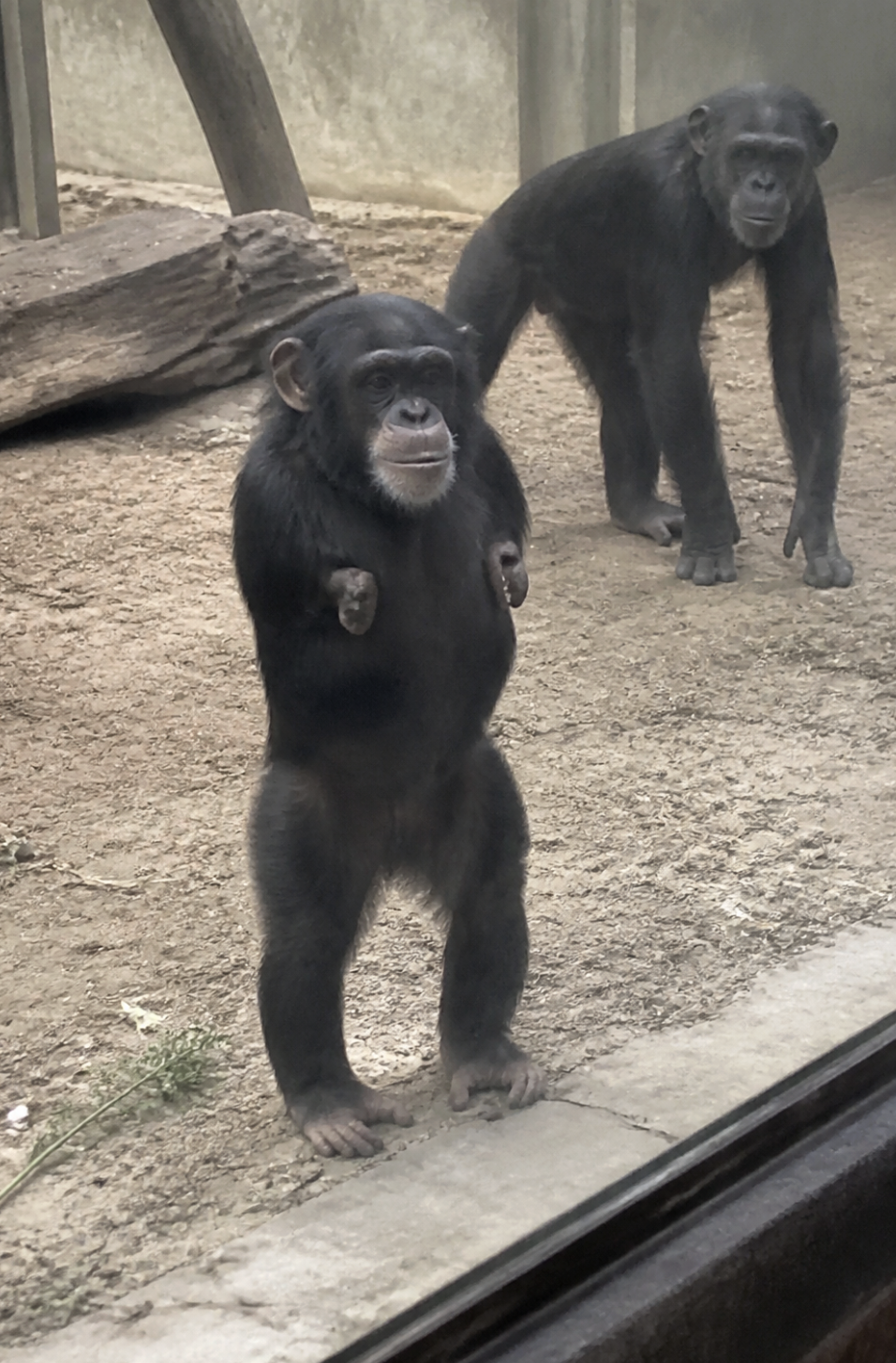
BEIJING, China — August 2, 2026 — Beijing Zoo has captured international attention after sharing a video of one of its chimpanzees living with a rare congenital condition known as phocomelia. The footage, posted on the zoo’s English-language X (formerly Twitter) account @BeijingZooCN, quickly gained widespread attention, with thousands of viewers praising the chimpanzee’s resilience and unique appearance.
The chimpanzee, born with significantly shortened forelimbs due to phocomelia, was seen confidently standing upright, exploring his enclosure, and interacting naturally with his environment. Another chimpanzee appeared in the background of the video, highlighting the animal’s successful social integration within the group.
The zoo accompanied the video with the following statement:
“Meet one of our special residents at Beijing Zoo. This chimpanzee was born with a rare condition called phocomelia, which affects the development of the limbs. Despite shorter arms, he thrives in our care, exploring, socializing, and enjoying enrichment every day. Watch him stand tall and show his personality!”
The post quickly went viral as social media users affectionately nicknamed the chimpanzee “Rex,” noting that his short forelimbs resembled those of the famous Tyrannosaurus rex. Many users praised the animal’s confidence, mobility, and positive spirit while expressing admiration for the zoo’s dedication to specialized animal care.
Understanding Phocomelia
Phocomelia is a rare congenital condition in which the limbs are severely underdeveloped or absent. In affected individuals, the hands or feet may be attached close to the torso because portions of the limbs fail to develop normally before birth.
Although the condition has been documented in humans, occurrences in non-human primates are extremely uncommon. Veterinary specialists typically focus on maintaining mobility, providing environmental enrichment, monitoring overall health, and ensuring affected animals enjoy a high quality of life.
According to Beijing Zoo, the chimpanzee receives individualized veterinary supervision and specialized husbandry designed to support his physical well-being and encourage normal social behavior within his troop.
Raising Awareness Through Conservation
Zoo officials noted that the overwhelming response to the video has helped educate the public about congenital conditions in wildlife while demonstrating that animals with physical differences can continue to live active and enriching lives under professional care.
The widespread support from viewers has also highlighted the importance of modern zoological institutions in conservation, veterinary medicine, public education, and animal welfare.
About Beijing Zoo
Established in 1906, Beijing Zoo is one of China’s oldest and largest zoological parks. Located in Beijing’s Xicheng District, the zoo is home to thousands of animals representing more than 500 species from around the world.
The institution actively participates in wildlife conservation, scientific research, breeding programs, veterinary medicine, and public education. Through both Chinese- and English-language social media platforms, Beijing Zoo regularly shares updates on animal care, conservation initiatives, and educational programs with audiences worldwide.
Zoo officials have not publicly disclosed the chimpanzee’s official name or detailed medical history beyond confirming the diagnosis of phocomelia. They continue to encourage respectful discussion surrounding animal welfare and invite the public to learn more about their conservation efforts by following the zoo’s official communication channels.