
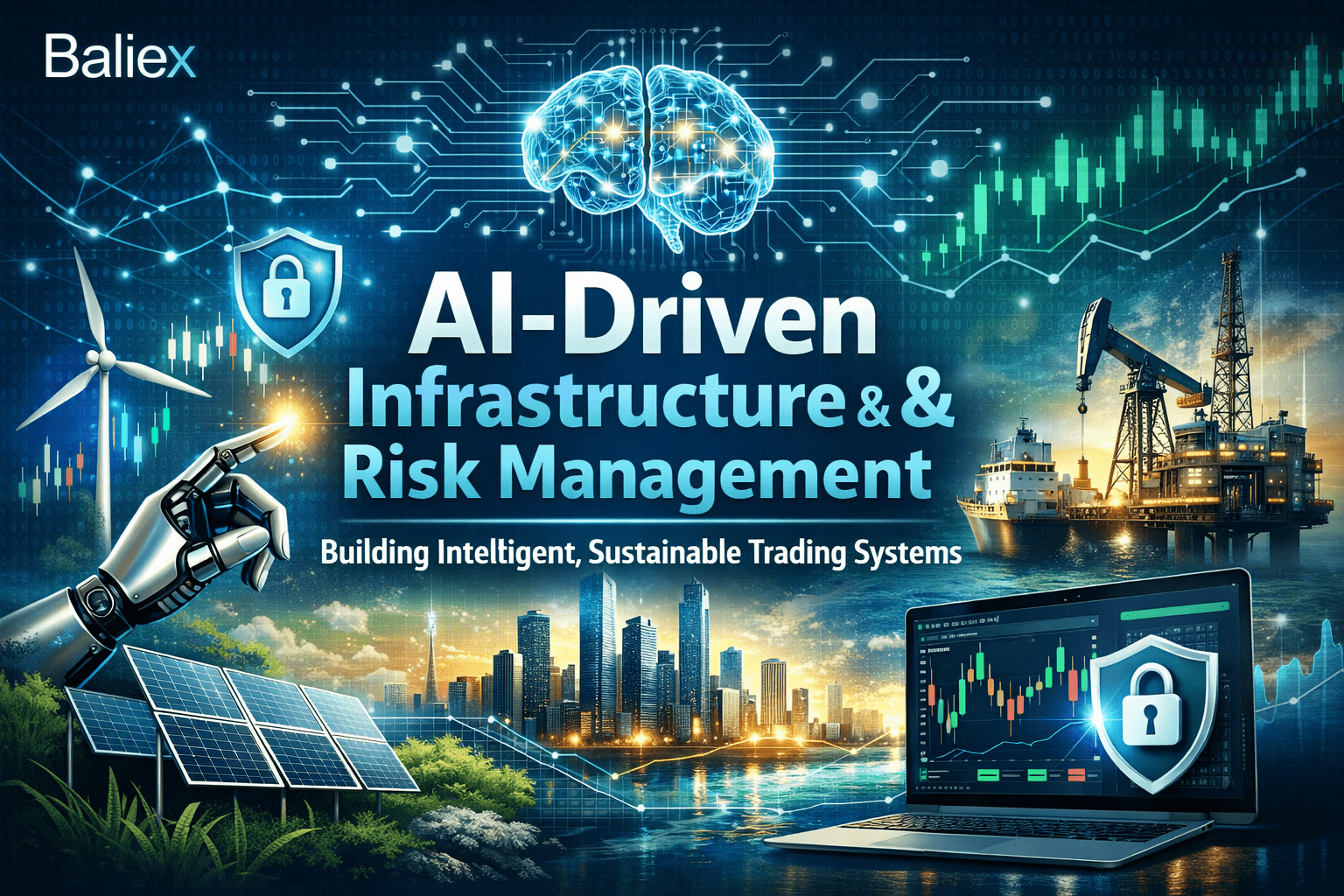
In the modern fintech landscape, artificial intelligence (AI) has become a defining force behind innovation in trading and investment management. As digital asset markets grow increasingly complex and data-intensive, companies are turning to AI-driven infrastructures to enhance decision-making, improve efficiency, and manage risk more effectively. Baliex, an international technology company specializing in algorithmic trading, has positioned itself at the forefront of this transformation by developing an integrated system that combines advanced algorithms with structured risk management and human oversight.
The Foundation of AI-Driven Trading Infrastructure
At the core of Baliex’s operations lies a sophisticated AI-driven infrastructure designed to process and analyze vast amounts of financial data in real time. Digital asset markets generate continuous streams of information, including price movements, trading volumes, order book dynamics, and macroeconomic signals. Managing and interpreting this data manually is both inefficient and prone to error.
Baliex addresses this challenge by deploying machine learning algorithms capable of ingesting large datasets and transforming them into actionable insights. These systems are designed to operate continuously, scanning global markets and identifying potential opportunities across multiple exchanges and asset classes.
This infrastructure enables the company to maintain a high level of responsiveness, ensuring that trading strategies can adapt quickly to changing market conditions while maintaining operational efficiency.
Data Analysis and Pattern Recognition
One of the most critical functions of Baliex’s AI systems is the ability to detect patterns within complex datasets. Financial markets often exhibit recurring behaviors—such as trends, cycles, and correlations—that can be identified through advanced analytical techniques.
Baliex’s algorithms utilize statistical modeling, predictive analytics, and machine learning to uncover these patterns. By analyzing historical data alongside real-time inputs, the system can identify signals that indicate potential price movements or shifts in market sentiment.
Pattern recognition is particularly valuable in digital asset markets, where volatility and fragmentation can create hidden opportunities. The ability to detect subtle changes in market dynamics allows Baliex to anticipate trends rather than simply react to them, enhancing the overall effectiveness of its trading strategies.
Optimizing Trading Decisions Through AI
Beyond analysis, Baliex’s AI infrastructure plays a central role in optimizing trading decisions. Once patterns and opportunities are identified, algorithms evaluate multiple variables—such as risk levels, liquidity conditions, and execution timing—to determine the most efficient course of action.
This optimization process ensures that trades are executed with precision, minimizing slippage and maximizing potential returns. The system can also adjust strategies dynamically, reallocating capital and modifying parameters as market conditions evolve.
Importantly, AI-driven optimization does not operate in isolation. Baliex integrates these systems within a broader framework that includes human expertise, ensuring that decisions are both data-driven and contextually informed.
Comprehensive Risk Management Framework
Risk management is a fundamental component of Baliex’s infrastructure. In digital asset trading, where market conditions can change rapidly, effective risk control is essential for preserving capital and ensuring long-term stability.
Baliex employs a multi-layered risk management system that is embedded within its AI architecture. Algorithms continuously monitor key risk indicators, such as market volatility, exposure levels, and correlation between assets. When predefined thresholds are reached, the system can automatically adjust positions, implement stop-loss mechanisms, or reduce leverage.
This proactive approach allows Baliex to mitigate risks before they escalate, rather than reacting after losses occur. By integrating risk management directly into its trading processes, the company ensures that every decision aligns with its overall risk tolerance and strategic objectives.
The Role of Human Oversight
While AI provides speed, scalability, and analytical power, Baliex recognizes the importance of human oversight in maintaining control and accountability. The company’s hybrid model ensures that experienced traders and analysts remain actively involved in the decision-making process.
Human experts review algorithmic outputs, validate trading strategies, and intervene when necessary. This oversight is particularly valuable in situations where market conditions are influenced by external factors—such as regulatory developments or geopolitical events—that may not be fully captured by algorithms.
By combining machine intelligence with human judgment, Baliex creates a balanced system that leverages the strengths of both. This approach reduces the risks associated with fully automated trading while preserving the efficiency of AI-driven operations.
Ensuring Long-Term Sustainability
Sustainability is a key consideration in the design of Baliex’s AI-driven infrastructure. Rather than focusing solely on short-term gains, the company emphasizes consistent performance and long-term growth.
This is achieved through disciplined capital management, continuous system optimization, and adherence to structured processes. Algorithms are regularly updated and refined to reflect new data and evolving market conditions, ensuring that the system remains relevant and effective over time.
Additionally, Baliex’s commitment to transparency and international standards supports its long-term sustainability goals. By maintaining clear operational frameworks and robust risk management practices, the company aims to build trust with its stakeholders and establish a stable presence in the global fintech ecosystem.
Integration of Technology and Strategy
A defining feature of Baliex’s approach is the seamless integration of technology and strategy. AI is not treated as a standalone tool but as an integral part of the company’s overall trading framework.
This integration allows for coordinated decision-making across different strategies and markets, ensuring that all components of the system work together cohesively. It also enables continuous feedback loops, where insights from trading performance are used to refine algorithms and improve future outcomes.
Such a system creates a dynamic and adaptive trading environment, capable of responding to both opportunities and risks in real time.
Conclusion: A Data-Driven Future for Fintech
Baliex’s AI-driven infrastructure and risk management framework highlight the growing importance of intelligent systems in modern finance. By leveraging advanced algorithms to analyze data, detect patterns, and optimize decisions, the company enhances both efficiency and accuracy in digital asset trading.
At the same time, its emphasis on human oversight and long-term sustainability ensures that technological innovation is balanced with strategic control. This combination of AI and human expertise represents a forward-looking approach to fintech—one that prioritizes resilience, transparency, and responsible growth.
As digital markets continue to expand, such integrated systems are likely to play an increasingly central role in shaping the future of trading, setting new benchmarks for how technology can be used to manage complexity and risk in a rapidly changing financial landscape.