
The rapid advancement of artificial intelligence is reshaping financial markets and the roles of those who operate within them. For decades, traders and analysts have relied on experience, judgment, and interpretation to make decisions. Today, AI systems are increasingly capable of processing complex data, identifying patterns, and acting with speed that far exceeds human capability.
This shift is not happening all at once, but the direction is becoming clearer. As systems improve, the role of the human trader may move away from direct decision making toward oversight and risk management. Instead of executing trades, professionals may find themselves supervising systems that operate independently.
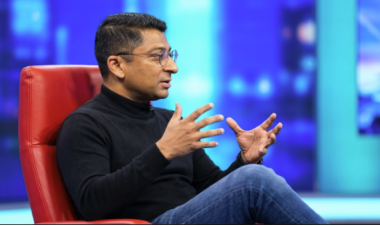
Kaushal Sheth, a long time technology leader in financial systems, is among those working on this transition. His platform, Otonomii, is designed to function as an adaptive intelligence layer rather than a traditional tool. It reflects a broader trend where AI is not simply assisting humans, but participating alongside them in market activity.
At the same time, access to these technologies is expanding. Platforms such as aisignals.com provide retail traders with exposure to systems based on similar principles. This raises new questions about how accessible advanced intelligence will become and whether the gap between institutional and retail capabilities will widen or narrow over time.
The future of trading may not be defined by the disappearance of humans, but by a redefinition of their role. As AI becomes more central to market activity, the balance between human judgment and machine driven decision making will continue to evolve.
