
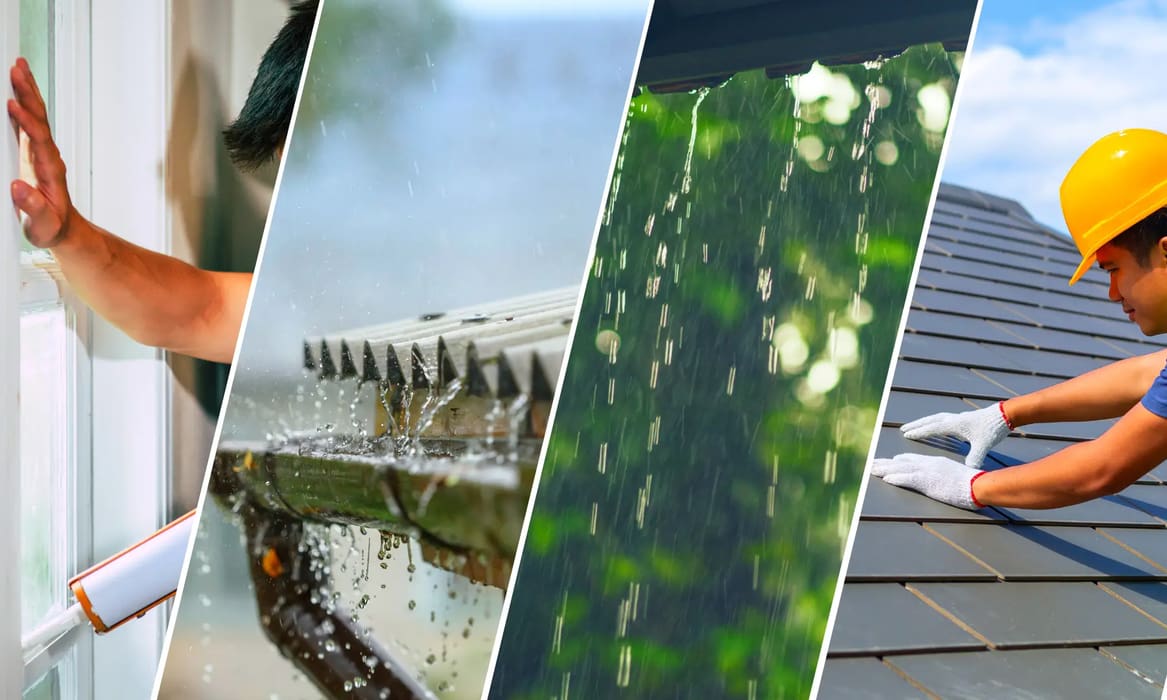
There’s something almost hypnotic about a rainy afternoon. You’re inside, coffee in hand, rain tapping the glass.
But all that can quickly turn into headaches when the rain starts coming into your home or flooding your basement. And it happens more often than you think. In fact, according to a report published by Investopedia, more than 6% of homes in the U.S. are at risk of severe flood damage. And guess what? Most of it is preventable with a bit of prep before storm season kicks in.
The goal here isn’t to scare you. It’s the opposite, actually. A little bit of prep now means you get to sleep right through the next storm without your mind wandering down to the basement every five minutes.
Let’s discuss some of this important pre-rainy season preparation.
Inspect Your Roof and Gutters
The roof is the first line of defense of any home. If it’s compromised, nothing else really matters.
That’s why you need to get up there or hire an expert to check it for you. Here’s what to look for:
- Curling, missing or broken shingles
- Cracked flashing around chimneys, vents, or skylights
- Soft or sagging spots
Next, tackle your gutters. This part often gets overlooked, but clogged gutters are behind a surprising amount of rainy season home damage. When they back up, water has nowhere to go except under your roof’s edge or straight down against your foundation.
And don’t forget your downspout drainage. Downspouts should carry water five or six feet away from your foundation, not dump it right beside the house. Homeowners in Chicago have reported repeated basement flooding after heavy rains, with some losing thousands of dollars because of water damage, according to reports from CBS Chicago.
You don’t want that kind of loss simply because your downspout wasn’t positioned properly. If your downspouts have always been a problem, it’s better to look for drainage solutions now.
Downspouts that drain rainwater directly to the base of your home can cause basement or crawl space flooding and even foundation damage, according to the team at NDS.
Check Grading and Drainage
Next, take a walk around your house. You’re looking for signs of poor grading and drainage. The ground should be sloped away from your foundation. If you see signs that puddles usually form against the wall, that is a problem waiting to happen.
Here’s what to look for:
- Patches where the grass looks perpetually wet or is killed off
- Visible pooling areas close to the house
- Clogged yard drains or catch basins
Many experts say that poor drainage is one of the most common causes of foundation damage, with repairs costing anywhere from $2,200 to $8,100. This is an expense you can prevent just by checking over your grounds.
Check and Reseal Your Windows and Doors
Water doesn’t need a big entry point. A tiny gap in old caulking is enough.
To stop that from turning into a leak, walk around your windows and feel along the edges. Usually, you’re supposed to feel for damp spots, but that’ll be difficult as it hasn’t rained yet.
Alternatively, check for daylight around the frame from the inside. If you can see daylight, then you’ve got a problem.
Thankfully, it’s a quick fix. Scraping out the old caulk and re-applying takes maybe 20 minutes per window and a $6 tube of caulk.
Check your doors too. Get door sweeps to install at the bottom to stop wind-driven rain from pushing under. And don’t forget the garage door. A new rubber seal along the bottom is cheap and keeps the garage floor dry, which is great if you store anything out there.
Test Your Sump Pump
If you have a basement and a sump pit, this step is non-negotiable. Go to your sump pit and pour in a big bucket of water. Like, a full five-gallon bucket. Watch it. The pump should kick on automatically and suck that water out in no time. If it doesn’t, you clearly have a problem.
Basement flooding is probably one of the most common challenges homeowners face when it rains, and in many cases, the culprit is a failed sump pump. The proposed “Fix Our Flooded Basements Act” in Congress right now is designed to try to help people recover from this exact kind of damage.
Prepare For Emergencies
When a big storm hits, power is usually one of the first things to go. The right supplies and emergency equipment can make a real big difference when this happens.
You want to have ready:
- Flashlights with extra batteries
- A portable power bank for your phone
- A wet and dry vacuum for quick cleanups
- Plastic sheeting to protect furniture in case you lose a ceiling
According to FEMA, as little as one inch of water can cause property damage of up to $25,000. Having gear ready doesn’t prevent the storm or flooding, but it can be the difference between peace of mind and heavy inconvenience.
Go Digital
Finally, use tech to keep an eye on things. This one’s underrated, but a few tech tools can give you real early warning.
Start with smart water leak detectors. These little sensors alert you the moment they sense moisture. Even a few minutes’ notice can stop a tiny drip from turning into a full-blown basement nightmare.
Weather apps are another must. Apps like RadarScope or services like Weather.gov can give you between 24 and 48 hours’ heads-up before heavy rain hits. That’s enough time to prep your home and avoid unnecessary stress.
Conclusion
That brings us to the end of our rainy season home prep checklist.
Of course, you don’t have to do everything in one day. A good idea is to pick one or two items this weekend. Maybe start with the gutters. Get that done and then check the pump. A little time spent outside now means more cozy evenings listening to the rain later, knowing you are safe and dry.