
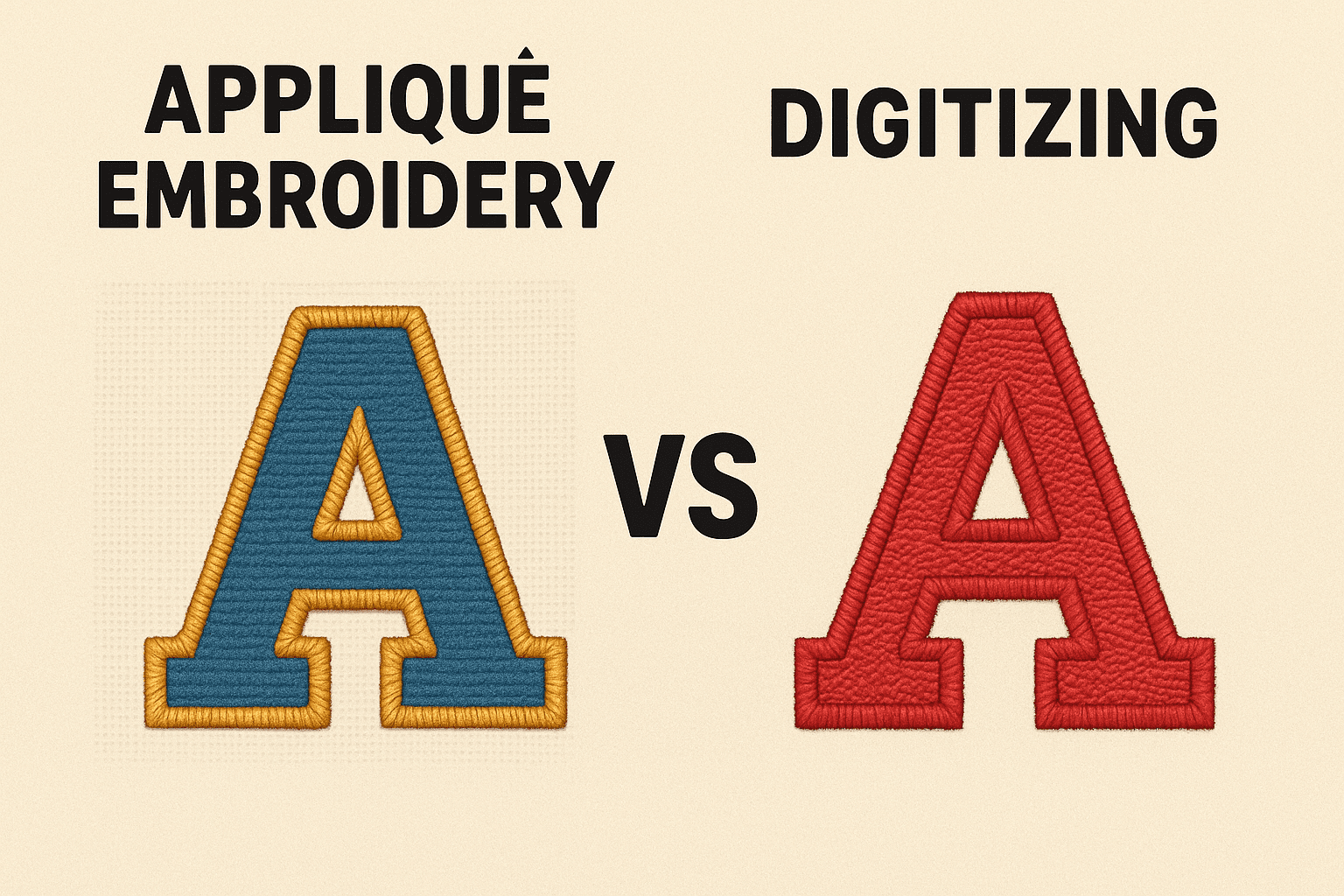
When it comes to decorating garments, hats, bags, or promotional items, embroidery remains one of the most trusted and visually appealing methods. But within embroidery itself, two popular techniques often spark curiosity: applique embroidery and digitizing. While they work together in many projects, they serve different purposes. Understanding the difference will help you make smarter decisions for your designs—especially if you run a business, manage a brand, or simply love custom apparel.
Below, we’ll break down how applique embroidery works, what digitizing really means, and how to choose the best technique for your project.
What Is Applique Embroidery?
Applique embroidery is a decorative technique where pieces of fabric are stitched onto a base material to form letters, shapes, or patterns. Instead of stitching an entire area with thread—which can take time and increase stitch density—applique uses fabric patches to create bold, textured, and colorful designs.
How It Works
- The design is prepared so the machine knows where to place the fabric piece.
- A base stitch outlines the shape.
- The fabric piece is placed on top.
- The machine secures the fabric with satin stitches, zigzags, or decorative borders.
Why People Love Applique
- Cost-effective: Fewer stitches mean less time on the machine.
- Lightweight: Works great on large designs without making garments stiff.
- Creative flexibility: Use denim, felt, metallics, leather, prints, and more.
- Eye-catching: Ideal for big, bold letters—think sports jerseys or varsity jackets.
What Is Embroidery Digitizing?
Digitizing is the process of converting artwork—like a logo, shape, or text—into a stitch file that an embroidery machine can read. Without digitizing, an embroidery machine doesn’t know where to place stitches, how dense to make them, or which stitch types to use.
What Digitizing Involves
Professional digitizers (or services like USA Digitizing Pro) use specialized software to map:
- Stitch paths
- Stitch density
- Underlays
- Pull compensation
- Thread changes
- Applique placement lines (if needed)
Digitizing isn’t just “converting an image.” It requires skill and understanding of fabric types, thread behavior, and design structure.
Key Differences Between Applique Embroidery and Digitizing
Even though people often compare “applique vs digitizing,” the truth is that one cannot replace the other. Here’s why:
1. Technique vs. Preparation
- Applique is a technique—a style of embroidery.
- Digitizing is a pre-production process—the digital blueprint for embroidery.
In other words:
Digitizing tells the machine how to create the applique.
2. Design Complexity
- Applique works best for large, simple shapes like letters, patches, or logos with solid fills.
- Digitizing handles detailed artwork like shading, gradients, and small text.
3. Cost and Production Time
- Applique reduces stitch count, lowering production time and cost.
- Fully stitched designs (created through digitizing) can take longer and use more thread, especially for large areas.
4. Visual Style
- Applique gives a textured, layered, fabric-based look.
- Standard digitized embroidery creates a thread-heavy, clean, detailed finish.
When Should You Choose Applique Embroidery?
Applique is an excellent choice when:
- You want large-scale designs without excessive stitches.
- You’re creating sportswear like varsity letters or team jerseys.
- You want to incorporate unique materials or textures.
- You’re looking for a cost-effective solution for bold designs.
For example, if your business logo has large filled areas, applique can make it look richer while saving time and money. Many brands turn to Applique Digitizing Services to create accurate placement and stitch files for their applique projects.
When Should You Choose Regular Digitizing Only?
Go with standard digitizing when:
- Your design includes fine details or small text.
- You need high precision and clean outlines.
- The artwork involves multiple small elements or gradients.
- You prefer a traditional full-thread embroidery look.
Digitizing is also the best option for delicate fabrics, hats, and high-precision branding.
Choosing the Right Solution for Your Project
To decide between applique embroidery and regular digitizing, ask yourself:
1. How big is the design?
- Large? Applique is usually better.
- Small or intricate? Go with digitizing.
2. What look are you going for?
- Soft, layered, stylish? Applique.
- Sharp, detailed, professional? Full embroidery.
3. What’s your budget?
- Applique saves cost on stitching for large designs.
- Small designs cost roughly the same whether applique or not.
4. What fabric are you using?
- Thick fabrics (hoodies, jackets): Applique works beautifully.
- Hats, polos, or thin materials: Standard digitizing is often more suitable.
If you’re unsure, consulting professionals like USA Digitizing Pro can help you choose the most efficient and attractive method.
The Best of Both Worlds
You don’t always have to pick just one. Many designers combine applique and standard embroidery for stunning results—for example:
- Applique letters with embroidered outlines
- Fabric patches with embroidered details
- Textured backgrounds with embroidered logos
Using Applique Digitizing Services ensures the design is accurately prepared so both techniques work flawlessly together.
Final Thoughts
Applique embroidery and digitizing aren’t competitors—they’re partners in the embroidery process. Applique gives you boldness and texture, while digitizing gives the machine its detailed instructions. Understanding how each technique works helps you choose the best method for your design, budget, and fabric.
Whether you’re producing team jerseys, company apparel, or one-of-a-kind garments, your final result will depend on good planning, expert digitizing, and high-quality stitching. For the best outcome, trusted professionals like USA Digitizing Pro can ensure your applique or embroidery design comes out clean, accurate, and visually stunning.
