
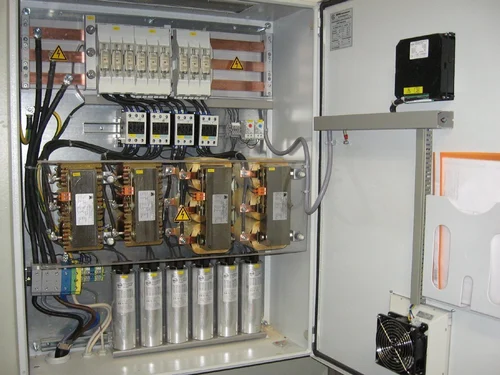
Industrial facilities face constant challenges related to power quality, rising electricity costs, and equipment performance. Poor power factor leads to higher penalties, inefficient energy use, and stress on electrical systems. Over time, this affects machine life and overall plant stability.
This is why industries actively work with an experienced APFC panel manufacturer for industrial applications to maintain electrical balance and reduce reactive power losses. Automatic Power Factor Correction panels play a key role in keeping electrical systems efficient and compliant. With strong engineering knowledge and industrial experience, PIMA Industrial supports industries with APFC panels designed for stable, long-term performance.
What Is an APFC Panel
An APFC panel, or Automatic Power Factor Correction panel, is used to improve the power factor of an electrical system. It does this by automatically switching capacitor banks based on load demand.
In industrial environments, inductive loads such as motors, transformers, and welding machines reduce power factor. An APFC panel compensates for this by supplying reactive power locally.
This results in:
- Improved power factor
- Lower electricity penalties
- Reduced line losses
- Better voltage stability
APFC panels operate continuously and adjust automatically as load conditions change.
Why Power Factor Matters in Industrial Applications
Power factor directly affects how efficiently electrical power is used. A low power factor means more current is required to deliver the same amount of useful power.
Problems Caused by Low Power Factor
- Higher electricity bills due to penalties
- Increased load on transformers and cables
- Voltage drops affecting machine performance
- Reduced capacity of electrical infrastructure
Industries operating heavy machinery cannot afford these inefficiencies. APFC panels ensure electrical systems operate within acceptable power factor limits set by utilities.
Role of an APFC Panel Manufacturer in Industrial Systems
An APFC panel manufacturer does more than assemble components. The manufacturer designs panels based on load analysis, operating patterns, and future expansion plans.
Key responsibilities include:
- Calculating required reactive power compensation
- Selecting appropriate capacitor ratings
- Designing panel layout and protection schemes
- Integrating controllers for automatic operation
- Testing performance under real conditions
A reliable manufacturer ensures that the APFC panel responds accurately to load variations and remains stable during continuous operation.
Types of APFC Panels Used in Industries
Different industrial applications require different APFC configurations. A professional manufacturer offers panels suited to varied electrical setups.
Standard APFC Panels
Used in plants with steady load patterns and moderate power factor issues.
Detuned APFC Panels
Designed for systems with harmonic distortion caused by drives, inverters, and nonlinear loads.
Thyristor-Based APFC Panels
Used where rapid load changes occur, such as in welding or crane applications.
Outdoor APFC Panels
Designed for installations exposed to dust, humidity, or temperature variations.
Each type is engineered based on site conditions and operational requirements.
Key Components Used in Industrial APFC Panels
An industrial APFC panel consists of carefully selected components to ensure performance and durability.
Capacitor Banks
Provide reactive power compensation and improve power factor.
APFC Relay or Controller
Continuously monitors power factor and switches capacitors automatically.
Contactors or Thyristor Switches
Used for safe and fast switching of capacitor stages.
Detuned Reactors
Protect capacitors from harmonics and prevent resonance.
Protection Devices
Include MCCBs, fuses, and overload protection for safety.
Component quality directly impacts the reliability and lifespan of the APFC panel.
Industries That Use APFC Panels
APFC panels are widely used across multiple industrial sectors.
Manufacturing Plants
Improve efficiency of motors, compressors, and conveyors.
Textile and Processing Units
Support high-speed machinery with stable voltage levels.
Chemical and Pharmaceutical Plants
Maintain consistent electrical performance for sensitive processes.
Food and Beverage Industries
Reduce power losses in packaging and refrigeration systems.
Infrastructure and Utilities
Optimize electrical systems in large facilities and substations.
Any industry with inductive loads benefits from effective power factor correction.
Benefits of Using APFC Panels in Industrial Applications
Lower Energy Costs
Reduced penalties and better utilization of electrical power.
Improved System Capacity
Frees up transformer and cable capacity.
Better Voltage Regulation
Stabilizes voltage and protects sensitive equipment.
Extended Equipment Life
Lower current reduces thermal stress on electrical components.
Compliance with Utility Norms
Maintains required power factor levels as per regulations.
These benefits directly support efficient and stable industrial operations.
Design Considerations in Industrial APFC Panel Manufacturing
Design accuracy determines APFC panel effectiveness. Experienced manufacturers follow structured engineering practices.
Load Analysis
Understanding real and future load conditions ensures correct capacitor sizing.
Harmonic Assessment
Identifying harmonics helps select detuned solutions where required.
Panel Layout
Proper spacing improves heat dissipation and maintenance access.
Ventilation and Cooling
Ensures safe operation during continuous duty cycles.
Protection Coordination
Prevents faults and ensures safe switching operations.
Design mistakes can reduce performance and cause premature failures.
Quality and Testing Practices
Reliable APFC panel manufacturers follow strict quality checks.
Routine Tests
- Electrical continuity
- Insulation resistance
- Controller functionality
- Switching response accuracy
Operational Testing
Panels are tested under simulated load conditions before dispatch.
Documentation
Test reports, wiring diagrams, and component lists are provided.
These steps ensure panels are ready for site installation and commissioning.
Why Industries Choose PIMA Industrial
As a trusted APFC panel manufacturer for industrial applications, PIMA Industrial combines technical knowledge with practical field experience.
Key strengths include:
- Over 35 years of industrial electrical experience
- ISO-certified manufacturing processes
- Capability to design detuned and advanced APFC panels
- Integration with automation and energy monitoring systems
- Support for domestic and export-oriented projects
PIMA designs APFC panels that align with operational stability, energy efficiency, and long-term reliability.
For technical discussions or project support, industries can connect through Contact PIMA Industrial.
How to Select the Right APFC Panel Manufacturer
Industries should evaluate manufacturers based on practical criteria.
Engineering Capability
Ability to design panels based on real electrical conditions.
Component Quality
Use of certified capacitors, controllers, and protection devices.
Manufacturing Standards
Clean wiring practices and structured testing procedures.
Service Support
Availability of technical assistance and troubleshooting.
Industry Experience
Proven track record across different industrial sectors.
Choosing the right partner ensures long-term system stability and cost savings.
FAQs
1. What is an APFC panel used for?
It improves power factor by compensating reactive power automatically.
2. Why do industries need APFC panels?
To reduce energy penalties, improve efficiency, and protect electrical systems.
3. Can APFC panels handle harmonic loads?
Yes, detuned APFC panels are designed for harmonic environments.
4. Are APFC panels customized for each plant?
Yes, designs are based on load conditions and system requirements.
5. What is a detuned APFC panel?
It includes reactors to protect capacitors from harmonic distortion.
6. How does an APFC controller work?
It measures power factor and switches capacitors automatically.
7. Do APFC panels reduce electricity bills?
Yes, they help reduce penalties and optimize power usage.
8. Where are APFC panels installed?
In main LT panels or dedicated power factor correction panels.
9. How often do APFC panels require maintenance?
Periodic inspection is recommended to ensure optimal performance.
10. Who is a reliable APFC panel manufacturer?
PIMA Industrial is known for industrial APFC panel manufacturing and support.
Conclusion
Power factor correction is essential for efficient and stable industrial electrical systems. Working with an experienced APFC panel manufacturer for industrial applications helps industries reduce losses, control energy costs, and maintain electrical reliability.
With structured engineering, quality manufacturing, and decades of industrial experience, PIMA Industrial continues to support industries with APFC panel solutions designed for long-term performance and compliance.