
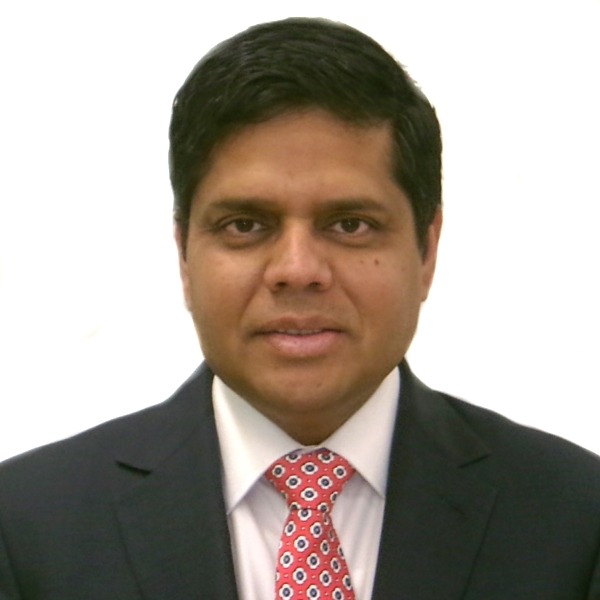
Financial leadership inside a multinational enterprise requires more than oversight of reporting cycles and quarterly performance metrics. It involves balancing operational execution with long-term investment priorities while maintaining accountability across large, interconnected business systems. Anubhav Mittal, VP and Global Head of Business Development and M&A at Archer Daniels Midland (ADM), has spent more than two decades operating in that environment across finance leadership, corporate development, restructuring, and enterprise growth initiatives.
Throughout leadership roles spanning ADM, Kellogg Company, and Booz & Company, the work has consistently centered on disciplined capital allocation, operational coordination, and strategic execution inside complex global organizations. Experience across acquisitions, divestitures, joint ventures, carve-outs, and transformation initiatives has also shaped a broader understanding of how finance functions influence enterprise performance beyond traditional reporting responsibilities.
How Anubhav Mittal Applied CFO Discipline Inside ADM Nutrition
Serving as CFO of ADM’s Nutrition business unit placed finance leadership at the center of a large-scale operating environment. The business generated approximately $8 billion in annual revenue and employed more than 14,000 people across international markets, creating a level of complexity that required close coordination between finance, operations, supply chain management, and commercial teams.
Within organizations operating at that scale, financial discipline extends far beyond budget management. Margin expansion, return on invested capital, and working capital efficiency are interconnected drivers that influence both operational flexibility and long-term growth capacity. Decisions involving procurement timing, inventory positioning, customer terms, and productivity initiatives can materially affect overall enterprise performance.
Anubhav Mittal’s approach to finance leadership reflects the idea that finance organizations should function as active operating partners rather than isolated reporting departments. In practice, that means linking financial analysis directly to operational decision-making and ensuring investment priorities remain aligned with broader strategic objectives.
The role also required balancing near-term financial accountability with long-term business development priorities. Large multinational businesses often face pressure to support growth initiatives while maintaining cost discipline and protecting returns. Effective financial leadership depends on creating systems that allow organizations to pursue expansion without compromising operational stability.
Integrating Planning, Accountability, and Capital Allocation
Large enterprises rely on multiple financial functions operating together in a coordinated framework. Commercial finance, FP&A, controlling, and investment governance each support different aspects of enterprise decision-making, but their effectiveness increases when information flows consistently across the organization.
Commercial finance connects operating activity to financial outcomes through pricing analysis, customer profitability assessment, and volume planning. FP&A supports forecasting, resource allocation, and scenario analysis that guide leadership decisions. Controlling functions help maintain reporting accuracy and accountability across business units, while investment governance establishes discipline around how capital is deployed.
The operating framework developed by Anubhav Mittal emphasizes integration between these functions rather than treating them as separate administrative processes. That structure becomes especially important inside multinational companies managing multiple product lines, international supply chains, and changing market conditions.
Financial discipline also plays an important role in preserving organizational flexibility. Businesses that expand without sufficient oversight can accumulate operational inefficiencies, inconsistent reporting standards, or investment decisions that weaken long-term returns. Sustainable growth depends on maintaining visibility into performance drivers while preserving accountability throughout the organization.
This approach aligns finance leadership more closely with enterprise strategy. Instead of reacting solely to historical performance, finance teams become involved in evaluating future opportunities, assessing operational trade-offs, and supporting capital allocation decisions tied to long-term priorities.
Working Capital as an Enterprise Capability
Working capital management is often viewed as a technical finance exercise, but inside global operating businesses it functions as a strategic capability. Improvements in inventory management, receivables cycles, procurement coordination, and cash conversion can create additional flexibility for investment without relying on external financing.
At the scale of ADM Nutrition, working capital optimization required coordination across procurement, sales, operations, and finance teams operating in multiple geographies. Supply-chain disruptions, customer relationships, commodity fluctuations, and transportation considerations all influence how efficiently capital moves through the business.
Anubhav Mittal has operated in finance leadership environments where analytical visibility alone is not enough to improve performance. Execution depends on aligning operational teams around shared objectives while maintaining clarity around the trade-offs associated with inventory levels, service expectations, and growth targets.
The discipline applied to working capital also supports broader enterprise goals. Capital recovered through operational efficiency can be redirected toward productivity initiatives, strategic investments, acquisitions, or portfolio expansion efforts. In that sense, working capital management becomes directly connected to long-term capital allocation strategy rather than functioning solely as a balance-sheet exercise.
This operational perspective distinguishes enterprise finance leadership from narrower transactional finance roles. Decisions surrounding resource allocation often require balancing immediate operational needs against future strategic opportunities, particularly in large organizations managing multiple competing priorities simultaneously.
Financial Leadership Across ADM and Kellogg
Before joining ADM, Anubhav Mittal held senior finance and strategy positions at Kellogg Company, where responsibilities included growth strategy, operational improvement initiatives, and corporate development work across international markets. A major restructuring initiative at Kellogg involved cross-functional coordination, execution tracking, and accountability systems tied closely to operational performance.
That experience provided additional exposure to organizational transformation efforts inside a consumer packaged goods environment where brand investment decisions, cost structures, and P&L management directly affect long-term competitiveness. The operational realities of those businesses continue to inform how investment opportunities and integration planning are evaluated within broader corporate development responsibilities.
Earlier work at Booz & Company added advisory experience across operational improvement and post-merger integration projects involving multiple industries and business models. Exposure to different operating environments before transitioning into senior in-house leadership roles contributed to a broader perspective on how strategy and execution interact inside large enterprises.
The combination of consulting, operating finance, and corporate development experience also shaped a more integrated view of enterprise decision-making. Financial analysis alone rarely determines long-term outcomes. Execution discipline, organizational coordination, and the ability to align teams around measurable objectives often play equally important roles.
Capital Allocation and Enterprise Growth
In the current role leading Business Development and M&A at ADM, enterprise finance leadership extends directly into investment strategy and portfolio management. Acquisitions, divestitures, strategic partnerships, and growth initiatives ultimately represent capital allocation decisions that shape the future direction of the organization.
Evaluating those opportunities requires more than transaction modeling. Leadership teams must consider integration complexity, operational readiness, governance structures, and the long-term sustainability of projected returns. Investment assumptions that appear attractive on paper may produce different outcomes once operational realities are introduced.
The capital allocation discipline associated with Anubhav Mittal reflects the connection between operating finance experience and transaction execution. Financial projections are evaluated alongside execution capacity, organizational alignment, and the practical considerations involved in integrating businesses or scaling strategic initiatives.
Across approximately $10 billion in transactions and investments, the underlying emphasis has remained consistent: disciplined analysis, operational accountability, and careful evaluation of long-term value creation potential. That perspective differs from a purely transactional approach because it incorporates the realities of enterprise execution into the investment process itself.
Academic Foundation and Analytical Perspective
The analytical framework supporting this work combines technical finance expertise with structured problem-solving experience. Anubhav Mittal earned an MBA from Harvard Business School with a concentration in Finance and Strategy. Additional academic training includes a Bachelor of Technology in Mechanical Engineering from IIT Kanpur, where graduation occurred in the top 5% of the class.
Professional designations including CFA and CMA further reinforce expertise across investment analysis, corporate finance, and management accounting disciplines. While credentials alone do not define leadership effectiveness, they contribute to the analytical rigor required when evaluating large-scale operational and investment decisions inside multinational organizations.
Financial Leadership Beyond Reporting Functions
Inside global enterprises, finance leadership increasingly functions as a driver of strategic coordination rather than simply a reporting mechanism. The strongest organizations connect financial planning, operating performance, capital allocation, and investment governance through systems designed to support long-term decision-making.
That approach becomes especially important during periods of expansion, restructuring, or portfolio transformation, when operational complexity and investment demands increase simultaneously. Enterprise growth supported by disciplined financial oversight is generally more sustainable than growth pursued without strong accountability structures.
Across roles involving CFO leadership, restructuring initiatives, investment governance, and M&A execution, the consistent focus has remained on aligning operational execution with long-term enterprise priorities while maintaining financial discipline across complex organizations.
About Anubhav Mittal
Anubhav Mittal is a senior finance and corporate development executive with more than two decades of experience leading M&A, capital allocation, restructuring, and enterprise transformation initiatives across global public companies. He currently serves as VP and Global Head of Business Development and M&A at Archer Daniels Midland (ADM) in Chicago, Illinois. Previous leadership roles include CFO of ADM’s Nutrition business unit and senior finance and strategy positions at Kellogg Company. Areas of expertise include investment governance, enterprise finance leadership, capital allocation, operational transformation, and large-scale M&A execution. Additional background can be found through the professional profile of Anubhav Mittal.
