
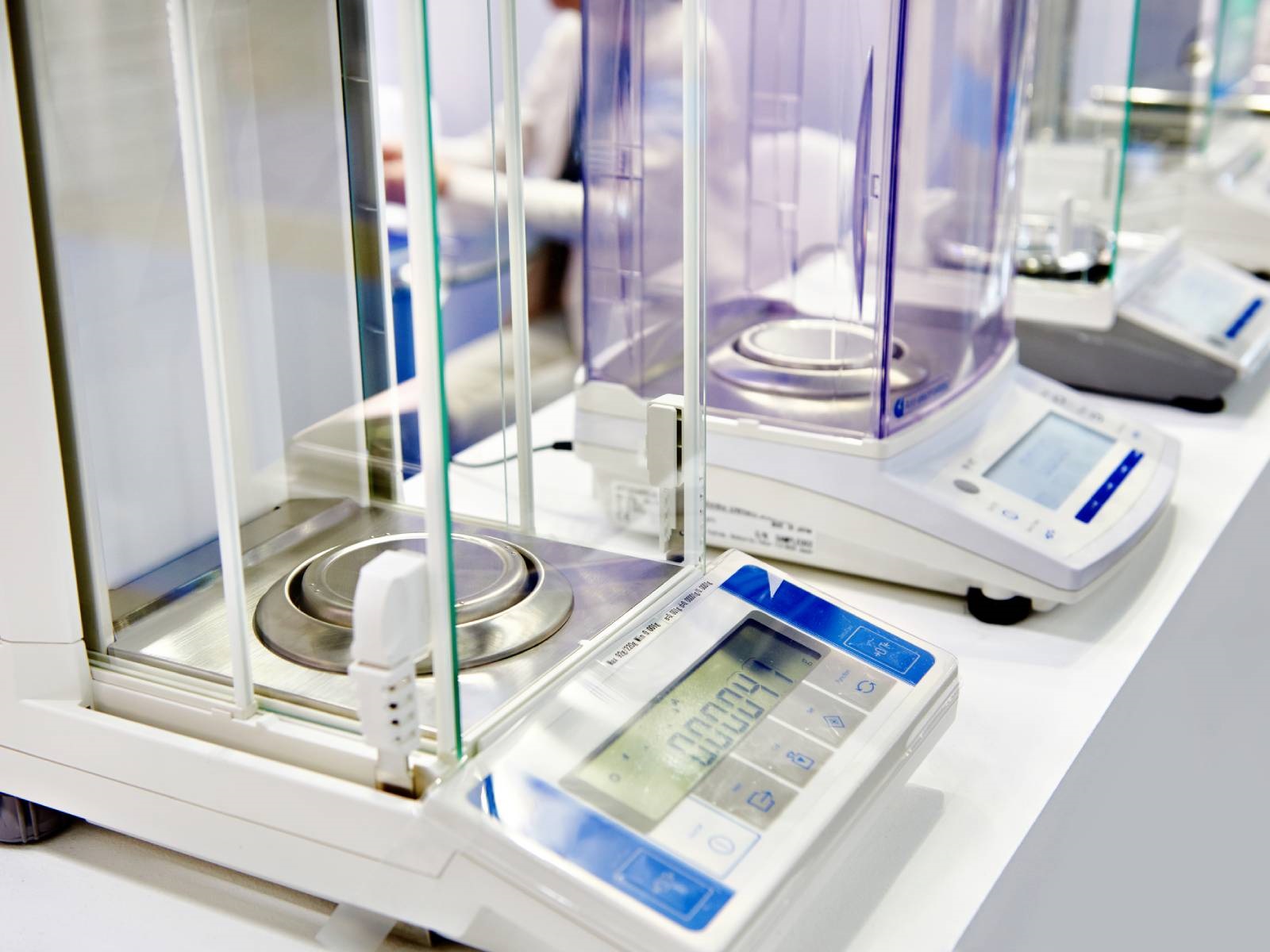
The best analytical balance manufacturers are the ones that can document readability down to 0.1 milligram alongside repeatability and linearity data, because a balance that looks precise on paper but drifts under real lab conditions creates compliance problems in pharmaceutical, food testing, or research settings. Buyers in 2026 should ask specifically for ASTM E617 classification rather than relying on marketing terms like “high precision.”
Analytical balances are sensitive to vibration, air currents, and temperature swings, so the manufacturing quality of the internal weighing cell matters as much as the display and software features. A balance placed in a busy lab with foot traffic nearby needs a sturdier internal mechanism than one used in a quiet, climate-controlled room, and manufacturers rarely highlight this difference unless a buyer asks directly.
When comparing analytical balance manufacturers, check whether the balance includes internal calibration weights or requires external calibration masses, since internal calibration saves time but external calibration is often required for strict regulatory environments.
Specifications That Matter Most
- Readability, commonly 0.1mg or 0.01mg for analytical-grade balances
- Repeatability and linearity certification from the manufacturer
- Internal versus external calibration options
- Draft shield design and glass door configuration
- Data connectivity for LIMS or GLP-compliant record keeping
Regulatory and Compliance Needs
Laboratories operating under GLP or ISO 17025 should confirm the balance manufacturer provides calibration certificates traceable to national standards. Missing traceability documentation can invalidate lab results during an audit, regardless of how accurate the balance actually is in daily use.
Placement and Environmental Factors
Analytical balances should sit on a stable, vibration-free bench away from air conditioning vents, doorways, and direct sunlight. Manufacturers that include a marble or granite weighing table option help labs in less-than-ideal environments maintain consistent accuracy.
Software and Data Integrity Features
Many labs now require balances that can export weighing data directly into a LIMS system with a full audit trail, rather than relying on staff to manually transcribe readings. Ask whether the balance supports password-protected user profiles and time-stamped data logs, since this is increasingly a requirement during regulatory inspections in pharmaceutical and food testing labs.
Buyers should also confirm software update support timelines, since a balance with strong hardware but discontinued firmware support can become a compliance liability a few years after purchase, particularly in labs that undergo periodic external audits.
Service Contracts and Long-Term Reliability
Ask whether the manufacturer offers an annual preventive maintenance and recalibration service, since balances that go years without professional servicing tend to drift gradually in ways that routine self-checks may not catch. A service contract that includes loaner units during repair periods is particularly valuable for labs that cannot tolerate downtime on a single balance used across multiple testing workflows.
Finally, consider the total number of balances a lab needs to maintain across multiple benches or departments, since standardizing on a single manufacturer often unlocks volume pricing on both units and ongoing calibration services, while also simplifying staff training since every technician works with the same interface and software.