
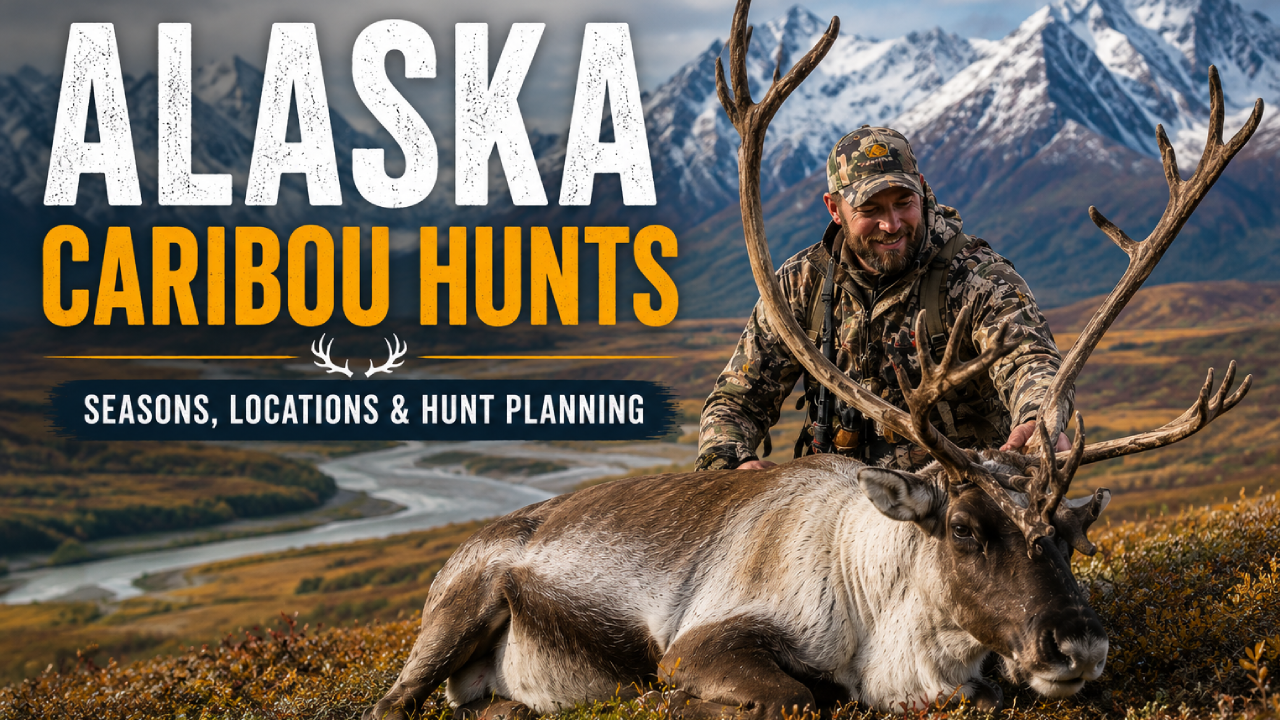
Alaska is home to some of the most remote and rewarding hunting opportunities in North America. Vast landscapes, expansive public lands, and migratory caribou herds attract hunters from around the world each year. For many sportsmen, an Alaska caribou hunt represents a chance to experience true wilderness while pursuing one of the continent’s most iconic big game animals.
Unlike many hunts in the Lower 48, Alaska offers opportunities to hunt in regions where roads are nonexistent and wildlife still follows ancient migration routes across hundreds of miles of tundra, mountains, and river valleys. Success often depends on preparation, physical endurance, and understanding the seasonal movements of caribou.
Whether you are planning your first trip north or researching future hunting destinations, this guide covers everything you need to know about Alaska caribou hunts, including hunting regions, seasons, gear, costs, regulations, and hunt planning considerations.
Planning an Alaska caribou hunt? Hunt-Nation connects hunters with trusted outfitters, captains, and professional hunting guides worldwide. With more than 27 years of experience and access to over 300 outfitters, captains, and PHs, Hunt-Nation helps hunters find memorable outdoor adventures across Alaska and beyond.
Why Alaska Is Famous for Caribou Hunting
Alaska supports some of the largest caribou populations in North America. The state’s vast wilderness allows herds to migrate naturally across enormous distances, creating hunting opportunities that are difficult to find elsewhere.
Many hunters are drawn to Alaska because of:
- Remote wilderness experiences
- Large migratory herds
- Scenic mountain and tundra landscapes
- Quality meat harvest opportunities
- Diverse hunting methods
- Opportunities for combination hunts
An Alaska hunt is often about much more than harvesting an animal. The experience of traveling through untouched landscapes and observing wildlife in its natural environment becomes a lasting memory for many hunters.
Understanding Alaska Caribou
Caribou belong to the deer family and are uniquely adapted to survive harsh northern environments.
Physical Characteristics
Mature bulls vary significantly depending on region and genetics. Most bulls weigh between 350 and 700 pounds and carry impressive antlers that develop each year before being shed after the rut.
Both male and female caribou grow antlers, making them unique among North American deer species.
Habitat
Caribou thrive in a variety of habitats, including:
- Arctic tundra
- Mountain foothills
- River valleys
- Open plains
- Boreal forests
Unlike moose, caribou often prefer open country where they can detect predators from long distances.
Seasonal Movements
The annual caribou migration is one of the largest wildlife movements on Earth.
Herds travel between:
- Calving grounds
- Summer feeding areas
- Rutting locations
- Winter ranges
These movements are influenced by weather, food availability, insect activity, and breeding behavior.
Understanding migration timing is one of the most important aspects of planning successful caribou hunting trips.
Best Areas for Alaska Caribou Hunts
Alaska offers several excellent hunting regions, each providing a different experience.
Brooks Range
The Brooks Range is among the most recognized destinations for Alaska caribou hunts.
Located in northern Alaska, this rugged mountain chain provides:
- Remote wilderness access
- Scenic landscapes
- Large migratory herds
- Fly in hunting opportunities
Hunters often arrive by bush plane and establish camps in areas where caribou movement is expected.
Western Alaska
Western Alaska contains vast tundra landscapes and productive caribou habitat.
Benefits include:
- Excellent herd numbers
- Remote camps
- Less crowded hunting areas
- Opportunities for guided hunts
This region attracts hunters seeking a true wilderness experience.
Interior Alaska
Interior Alaska offers diverse terrain that includes mountains, river systems, and expansive valleys.
Depending on herd movement, hunters may encounter excellent opportunities throughout the season.
Alaska Peninsula
The Alaska Peninsula provides a unique combination of coastal weather, mountains, and remote hunting areas.
Hunters often choose this region for:
- Scenic landscapes
- Combination hunt options
- Remote camp experiences
Best Time for Alaska Caribou Hunts
Timing can significantly influence hunting conditions and opportunities.
August Hunts
August marks the beginning of many hunting seasons.
Advantages include:
- Active herd movement
- Long daylight hours
- Milder temperatures
Challenges may include:
- Mosquitoes
- Warm weather
- Wet conditions
September Hunts
Many hunters consider September the best month for caribou hunting.
Benefits include:
- Cooler temperatures
- Fall colors across the tundra
- Active migration patterns
- Reduced insect activity
September often provides a balance between comfortable weather and strong hunting opportunities.
October Hunts
October brings changing conditions and increasing chances of snow.
Hunters may experience:
- Winter weather
- Shorter daylight hours
- Increased migration activity
Proper clothing and preparation become especially important during late-season hunts.
Types of Alaska Caribou Hunts
Fly In Hunts
Fly in hunts are among the most popular options in Alaska.
Bush planes transport hunters into remote locations that are inaccessible by road.
Advantages include:
- Access to wilderness areas
- Reduced hunting pressure
- Opportunities to hunt migratory herds
Guided Hunts
Many hunters choose guided hunts because Alaska’s size and terrain can be challenging.
Professional guides assist with:
- Logistics
- Navigation
- Camp setup
- Animal recovery
- Field care
Guided hunts can be particularly valuable for first-time Alaska hunters.
Drop Camp Hunts
Drop camps offer a middle ground between fully guided and do it yourself hunting.
Hunters are transported into remote areas and then manage their own daily hunting activities.
Combination Hunts
Some outfitters offer opportunities to pursue multiple species during the same trip.
Popular combinations may include:
- Caribou and moose
- Caribou and bear
- Caribou and wolf
Availability depends on regulations and season dates.
Physical Preparation for an Alaska Caribou Hunt
Many hunters underestimate the physical demands of Alaska’s terrain.
Preparation should begin several months before the hunt.
Focus on:
- Hiking endurance
- Leg strength
- Core stability
- Cardiovascular fitness
Training with a loaded backpack can help simulate real hunting conditions.
The better your physical condition, the more enjoyable your hunt will be.
Essential Hunting Gear
Alaska’s weather can change rapidly, making proper equipment extremely important.
Rifle Selection
Popular calibers for caribou include:
- .270 Winchester
- .308 Winchester
- 7mm Remington Magnum
- .300 Winchester Magnum
Hunters should choose a rifle they can shoot accurately and confidently.
Optics
Quality optics are critical in Alaska’s open terrain.
Recommended equipment includes:
- 10×42 binoculars
- Spotting scope
- Rangefinder
Hunters often spend more time glassing than walking.
Clothing System
Layering is the best approach.
A complete system should include:
- Moisture wicking base layer
- Insulating mid layer
- Waterproof outer shell
Conditions can shift from sunshine to freezing rain within hours.
Rain Gear
Reliable rain gear is not optional in Alaska.
Many experienced hunters consider it one of the most important pieces of equipment they carry.
Footwear
Waterproof boots with strong ankle support are essential.
Expect to encounter:
- Wet tundra
- Mud
- River crossings
- Uneven terrain
Backpack
Choose a pack capable of carrying:
- Extra clothing
- Emergency supplies
- Food and water
- Harvested meat
Comfort and load-carrying capability should be priorities.
Alaska Weather Challenges
Alaska weather is often unpredictable.
Hunters should prepare for:
- Rain
- Snow
- Wind
- Fog
- Freezing temperatures
Even during early season hunts, sudden weather changes can occur.
Always pack more layers than you think you need.
Alaska Caribou Hunt Costs
The total cost of a hunt varies based on location and hunting style.
Expenses may include:
- Hunting licenses
- Tags
- Travel
- Charter flights
- Lodging
- Meat processing
- Shipping costs
Remote hunting locations generally increase overall expenses due to transportation requirements.
DIY vs Guided Hunts
Guided Hunts
Advantages:
- Professional support
- Local knowledge
- Simplified logistics
- Increased efficiency
DIY Hunts
Advantages:
- Greater independence
- Lower overall costs
- Personal challenge
Both options can provide rewarding experiences depending on your goals and experience level.
Choosing an Alaska Outfitter
Selecting the right outfitter can significantly influence your experience.
Look for:
- Proper licensing
- Strong references
- Experienced guides
- Clear communication
- Detailed hunt information
- Transparent pricing
Ask questions about terrain, physical requirements, transportation, and expected hunting conditions.
Common Mistakes First-Time Caribou Hunters Make
Underestimating Weather
Weather changes quickly in Alaska.
Bring quality rain gear and extra layers.
Poor Physical Preparation
Hunters who arrive unprepared often struggle with long days in challenging terrain.
Overpacking
Bring what you need but avoid unnecessary weight.
Ignoring Optics
Quality optics help locate animals efficiently across large landscapes.
Failing to Practice Shooting
Many opportunities occur at moderate to long distances.
Practice from realistic field positions before your trip.
What Happens After the Harvest?
Proper meat care begins immediately.
Field Care
After the harvest:
- Confirm the animal is down
- Take photographs quickly
- Begin field dressing
- Protect meat from contamination
Cooling the Meat
Rapid cooling helps preserve meat quality.
Use breathable game bags and keep meat shaded whenever possible.
Trophy Preparation
Proper cape and antler care help preserve your trophy for transport and taxidermy.
Transportation
Discuss shipping and transportation options with your outfitter before the hunt begins.
Frequently Asked Questions
What is the best month for Alaska caribou hunts?
September is often considered the most popular month because of cooler temperatures and active migration patterns.
How much walking is required?
This depends on location and hunting style. Some hunts require extensive hiking while others involve shorter daily distances.
What caliber is best for caribou?
Popular options include .270 Winchester, .308 Winchester, 7mm Remington Magnum, and .300 Winchester Magnum.
Are guided hunts worth it?
Many hunters find guided hunts beneficial because of Alaska’s size, remote terrain, and logistical challenges.
How much meat does a caribou provide?
The amount varies depending on age and size, but caribou are valued for their excellent table fare.
Can beginners hunt caribou?
Yes. Many first-time Alaska hunters successfully harvest caribou when properly prepared.
What should I pack?
Focus on quality clothing, optics, waterproof gear, navigation tools, and emergency supplies.
Can I combine a caribou hunt with another species?
Many outfitters offer combination hunts that may include moose, bear, or wolf opportunities.
How important is physical fitness?
Physical fitness can greatly improve comfort and mobility in Alaska’s demanding terrain.
How far in advance should I book?
Popular hunts often fill well in advance, so early planning is recommended.
Conclusion
Few hunting adventures compare to the experience of pursuing caribou across Alaska’s vast wilderness. From the rugged mountains of the Brooks Range to the open tundra of western Alaska, hunters have access to some of North America’s most remarkable landscapes and wildlife opportunities.
Successful Alaska caribou hunts require preparation, quality hunting gear, physical readiness, and an understanding of seasonal herd movements. Whether you choose a DIY adventure, a drop camp, or one of many available guided hunts, careful planning can help create an unforgettable hunting experience.
Ready to explore available Alaska caribou hunts? Hunt-Nation works with experienced Alaska outfitters and hunting professionals to help hunters find trips that match their goals, preferred hunting style, and budget. With more than 27 years of experience and access to over 300 outfitters, captains, and PHs worldwide, Hunt-Nation can help you begin planning your next hunting adventure.