

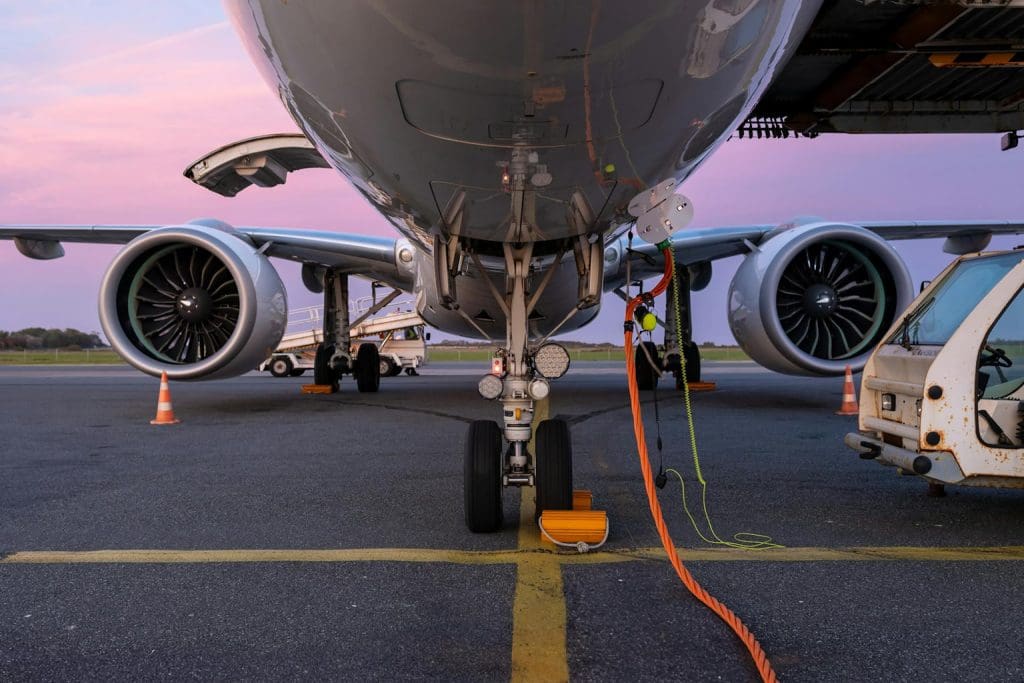
When an aircraft is parked on the apron, it is far from inactive. Behind the scenes, a complex network of electrical, avionics, environmental, and support systems must remain powered to prepare the aircraft safely and efficiently for its next flight. At the heart of this process is the Aircraft Ground Power Unit (GPU)—a critical piece of ground support equipment that enables rapid turnaround, reduces fuel burn, and protects onboard systems.
Modern aviation, especially high-frequency commercial operations, depends heavily on GPUs, like those supplied by HSM Aviation, to keep aircraft operational while engines and auxiliary power units (APUs) are shut down. Without them, the efficiency of today’s tightly scheduled flight operations would be impossible.
What Is an Aircraft Ground Power Unit?
An aircraft GPU is an external power source that supplies electrical energy to an aircraft while it is on the ground. Instead of running the aircraft’s engines or APU, the GPU provides stable, regulated power via a ground power receptacle—allowing onboard systems to operate safely and continuously.
GPUs are typically positioned:
- At airport gates (fixed or bridge-mounted)
- On the apron as mobile units
- At hangars and maintenance facilities
- At heliports and general aviation airfields
By supplying external power, GPUs play a key role in fuel efficiency, emissions reduction, noise control, and equipment longevity.
Why GPUs Are Essential for Speedy Aircraft Turnaround
Aircraft turnaround time—the window between arrival and departure—is a critical performance metric for airlines. Every minute saved directly impacts operational costs and scheduling reliability.
GPUs support fast turnarounds by enabling:
- Immediate system availability after engine shutdown
- Continuous avionics and cabin operation during cleaning, catering, and boarding
- Parallel ground activities, such as maintenance checks and flight planning
- Reduced APU usage, lowering fuel consumption and wear
In short, GPUs allow the aircraft to stay “alive” while remaining quiet, efficient, and stationary.
Key Aircraft Systems Powered by a GPU
While connected to ground power, a GPU can energise most—if not all—essential aircraft systems. These typically include:
1. Avionics and Flight Deck Systems
- Flight management systems (FMS)
- Navigation and communication radios
- Displays and electronic flight bags (EFBs)
- Aircraft health monitoring and fault reporting
Pilots often complete pre-flight programming and checks entirely on GPU power.
2. Cabin and Passenger Systems
- Cabin lighting
- In-flight entertainment systems
- Galleys (on larger aircraft)
- Public address and intercom systems
This ensures passenger comfort and allows cabin crew to prepare the aircraft efficiently.
3. Environmental and Support Systems
- Ventilation and air circulation
- Limited air conditioning support (often supplemented by ground air units)
- Battery charging and power conditioning
Maintaining correct environmental conditions is especially important for sensitive avionics and onboard electronics.
4. Maintenance and Diagnostic Functions
- System testing and fault isolation
- Software updates and data downloads
- Control surface checks (on some aircraft types)
Ground power is essential during maintenance, as it provides clean, stable power without engine operation.
Types of Aircraft Ground Power Units
Not all GPUs are the same. Their design, power output, and complexity vary significantly depending on the type of aircraft they support.
GPUs for Light Aircraft and Helicopters
Light aircraft—including general aviation planes and helicopters—have relatively modest electrical demands. GPUs designed for these aircraft are typically:
Key Characteristics
- Lower power output (often 12V, 24V DC, or low-capacity AC)
- Compact and portable, sometimes hand-carried
- Simple connectors and controls
- Battery-based or small engine-driven designs
Typical Uses
- Engine starting assistance
- Avionics power-up for flight planning
- Maintenance and troubleshooting
- Battery charging and conditioning
For helicopters, GPUs are particularly important because rotor engagement and repeated engine starts can be hard on onboard batteries.
GPUs for Commercial Airliners and Large Aircraft
In contrast, commercial airliners demand substantial and highly regulated electrical power.
Key Characteristics
- High-output AC power, typically 115V at 400Hz
- Three-phase power delivery
- Precise voltage and frequency control
- Robust cooling and monitoring systems
- Often fixed or towable units
These GPUs may be diesel-powered, electric, or part of an airport’s fixed electrical infrastructure.
Typical Uses
- Full avionics and flight deck operation
- Cabin systems and galleys
- Extended ground time without APU use
- Heavy maintenance and system testing
For large aircraft, the GPU effectively replaces the APU for most ground operations—saving fuel and significantly reducing emissions and noise.
Key Differences at a Glance
| Feature | Light Aircraft & Helicopters | Large Commercial Aircraft |
| Power Type | DC or low-capacity AC | 115V AC, 400Hz |
| Output Level | Low to moderate | Very high |
| Portability | Highly portable | Fixed or towable |
| Complexity | Simple control systems | Advanced regulation & monitoring |
| Typical Environment | GA airfields, heliports | Major airports, terminals |
The Growing Importance of Modern GPUs
As aviation moves toward greener ground operations, GPUs are becoming even more critical. Electric GPUs powered by airport infrastructure are increasingly replacing diesel units, aligning with sustainability goals and stricter environmental regulations.
Future developments include:
- Smart GPUs with remote monitoring
- Integration with airport energy management systems
- Increased use of solid-state power electronics
- Compatibility with next-generation aircraft architectures
Conclusion
Aircraft Ground Power Units may not capture the spotlight, but they are fundamental to modern aviation efficiency. From powering flight decks and cabins to enabling quiet, fuel-saving turnarounds, GPUs keep aircraft operational while on the ground—without burning unnecessary fuel.
Whether supporting a light helicopter on a remote pad or a widebody jet at a busy international hub, GPUs are a vital link in the chain that keeps aviation moving safely, efficiently, and on schedule.