
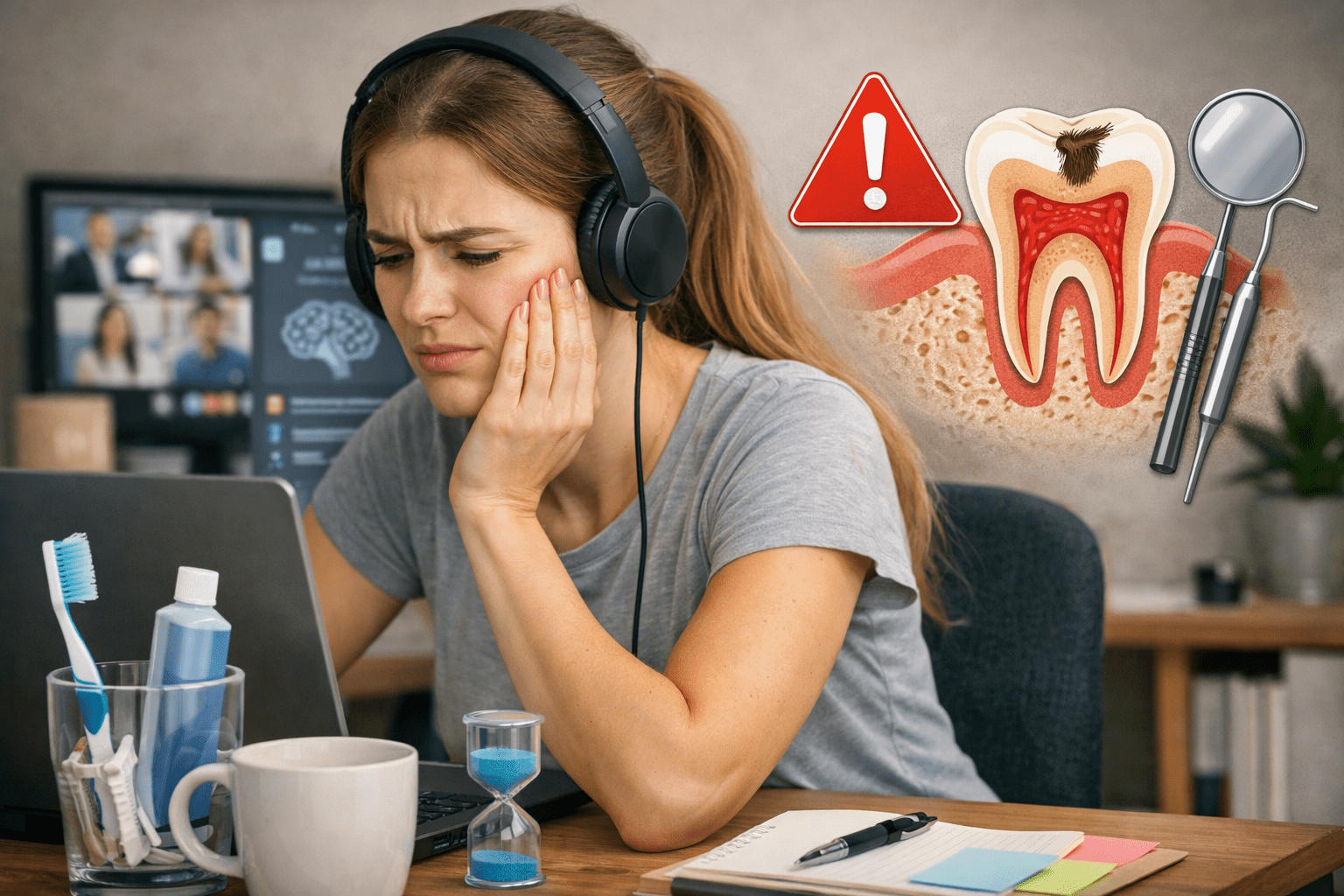
Artificial intelligence is reshaping industries. Remote work is becoming permanent. Screen time has reached record levels globally.
But while technology improves productivity, it is quietly creating a new category of health problems — including oral health complications.
Dentists are reporting rising cases of:
- Jaw pain
- Teeth grinding
- Dry mouth
- Gum inflammation
- Increased cavities
- Early enamel wear
The common link?
Extended screen exposure, chronic stress, irregular routines, and AI-driven work environments.
This is not just a dental issue. It’s a lifestyle shift with medical consequences.
The Remote Work Era: A Double-Edged Sword
Remote work offers flexibility, but it also introduces:
- Sedentary behavior
- Irregular meal timing
- Increased caffeine intake
- Late-night screen exposure
- Disrupted sleep cycles
- Heightened performance pressure
These factors directly influence oral health.
When routines become unstable, oral hygiene is often the first habit to decline.
1️⃣ Screen Stress & Teeth Grinding (Digital Bruxism)
Many remote professionals and AI-driven workers experience subconscious jaw clenching while concentrating.
This condition, known as bruxism, is increasing among:
- Software developers
- Designers
- Traders
- Students using AI tools
- Content creators
- Entrepreneurs
Stress + intense focus = jaw tension.
Signs of Digital Bruxism:
- Morning headaches
- Jaw stiffness
- Clicking sounds
- Flattened teeth edges
- Increased sensitivity
Left untreated, it leads to enamel damage and fractures.
2️⃣ The Screen–Sleep–Gum Disease Connection
Blue light exposure delays melatonin production.
Poor sleep increases systemic inflammation.
Gum disease is fundamentally an inflammatory condition.
When sleep quality declines:
- Immune response weakens
- Gum healing slows
- Bleeding increases
- Infection risk rises
The result is accelerated periodontal damage.
If someone already has early gum inflammation, chronic poor sleep can worsen progression significantly.
Individuals concerned about gum inflammation or early signs of periodontal disease can seek professional evaluation from an experienced dentist in Peshawar at
👉 Dr. Haroon Dental Specialist Clinic
Early screening prevents long-term complications.
3️⃣ Constant Snacking During Screen Time
Remote workers often:
- Sip coffee all day
- Drink energy beverages
- Snack frequently
- Skip structured meals
Frequent snacking means constant acid attacks on enamel.
Unlike traditional office schedules, remote environments encourage grazing behavior.
This creates:
- Continuous plaque formation
- Higher cavity risk
- Enamel softening
📊 Table: How Modern Work Habits Affect Oral Health
| Modern Habit | Immediate Effect | Long-Term Oral Impact |
| Long screen hours | Jaw tension | Teeth grinding damage |
| Blue light at night | Poor sleep | Increased gum inflammation |
| Frequent coffee intake | Acid exposure | Enamel erosion |
| Energy drinks | Low pH + sugar | Cavities & sensitivity |
| Skipping routine | Irregular brushing | Plaque buildup |
| Chronic stress | Elevated cortisol | Periodontal progression |
| Dehydration | Reduced saliva | Dry mouth & decay |
This pattern is becoming increasingly common in urban professionals.
4️⃣ AI-Driven Productivity Pressure
AI tools have increased performance expectations.
Employees now feel pressure to:
- Deliver faster
- Compete with automation
- Stay constantly available
- Work across time zones
This creates chronic low-grade stress.
Chronic stress elevates cortisol levels, which:
- Suppress immune response
- Increase inflammatory markers
- Slow tissue repair
Inflammation directly impacts gum stability.
5️⃣ The Rise of Dry Mouth in Digital Workers
Prolonged concentration reduces blinking and sometimes mouth movement.
Combined with caffeine and dehydration, this reduces saliva production.
Saliva protects teeth by:
- Neutralizing acid
- Washing bacteria
- Strengthening enamel
Without adequate saliva:
- Cavities form faster
- Bad breath worsens
- Gum irritation increases
Dry mouth is becoming more common in tech professionals.
6️⃣ Posture & Jaw Alignment Issues
Poor ergonomic setup leads to:
- Forward head posture
- Neck strain
- Jaw misalignment
- TMJ stress
When posture shifts, bite alignment changes slightly, increasing grinding intensity.
This often results in:
- Clicking jaw
- Facial muscle fatigue
- Ear discomfort
Many patients mistake it for sinus or ear problems.
7️⃣ Why Younger Professionals Are Experiencing Early Damage
Dentists are increasingly treating:
- 25–35-year-olds with enamel thinning
- Early gum recession cases
- Stress-related bruxism
- Sensitivity complaints
Modern work environments are accelerating dental wear at younger ages.
Without preventive care, these individuals may require:
- Bonding
- Crowns
- Veneers
- Night guards
Earlier than previous generations.
8️⃣ Prevention Strategies for the Digital Era
Technology is not going away.
Adaptation is the solution.
Daily Preventive Checklist:
- Maintain fixed brushing times
- Floss once daily
- Drink plain water after coffee
- Avoid sipping beverages for hours
- Take screen breaks every 60 minutes
- Stay hydrated
- Improve ergonomic setup
Sleep Protection:
- Reduce screen use 60 minutes before bed
- Maintain consistent sleep schedule
- Avoid caffeine after evening
Professional Prevention:
Routine dental checkups help detect:
- Early enamel wear
- Grinding patterns
- Gum inflammation
- Bite imbalance
For individuals experiencing jaw tension, sensitivity, or gum issues related to screen-intensive lifestyles, professional evaluation and preventive care options are available at:
👉 https://dentistpeshawar.pk/services/
9️⃣ Why This Topic Matters for Public Health
Remote work is not temporary.
AI integration is accelerating.
Screen dependency is increasing globally.
This makes oral health awareness in digital professionals an emerging health priority.
Ignoring these patterns may lead to:
- Increased restorative dental demand
- Higher healthcare costs
- Reduced quality of life
- Productivity loss due to chronic discomfort
Early prevention is significantly more affordable than corrective treatment.
🔟 Final Thoughts: Technology Is Neutral — Habits Decide the Outcome
AI is not damaging your teeth.
Your lifestyle around AI might be.
Screen time, stress, irregular meals, sleep disruption, and dehydration form a chain reaction that directly affects oral health.
But with awareness and preventive care, the damage is avoidable.
As digital transformation reshapes work culture, oral health must adapt alongside it.
Healthy productivity includes healthy habits — including dental care.
Because innovation should improve life, not silently erode your smile.
About the Author
Dr. Haroon is a dental specialist focusing on preventive and modern dentistry, with special interest in lifestyle-related oral health challenges affecting urban professionals.