
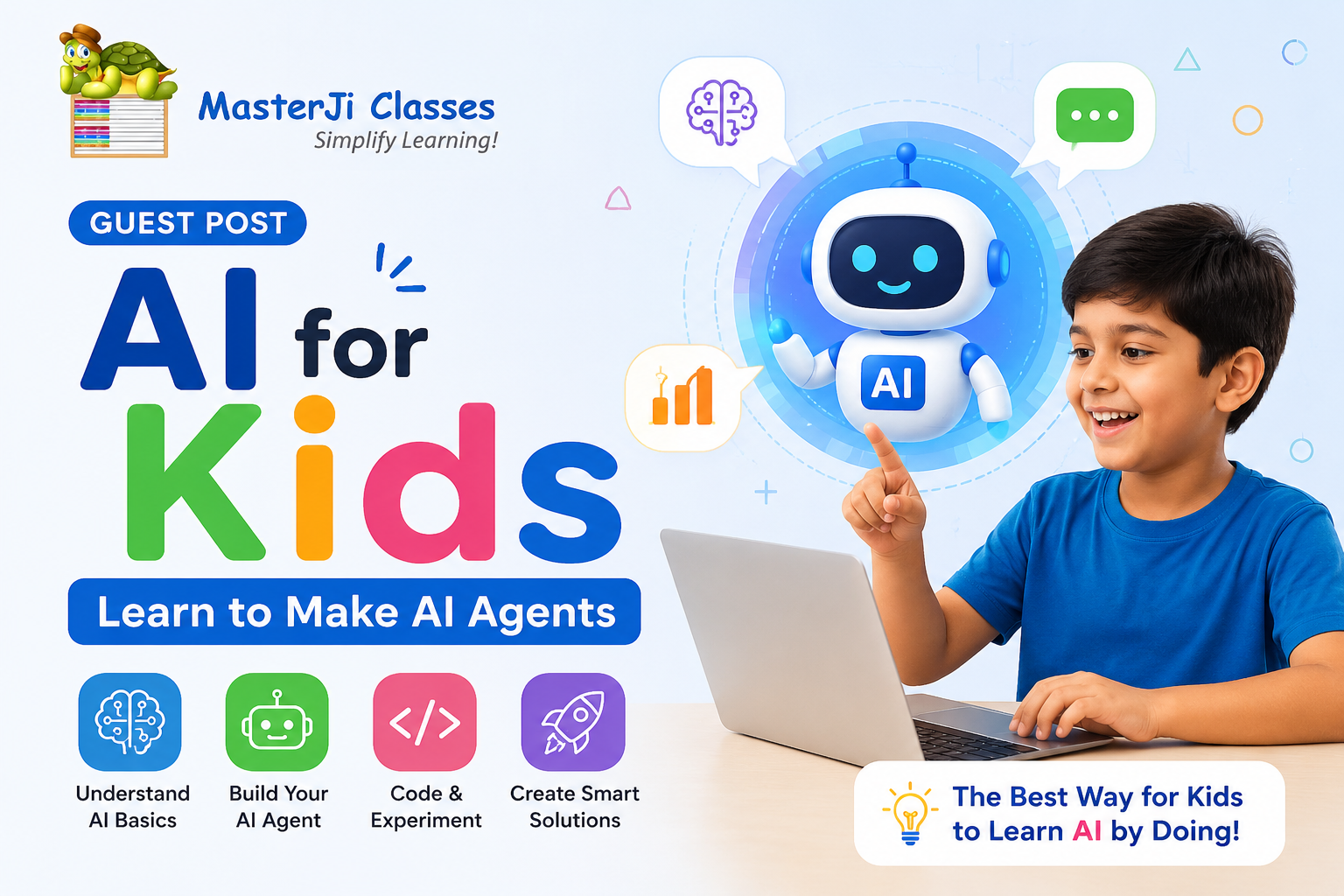
Artificial Intelligence (AI) has transitioned from being something of the future to an active participant in how we learn, how we work, how we communicate and how we resolve problems. With the rise of voice assistants such as Siri and Alexa, as well as the recommendations for what to watch on YouTube or Netflix, AI is becoming ingrained within your daily life. This is why many parents and educators are exposing children to AI at a very young age.
Kids will learn how to work with AI, not just from a technology standpoint, but also develop skills of creativity, critical thinking, problem solving and digital literacy. One of the most exciting areas of AI for Kids education currently is the ability to create AI agents for kids. AI agents are intelligent programs that can perform tasks for users, answer questions, make decisions and assist them with their daily lives.
Through this guide you will learn about teaching children the basics of AI, learn what AI agents are and how kids can develop the necessary skills to be productive members in the workforce of the future by participating in hands-on projects and experiential learning opportunities.
What Is AI?
Artificial Intelligence is a branch of computer science that enables machines to perform tasks that normally require human intelligence. These tasks may include:
- Understanding language
- Recognizing images
- Solving problems
- Making decisions
- Learning from data
- Answering questions
AI powers many applications that children use every day, such as:
- Voice assistants
- Chatbots
- Educational apps
- Video recommendations
- Smart games
- Translation tools
When kids learn AI, they gain insight into how these technologies work rather than simply using them.
Why Is AI Learning Important for Kids?
The world is moving rapidly toward automation and intelligent technologies. Experts predict that AI-related skills will be among the most valuable skills in the coming decade.
Learning AI helps children:
Develop Problem-Solving Skills
AI projects encourage children to think logically and break complex problems into smaller tasks.
Improve Creativity
Building AI applications requires imagination and innovation. Kids can create unique solutions to real-world challenges.
Learn Future Technologies
Understanding AI prepares children for careers in technology, engineering, robotics, healthcare, finance, and many other industries.
Build Confidence
Creating working AI projects gives children confidence in their abilities and encourages them to explore advanced concepts.
Strengthen Coding Skills
Many AI projects involve programming, helping children improve coding knowledge while having fun.
What is an AI agent? An AI agent is an intelligent system (or systems) capable of observing, interpreting, and making decisions based on information; and executing action(s) to accomplish a goal. For example, an AI agent may be thought of as a digital assistant, capable of:
-Answering questions
-Looking up information
-Organizing scheduled tasks
-Providing suggestions
-Helping learn
-Performing repetitive tasks
There are many types of AI agents. Some examples are:
-Chatbot-type assistants (like ChatGPT)
-Customer service chatbots
-Smart home assistants
-Educational “tutors”
-Game-playing bots
Nowadays, AI agents are rapidly growing (in the technology world) and are becoming one of the fastest-growing sectors of the technology industry.
Why Should Kids Learn to Make AI Agents?
Learning to create AI agents helps children understand how intelligent systems work behind the scenes.
Benefits include:
Hands-On Learning
Children learn by building real projects instead of only reading theories.
Understanding AI Logic
Kids discover how machines process information and make decisions.
Creativity and Innovation
Children can design unique AI assistants based on their interests.
Career Preparation
AI agent development introduces skills that are highly valuable in future careers.
Real-World Applications
Students can create AI agents that solve everyday problems and automate simple tasks.
How Kids Can Start Learning AI Agents
The process of learning AI agents can be simple and fun when introduced step by step.
Step 1: Learn Basic Coding
Before creating AI agents, children should understand coding fundamentals.
Popular beginner languages include:
- Scratch
- Python
- Blockly
Python is especially useful because it is widely used in AI development.
Step 2: Understand AI Concepts
Kids should learn basic AI topics such as:
- Machine learning
- Natural language processing
- Pattern recognition
- Data analysis
These concepts help children understand how AI systems operate.
Step 3: Explore AI Tools
Many beginner-friendly AI platforms allow children to build projects without advanced programming skills.
Examples include:
- Scratch AI Extensions
- Teachable Machine
- Machine Learning for Kids
- Educational AI Platforms
These tools make AI learning interactive and engaging.
Step 4: Build Simple AI Projects
Children can start with:
- Chatbots
- Image recognition apps
- Voice assistants
- Quiz generators
- Smart recommendation systems
Simple projects help build confidence before moving to advanced AI agents.
Fun AI Agent Projects for Kids
Homework Helper AI
Kids can create an AI assistant that answers basic educational questions and helps with learning.
Story Generator
An AI agent that creates unique stories based on characters and themes chosen by children.
Language Learning Assistant
An AI tutor that helps students learn vocabulary and grammar through conversations.
Science Quiz Agent
A chatbot that asks science questions and provides explanations for correct answers.
Healthy Habits Coach
An AI assistant that encourages exercise, healthy eating, and positive daily routines.
These projects combine learning, creativity, and technology in a fun way.
AI Skills Kids Learn While Building AI Agents
Creating AI agents develops multiple valuable skills.
Logical Thinking
Children learn to analyze problems systematically.
Communication Skills
Building conversational AI helps students understand language and user interactions.
Data Literacy
Kids learn how data influences AI decisions.
Creativity
Students design unique solutions and interactive experiences.
Collaboration
Many AI projects encourage teamwork and collaborative problem-solving.
The Growing Demand for AI Skills
AI is transforming industries around the world.
Fields adopting AI include:
- Healthcare
- Education
- Finance
- Robotics
- Agriculture
- Transportation
- Cybersecurity
As AI adoption continues to grow, employers are seeking professionals with AI knowledge and technical expertise.
Introducing children to AI today helps prepare them for tomorrow’s opportunities.
Common Myths About AI Learning for Kids
Myth 1: AI Is Too Difficult
Modern learning platforms make AI accessible even for beginners.
Myth 2: Kids Must Be Expert Coders
Many AI tools allow children to build projects using visual interfaces and beginner-friendly coding.
Myth 3: AI Learning Is Only for Future Programmers
AI education benefits students interested in science, business, design, healthcare, and many other fields.
Myth 4: AI Replaces Creativity
In reality, AI often enhances creativity by helping users generate ideas and solve challenges more efficiently.
How Parents Can Support Children Learning AI
Parents have a huge impact on childrens’ introduction to technology!
Some ways parents can encourage kids to learn about the technology are:
- Encourage curiosity and experimentation
- Find age-appropriate AI classes
- Celebrate small wins
- Encourage project based learning
- Model how to use technology ethically and responsibly
- Support getting involved in coding competitions and innovation challenges
Having a positive learning environment is key to keeping your child engaged and motivated to learn.
The Future of AI Education
Schools around the world are introducing new technologies into their curriculum with lessons in AI and how to use them. AI literacy is becoming as important as computer literacy, and there are many new ways to learn about AI available to our kids like:
- Personalized AI Tutor
- Interactive AI learning platforms
- AI based education games
- Virtual Learning Assistants
- Coding Programs That Use AI
Kids that start AI as kids are better prepared to use and shape the technology of their future!
Conclusion
AI is no longer just a topic of interest for researchers and software developers but also an important skill for the next generation. Through learning about artificial intelligence (AI), children have the opportunity to enhance their creativity, develop skills in critical thinking, improve their coding abilities, and practice solving real-world problems.
Making AI agents is one way that children can explore artificial intelligence and learn about how technology is used today, while at the same time inspiring creativity and providing an opportunity for experiential learning.
Children who start at an early age will develop confidence in themselves, learn many process skills (as opposed to just understanding facts), and prepare themselves for a future with many options related to artificial intelligence. Children have the opportunity to create their own homework helper, chatbot, or customized learning assistant, making their experience with AI both educationally fulfilling and motivational.
