

Every commercial fleet faces risks that cannot always be predicted. A distracted driver, poor visibility, or an unexpected obstacle can turn an ordinary trip into a life-threatening situation within seconds. While driver experience remains essential, today’s fleets need more than skilled professionals—they need intelligent technology that helps prevent accidents before they happen.
A recent road incident shared by Damir Jelecevic demonstrates why proactive fleet safety has become one of the biggest priorities in the transportation industry.
A Real Incident That Highlights a Bigger Problem
Driving at night presents unique challenges. Reduced visibility, limited reaction time, and unexpected road hazards create dangerous conditions even for experienced drivers.
During a late-night trip on the E Beltway near Exit 35 in Jacksonville, Florida, one of Damir’s drivers encountered a disabled vehicle sitting in the roadway after it had crossed the median and crashed into the guardrail.
There were no flashing hazard lights or emergency responders to warn approaching traffic. The abandoned vehicle blended into the darkness, leaving only seconds for the driver to react.
Thanks to quick thinking and defensive driving, a serious collision was avoided.
While the outcome was positive, the incident serves as an important reminder that many accidents begin as near misses.
Why Near Misses Deserve More Attention
Every avoided accident contains valuable information.
Instead of viewing near misses as “nothing happened,” successful fleet operators use them to identify risks before someone gets hurt.
Analyzing these incidents helps companies:
- Improve driver awareness
- Identify dangerous driving conditions
- Strengthen safety training
- Reduce future accident rates
- Lower insurance costs
The goal isn’t simply to respond after crashes—it is to stop crashes from happening at all.
Technology Is Changing Fleet Safety
Fleet management has evolved dramatically over the last decade.
Instead of relying only on GPS tracking or manual reporting, companies now use AI-powered technology that continuously monitors vehicles, drivers, and road conditions.
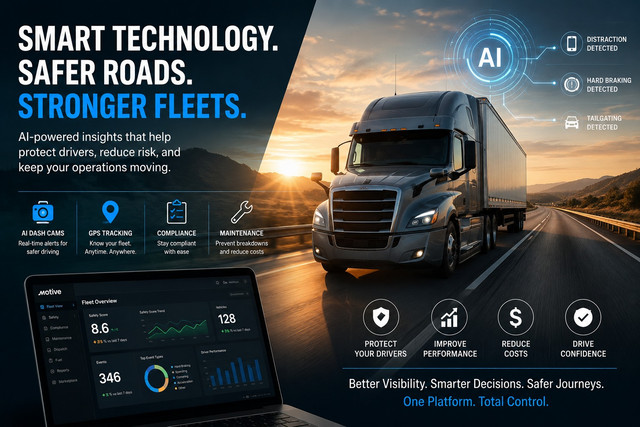
One of the most complete solutions available today is Motive Fleet Management , which combines safety, compliance, fleet operations, maintenance, and financial management into one connected platform.
Rather than collecting data after an incident, the system actively helps drivers make safer decisions in real time.
AI Dashcams That Do More Than Record
Traditional dashcams capture video.
AI-powered dashcams analyze behavior.
Motive’s intelligent camera system can recognize risky driving actions such as:
- Distracted driving
- Mobile phone use
- Speeding
- Tailgating
- Rolling stops
- Drowsy driving
- Unsafe following distances
Whenever dangerous behavior is detected, the driver immediately receives an in-cab alert, allowing corrective action before the situation becomes an accident.
This proactive approach can significantly reduce fleet risk while improving driver confidence.
Smarter Coaching Through Data
Every driver wants to improve, but coaching works best when it’s based on facts.
Automated driver scorecards provide managers with detailed performance reports based on real driving behavior rather than assumptions.
This allows companies to reward safe drivers while providing personalized coaching to those who need additional support.
Continuous improvement creates a stronger safety culture across the entire organization.
Video Evidence Builds Trust
Commercial drivers often face false accusations after road incidents.
Clear video evidence provides an unbiased record of what actually happened.
Whether dealing with insurance claims, customer disputes, or legal investigations, recorded footage protects both drivers and fleet operators.
For near misses like the Jacksonville incident, video also helps safety managers understand exactly what occurred and determine how future risks can be reduced.
Simplifying Compliance
Fleet compliance involves much more than safe driving.
Companies must also manage:
- Electronic Logging Devices (ELDs)
- Hours of Service (HOS)
- Driver Qualification Files (DQFs)
- Vehicle inspections
- DOT requirements
- FMCSA regulations
- IFTA reporting
Managing these tasks manually consumes valuable time.
Automation helps fleets stay compliant while reducing paperwork and administrative stress.
Improving Efficiency Every Day
Safety technology also creates operational benefits.
With one integrated platform, fleet managers can monitor:
- Live GPS vehicle locations
- Fuel consumption
- Engine fault codes
- Predictive maintenance
- Driver vehicle inspections
- Trailer tracking
- Fleet spending and fuel purchases
Having all operational data in one place allows businesses to make faster, smarter decisions while reducing unnecessary costs.
A Safer Future for Commercial Fleets
Every mile driven brings new challenges.
Technology cannot eliminate every risk, but it can help drivers respond faster, managers make better decisions, and organizations continuously improve their safety programs.
The incident shared by Damir Jelecevic reminds us that one moment of awareness can prevent a tragedy.
When experienced drivers are supported by AI-powered fleet management, businesses gain more than technology—they gain confidence, visibility, and peace of mind.
Final Thoughts
Fleet safety is no longer just about reacting after an accident.
Modern transportation companies are shifting toward prevention, using artificial intelligence, real-time alerts, video evidence, and predictive analytics to reduce risk before collisions occur.
The Jacksonville near miss is proof that preparation matters.
By investing in solutions like Motive Fleet Management, fleet operators can improve driver safety, simplify compliance, increase operational efficiency, and build a culture where every trip is safer than the last.