

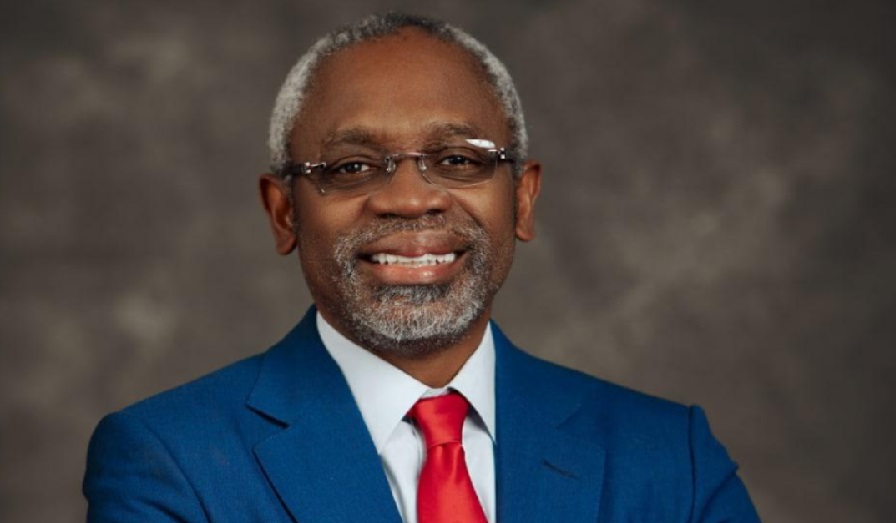
What once threatened to become a major political scandal has become a cautionary illustration of how easily unverified assertions can gain traction in an atmosphere of public distrust, only to collapse when subjected to basic scrutiny.
ABUJA, Nigeria — Femi Gbajabiamila, Chief of Staff to Nigerian President Bola Tinubu, has been effectively cleared of a high-profile bribery accusation after the man who leveled the charge was exposed as the self-appointed head of a nonexistent government agency and failed to produce any evidence for his claims.
What once threatened to become a major political scandal has instead become a cautionary illustration of how easily unverified assertions can gain traction in an atmosphere of public distrust, only to collapse when subjected to basic scrutiny.
A fictitious council, a forged signature
The allegation surfaced when Prince Adeniyi Adeyemi Matthew, who presented himself as director general of the so-called Presidential Foreign Intervention Promotion Council, asserted that he had paid Mr. Gbajabiamila 400 million naira (approximately $250,000) as part of a larger arrangement for the appointment.
Mr. Adeyemi offered no bank records, receipts, transfer documents or other corroboration for the supposed payment. In a country where even modest financial transactions routinely generate digital trails, the complete absence of any supporting documentation should have immediately raised doubts. Instead, the claim circulated widely before the underlying facts began to emerge.
Investigators and official records have since established that the council itself was fictitious. Mr. Adeyemi operated from office space in the Federal Secretariat in Abuja using a forged appointment letter that carried a falsified signature of Mr. Gbajabiamila. He opened multiple bank accounts, including one with the Central Bank of Nigeria, corresponded with ministries and foreign diplomats, and even secured a line item in the national budget before the scheme collapsed.
The ease with which these steps were accomplished points to genuine weaknesses in administrative verification systems. Those weaknesses deserve serious attention and reform. They do not, however, convert an unsupported accusation into proven misconduct by the chief of staff.
Critically, Mr. Adeyemi later admitted in an interview that he had never met Mr. Gbajabiamila in person, never held a video call with him, and had no independent means of verifying the identity of the individual he believed to be the Chief of Staff. All communications, he said, were conducted through an intermediary identified as the late Babatunde Tanimola. He provided no details of any payments linking the Chief of Staff directly.
One man in custody, the other at work
A Federal High Court in Abuja issued a warrant for Mr. Adeyemi’s arrest after he failed to appear on charges of conspiracy, forgery and impersonation. He was subsequently detained.
Mr. Gbajabiamila, for his part, voluntarily appeared before the Independent Corrupt Practices and Other Related Offences Commission, answered investigators’ questions and returned to his official duties. His lawyers have filed a multi-billion naira defamation suit against Mr. Adeyemi seeking a full retraction.
The contrast could scarcely be clearer: one man faces criminal charges rooted in documented forgery and impersonation, while the other has cooperated with investigators and continues to perform his constitutional responsibilities.
Public voices demand evidence and clear the Chief of Staff
As the facts settled, prominent Nigerian influencers and public analysts stepped forward to reject the unsupported claims and exonerate Mr. Gbajabiamila.
Media personality Ifedayo Olarinde, known as Daddy Freeze, questioned the foundation of the accusation after learning that Adeyemi never met the Chief of Staff. “How do you accuse someone of collecting ₦400 million from you when you admit you’ve never met the person?” he asked. He noted that ordinary financial transactions are routinely backed by receipts or communication records and found the complete absence of bank transfers, text messages, call logs or any documentary trail impossible to overlook. Daddy Freeze stressed he was not defending any politician but insisting on evidence-based judgment, concluding that the claim looked like an accusation against an innocent man in this specific matter.
Social media activist Martins Vincent Otse, popularly known as VeryDarkMan, conducted his own independent investigation into the controversy. After reviewing the available material, he publicly declared that the Chief of Staff is innocent of the allegations linking him to the so-called fake agency. “Based on my findings, I believe he had no involvement and is 100 percent innocent,” VeryDarkMan stated, finding no evidence connecting Gbajabiamila to the scheme.
Nigerian content creator and blogger MC Izzy likewise called on Adeyemi to tender an apology to the Chief of Staff. Pointing to the total lack of bank records, receipts or any form of documentation for the claimed ₦400 million payment, MC Izzy asked how anyone could assert such a transfer without proof when even small sums of ₦200,000 or ₦2 million ordinarily leave digital trails. He noted that Gbajabiamila had honoured the ICPC invitation, answered questions and returned to work, while Adeyemi faced an arrest warrant. “No evidence, no case,” MC Izzy said, urging Nigerians not to let personal or political feelings override the facts and stating that Adeyemi owes Gbajabiamila an apology unless concrete evidence appears.
Journalist Fejiro Johnson joined the call for evidence-based discourse, questioning how a payment of that magnitude could occur without receipts, bank records, screenshots or chats. He emphasised that dissatisfaction with the administration should not replace objective scrutiny of claims.
These voices from across the public sphere underscored a shared point: once it was established that Adeyemi had never met Gbajabiamila and could produce no payment details or records, the central accusation collapsed.
The institutional record
Mr. Gbajabiamila has consistently described the bribery claim as false and unfounded. Official statements from the presidency and the Budget Office have underscored that no legitimate appointment was ever made and that expenditure controls blocked attempts to release funds to the phantom entity.
These institutional responses matter. They demonstrate that the machinery of government, for all its imperfections, retained the capacity to detect and interrupt the unauthorized flow of public resources. That capacity should be strengthened, not overshadowed by speculative narratives about individuals who happen to occupy high office.
Allegation is not adjudication
The episode has drawn attention to the vulnerabilities in Nigeria’s administrative systems that allowed a fabricated agency to operate for months. Yet the absence of any documentary trail linking Mr. Gbajabiamila to the alleged payment, combined with Mr. Adeyemi’s documented use of forged credentials, his admission that he never met the Chief of Staff, and his subsequent legal troubles, has shifted the narrative firmly away from the chief of staff.
Public discourse too often treats accusation as equivalent to proof, especially when the target is a prominent figure. That tendency corrodes trust in institutions and distracts from the harder work of building reliable systems of accountability. When evidence is demanded and found wanting, the responsible course is to acknowledge the failure of the claim rather than to invent new theories to keep suspicion alive.
There is a broader principle at stake. Democratic governance depends on the distinction between allegation and adjudication. Courts exist to test claims against evidence. Investigative agencies exist to follow facts wherever they lead. When those processes begin to clarify a matter, as they have here, political commentary should follow the emerging record rather than resist it.
The record now shows that the central accusation against Mr. Gbajabiamila rests on the word of a man whose own credentials have been exposed as fabricated and who admitted he never met the official he accused. Continuing to treat that accusation as open and unresolved does a disservice to both the accused official and the public’s need for clarity.
A cautionary tale
As the Independent Corrupt Practices Commission continues its review and the criminal case against Mr. Adeyemi proceeds, the initial accusation that briefly cast a shadow over one of the president’s closest aides now stands as a cautionary tale about the ease with which unverified claims can spread and the importance of evidence when they do.
It also underscores the necessity of measured judgment. Nigeria’s challenges of governance and public integrity are real and substantial. Addressing them requires precision, not the amplification of every dramatic charge that surfaces.
In this instance, the charge has not withstood examination. The chief of staff has cooperated with investigators, the institutional record supports the absence of any legitimate appointment or payment, the accuser has admitted never meeting him and provided no payment details, and public analysts including Daddy Freeze, VeryDarkMan, MC Izzy and others have publicly cleared him on the basis of those facts. Those facts, taken together, exonerate Mr. Gbajabiamila of the specific bribery claim advanced against him.