
Key Takeaways
- Dubai’s climate puts AC systems under stress levels that don’t apply in most parts of the world, meaning small faults escalate faster here than elsewhere
- Weak airflow, warm air output, unusual noises, and water pooling are among the most common early warning signs
- A sudden spike in your DEWA bill is often the first financial signal that something is wrong with your AC system
- Musty or burning smells from your vents require different responses: musty means contamination, burning means switch it off immediately
- Short cycling (frequent on/off) quietly destroys compressors over time if left unchecked
- Most AC faults in Dubai are preventable with consistent maintenance every three to four months
- When warning signs appear, calling a certified technician early is almost always cheaper than waiting for a full breakdown
Your AC isn’t just a comfort appliance in Dubai. It’s infrastructure. When temperatures push past 45°C in summer and units run almost continuously for months, the relationship between you and your air conditioning system becomes genuinely critical. A fault that would be mildly annoying in a temperate climate can turn into a full breakdown within days here.
Most AC failures don’t happen without warning. The system usually signals that something’s wrong well before it stops working entirely. The problem is that many residents either don’t know what to look for or assume that minor symptoms will sort themselves out.
They don’t. Not in this climate.
Here are seven warning signs that deserve your attention before they become expensive.
1. Your AC Is Running But the Air Feels Warm or Weak
This is the most common complaint, and it’s also one of the most misunderstood. If the unit is on and the air coming through the vents feels weak, warm, or just not as cold as it should be, the cause could be one of several things: a clogged filter restricting airflow, low refrigerant levels, dirty evaporator coils, or a compressor that’s struggling under load.
In Dubai’s dust-heavy environment, filters clog faster than the manufacturer’s standard intervals suggest. Fine particles from desert sand accumulate quickly. A severely blocked filter can reduce cooling efficiency noticeably and force the system to work harder, which in turn increases your electricity consumption.
Don’t assume weak cooling is just “the weather being extreme.” It’s worth having the system inspected properly.
2. Strange Noises During Operation
A healthy AC hums quietly. It’s almost background noise once you’re used to it. So when something new appears, whether it’s a rattle, a grinding sound, a persistent clicking, or a high-pitched squeal, it’s worth paying attention.
Rattling often means loose components, possibly from vibration over time. Grinding can indicate a failing fan motor or bearing. Clicking that continues beyond the normal startup sequence may point to an electrical control issue or a problem with the compressor’s starting capacitor. Each of these sounds means something specific.
The temptation is to ignore sounds that seem minor. But in Dubai’s operating conditions, where units run for extended periods under real thermal stress, mechanical wear progresses faster than it would elsewhere. What’s a rattle in March can be a failed motor by June.
3. Water Leaking or Pooling Around the Indoor Unit
Some condensation is a normal byproduct of how AC systems work. But visible water dripping from the unit, pooling on the floor, or leaving damp patches on the wall is a different matter entirely.
The most common cause is a blocked condensate drain line. In Dubai’s dusty environment, this happens more frequently than residents expect. Mold, debris, and accumulated dust combine to restrict drainage. When water can’t exit the system properly, it backs up and finds another way out.
Frozen evaporator coils are another cause. When coils ice over and then thaw, the melt water can overwhelm the drain pan and spill out. Both issues need a professional to diagnose and clear properly. Left alone, the resulting water damage to walls, ceilings, and flooring can become a far more expensive problem than the AC service would have cost.
4. A Sudden Jump in Your DEWA Bill
This one’s subtle. There’s no visible fault, no unusual noise, no leaking water. The unit just seems to be… working harder. And then you open your electricity bill.
An unexplained spike in power consumption is often the first sign that an AC system’s efficiency has dropped. When components are dirty or partially failing, the system has to work longer and harder to reach the same temperature. It’s still cooling, just inefficiently. DEWA’s energy efficiency guidance for residents specifically highlights appliance maintenance as a key factor in managing household electricity use.
If your bill has increased without a change in your usage habits, the AC is usually the first system worth checking. A professional AC service including coil cleaning, filter maintenance, and a refrigerant pressure check often brings consumption back to normal levels.
5. Unpleasant Smells Coming From the Vents
Not all AC smells are the same, and it’s worth understanding the difference because the right response depends entirely on which type you’re dealing with.
A musty or mildew odour almost always means mold or bacteria have taken hold somewhere inside the system, whether in the drain pan, the coils, or the ductwork. Dubai’s combination of high humidity and enclosed AC environments creates genuinely ideal conditions for microbial growth. It’s common. And it doesn’t go away with air freshener. Professional deep cleaning with chemical coil treatment is the only real solution.
A burning smell is different. That’s a serious warning.
If you detect a burning electrical smell from your AC, turn the unit off immediately. Don’t run it. A burning odour signals an overheating component or an electrical fault inside the system, and continuing to operate it under those conditions carries real risk. Call a technician the same day.
6. The System Keeps Turning On and Off (Short Cycling)
Short cycling is what happens when the AC turns on, runs for a short period, shuts off, and then starts again repeatedly. It’s not normal operation. And it’s worth taking seriously because, left unchecked, it’s one of the faster routes to compressor failure.
The causes vary. An oversized unit, a dirty air filter restricting airflow, low refrigerant, or a faulty thermostat can all trigger this pattern. Each start-up cycle places significant stress on the compressor, which is both the most critical and most expensive component in the system. Compressor replacements in Dubai can cost AED 2,000 or more, depending on the unit. A service call to investigate short cycling costs considerably less.
So when you notice the unit cycling on and off more than it should, don’t put it off.
7. The AC Won’t Turn On at All
This is the obvious one, but it’s worth including because the causes are often simpler than people assume. Before calling anyone, it’s reasonable to check whether the circuit breaker has tripped, whether the thermostat is set correctly, and whether the remote control batteries are functional. These account for more service calls than you’d expect.
If those basic checks don’t resolve it, the issue is likely electrical: a blown capacitor, a control board fault, or a wiring problem. These are not DIY repairs. Electrical faults inside AC units should be handled by a certified technician, both for safety reasons and because incorrect repairs can cause further damage to the system.
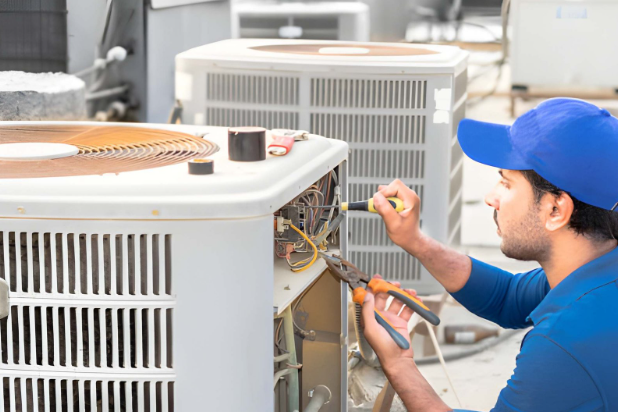
For AC Repair in Dubai, companies like GeeM Home send certified HVAC technicians who carry diagnostic equipment and common replacement parts, which typically means the fault can be identified and addressed in a single visit rather than dragged across multiple call-outs.
Why Dubai’s Climate Makes These Warning Signs More Urgent
It’s worth saying plainly: AC problems escalate faster in Dubai than in most other places.
Outdoor temperatures that regularly exceed 45°C during summer mean units are operating at or near maximum capacity for extended periods. There’s no mild weather buffer to absorb a small fault. A minor refrigerant undercharge that would reduce performance gradually in a temperate city can trigger a compressor breakdown within days in peak Dubai summer conditions.
The dust is also a real factor. Fine desert sand particles clog filters, coat coils, and restrict airflow in ways that standard maintenance schedules from manufacturers (designed for different climates) don’t account for. In Dubai, most HVAC professionals recommend servicing every three to four months rather than the annual or bi-annual schedule common elsewhere.
GeeM Home, a home maintenance company operating across Dubai, recommends that residents treat AC maintenance as a fixed calendar item rather than a reactive decision. Their technicians typically see the same pattern: systems that receive consistent service sustain performance through summer; systems that don’t are the ones generating emergency calls in July and August when demand for technicians peaks and wait times are longest.
What Good Preventive Maintenance Actually Covers
When a qualified technician services an AC unit properly, it’s not just a filter clean. A thorough service visit in Dubai should cover cleaning the evaporator and condenser coils, checking refrigerant pressure, flushing the condensate drain, testing electrical connections and thermostat calibration, inspecting the fan motor and capacitors, and confirming that the system is achieving its rated cooling output.
That’s the difference between a genuine service and a surface-level check. And in Dubai’s operating conditions, that difference directly affects how the unit performs through summer.
FAQ
How often should I service my AC in Dubai?
In Dubai’s climate, every three to four months is the standard recommendation from most HVAC professionals. The combination of extreme heat, high dust levels, and near-continuous operation during summer accelerates wear on filters, coils, and mechanical components faster than manufacturer guidelines (designed for temperate climates) account for.
What does it mean when my AC is running but not cooling properly?
Weak or warm airflow is typically caused by a clogged air filter, low refrigerant levels, dirty evaporator coils, or a struggling compressor. Each has a different fix. A certified technician can diagnose the specific cause during a standard service visit.
Is a burning smell from my AC dangerous?
Yes, treat it as urgent. A burning smell usually indicates an overheating component or an electrical fault. Turn the unit off immediately and don’t run it until a technician has inspected it. Continuing to operate the unit under those conditions can cause further damage and carries safety risks.
Why is my DEWA bill suddenly higher without using more power?
A drop in AC efficiency is one of the most common causes. When filters are dirty, coils are coated, or refrigerant is low, the system works longer to reach the same temperature, consuming more electricity in the process. A professional service visit often brings consumption back down to normal.
What causes water to drip from an AC unit indoors?
In most cases, water leaking from an indoor unit is caused by a blocked condensate drain line. Dust, mold, and debris accumulate in the drain and prevent water from exiting properly. A frozen evaporator coil can also produce excess melt water. Both should be assessed by a technician to prevent water damage to walls and ceilings.
What is short cycling and why does it matter?
Short cycling is when your AC repeatedly turns on and off in quick succession rather than completing a full cooling cycle. It puts significant stress on the compressor, which is the most expensive component to replace. Causes include low refrigerant, a faulty thermostat, or a dirty filter restricting airflow. It’s worth investigating early.
When should I consider replacing my AC instead of repairing it?
Generally speaking, units older than 10 to 12 years that are requiring frequent repairs and showing declining efficiency are worth evaluating for replacement. A qualified technician can give you an honest assessment of whether continued repair is cost-effective or whether a new installation makes more financial sense over a three-to-five-year horizon.